 Save
Save A friend surprised me with this bowl at a rooftop dinner during one of those unexpectedly warm spring evenings, and I remember being struck by how the creamy coconut quinoa felt luxurious while the crisp vegetables snapped between my teeth like little wake-up calls. She'd picked up the recipe from a wellness podcast she half-joked about, but the combination was so genuine and uncomplicated that I stopped joking along and just kept eating. The peanut dressing was the moment everything clicked—tangy, nutty, bright—and I realized I'd been making salads wrong my whole life by overthinking them.
The first time I made this for a potluck, I arrived second and watched someone's face light up when they took a bite—they asked for the recipe before they even finished chewing, which taught me something about how food can communicate when words feel insufficient. That moment shifted how I think about cooking for people; it's not about complexity or restaurant-level plating, it's about flavors that feel like they're rooting for you.
Ingredients
- Quinoa, rinsed: Use the fine white variety for the fluffiest texture, and please rinse it even though the package says it's pre-rinsed, because that bitter coating is real and worth the extra 30 seconds.
- Coconut milk, full-fat: This is where the creamy richness comes from, and it transforms ordinary quinoa into something that tastes intentional.
- Water: The exact ratio matters here—too much water and you get mush, too little and the grains stay hard.
- Salt: Half a teaspoon seems small but it's doing the work of seasoning every grain from the inside out.
- Red bell pepper, thinly sliced: The sweetness and crunch are non-negotiable, and they stay bright when you slice them fresh right before assembling.
- Carrot, julienned or shredded: Carrots bring earthiness and a subtle sweetness that balances the peanut dressing's intensity.
- Cucumber, thinly sliced: This is your cooling agent—it keeps the whole bowl from feeling heavy and adds that spa-like freshness.
- Purple cabbage, shredded: It holds its color and crunch better than green cabbage, and it looks stunning against everything else.
- Edamame, cooked and shelled: They add protein and a buttery texture that makes this feel complete as a meal.
- Fresh cilantro, chopped: A little goes a long way, and it's the difference between a good bowl and one that tastes like someone cared about the details.
- Sesame seeds: Toast them yourself if you have time—the difference is subtle but unmistakable.
- Creamy peanut butter: The base of everything, and make sure it's the kind without added sugar or it'll throw off the balance.
- Soy sauce, gluten-free if needed: This is the umami backbone that makes the dressing taste complex and sophisticated.
- Rice vinegar: Gentler than white vinegar and it lets the other flavors shine instead of overpowering them.
- Fresh lime juice: Bottled will work in a pinch, but fresh lime brings an immediacy that matters.
- Maple syrup or honey: Just enough sweetness to round out the sharp edges without making it dessert.
- Toasted sesame oil: This is concentrated flavor—a little bit goes a long way and makes your kitchen smell like an actual Thai restaurant.
- Warm water: Keep it nearby while whisking the dressing because you'll need to adjust the consistency gradually.
Tired of Takeout? 🥡
Get 10 meals you can make faster than delivery arrives. Seriously.
One email. No spam. Unsubscribe anytime.
Instructions
- Rinse and set up your quinoa:
- Even though packages claim pre-rinsing, run the quinoa under cool water in a fine-mesh sieve for about 30 seconds to remove any bitter coating. This small step transforms the final texture from grainy to fluffy.
- Build the coconut cooking liquid:
- Pour the rinsed quinoa into a medium saucepan with the coconut milk, water, and salt. The combination of coconut milk and water creates a creamier result than water alone without being overpowering.
- Bring to a boil, then lower the heat:
- Watch for the moment the liquid starts actively bubbling, then immediately reduce the heat to the lowest setting and cover with a lid. This prevents the bottom from scorching and ensures even cooking.
- Let time do the work:
- Set a timer for 15 minutes and resist the urge to lift the lid—steam is doing important things under there. When the timer rings, the liquid should be completely absorbed and the grains should look slightly translucent.
- Rest and fluff:
- Leave it covered off the heat for 5 minutes, then use a fork to gently separate the grains. This resting period lets the quinoa finish cooking with residual heat.
- Prep vegetables while quinoa cooks:
- Slice the bell pepper into thin strips, shred or julienne the carrot, slice the cucumber into half-moons, and shred the cabbage. Having everything ready before assembly keeps the bowl from getting watery as vegetables sit.
- Whisk the dressing into something silky:
- In a small bowl, combine peanut butter, soy sauce, rice vinegar, lime juice, maple syrup, and sesame oil. Whisk until it starts coming together, then add warm water one tablespoon at a time until you reach a pourable consistency—think salad dressing, not peanut butter sauce.
- Assemble with intention:
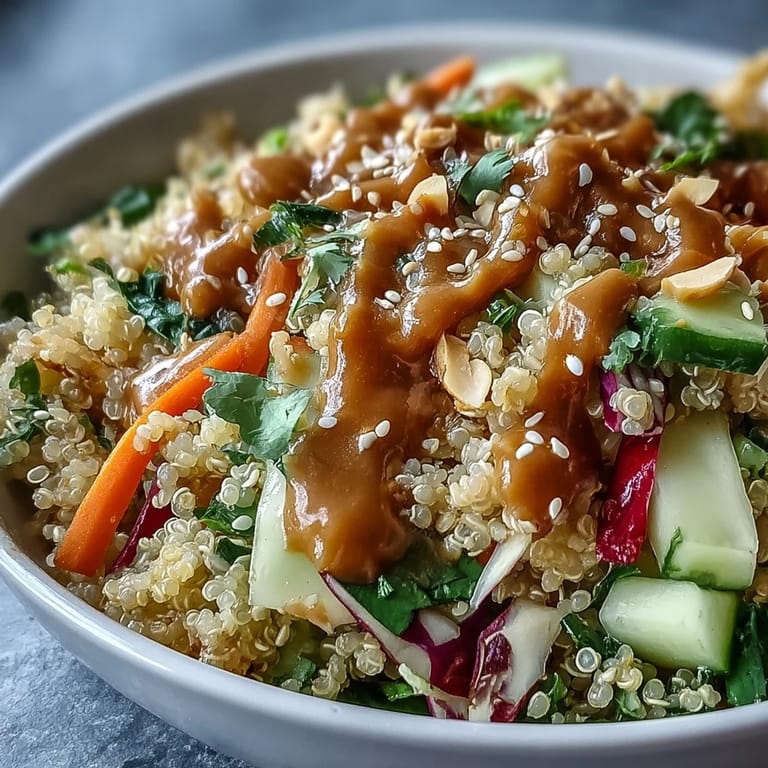
- Divide the warm coconut quinoa among four bowls, creating an even base. Distribute vegetables and edamame in sections around the quinoa so every bite has a little bit of everything.
- Dress and garnish:
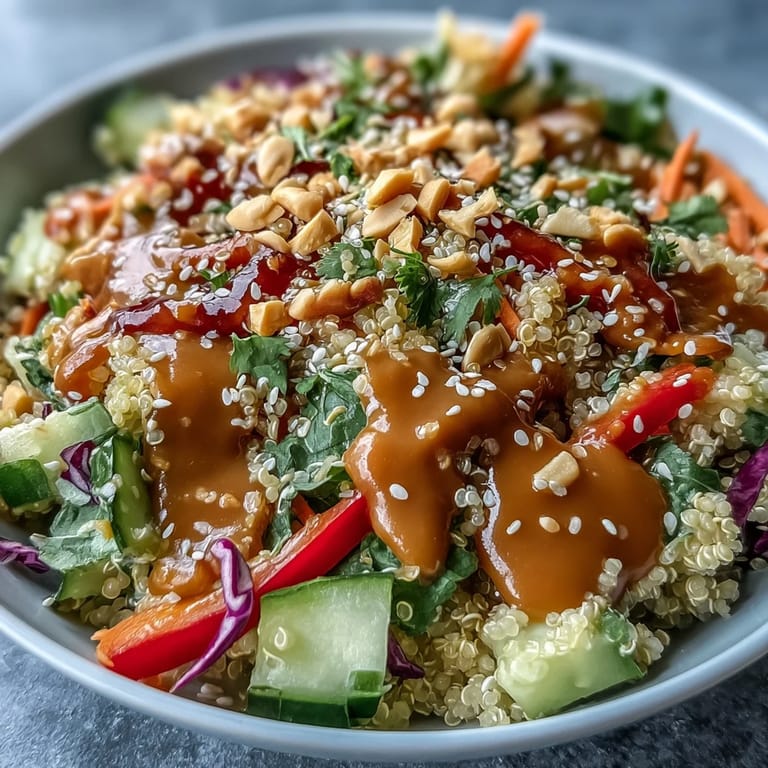
- Drizzle the peanut dressing generously over each bowl, then finish with cilantro and sesame seeds. The garnish isn't decoration—it's the final flavor and texture note that makes people notice.
- Serve or chill:
- This bowl is excellent warm or cold, so make it work for your mood. If serving later, keep components separate until the last moment to preserve crunch in the vegetables.
 Save
Save I made this for my mother the week she was convinced she needed to eat healthier, and watching her push the bowl aside initially because she thought virtuous food had to taste boring, then seeing her scrape the bottom for every last bite of dressing, felt like I'd discovered something worth knowing. She's made it three times now without asking for the recipe again, which somehow means more than any compliment.
Why the Coconut-Quinoa Combination Works
Coconut milk has a subtle sweetness and fat content that makes quinoa feel less like rabbit food and more like something you chose because it tastes good. The liquid ratio matters—too much water and you lose the coconut flavor, too much coconut milk and it becomes heavy. This balance lets the nutty quinoa shine while staying creamy enough that vegetables aren't the only thing that matters on your plate.
The Peanut Dressing is Everything
This dressing is where the bowl transforms from ingredients into something with personality and intention. The soy sauce brings umami depth, the lime and vinegar add brightness so the peanut butter doesn't feel heavy, and the sesame oil brings an aromatic quality that makes people lean in closer. I've drizzled this over roasted vegetables, stirred it into rice, and used it as a dipping sauce for spring rolls—it's one of those dressings worth mastering because it teaches you how flavors can balance each other.
Make It Your Own Without Losing the Soul
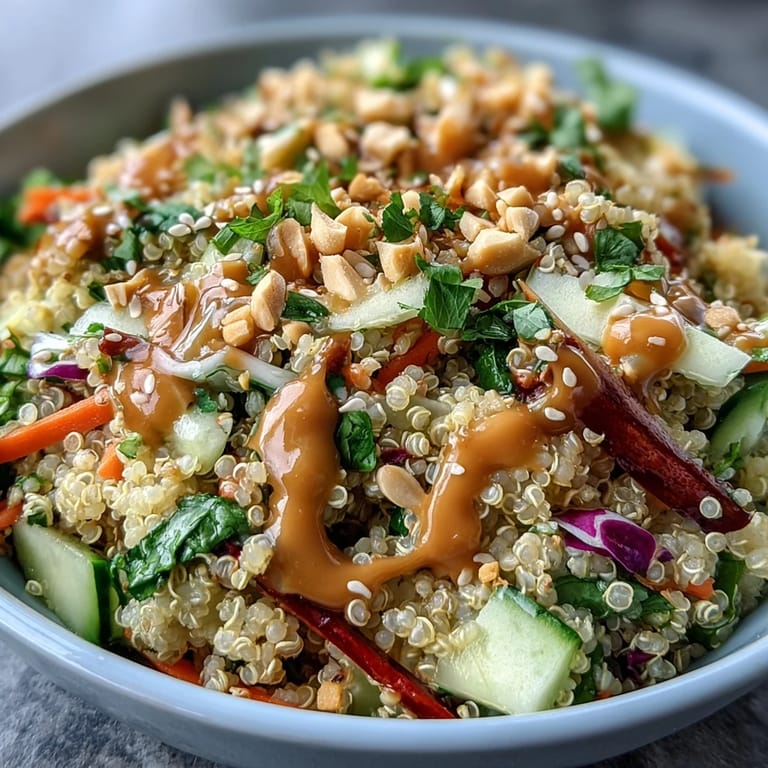
This bowl is flexible enough that you can swap vegetables with whatever's in season or what you actually want to eat, and it still feels right. Grilled tofu, tempeh, or even chickpeas add protein if you want the bowl to be more substantial. The dressing stays the anchor that ties everything together, so focus your creativity on the vegetables and protein while keeping the coconut quinoa and peanut dressing consistent.
- Try adding roasted peanuts for extra crunch if you want the nuttiness to really announce itself.
- Substitute maple syrup with honey if you prefer, though maple brings a deeper, earthy note that pairs beautifully with coconut.
- Make the dressing thinner if you're serving this cold from the refrigerator, since cold vegetables won't absorb liquid the way warm ones do.
 Save
Save This bowl has become the thing I make when I want to feel nourished without any of the guilt or compromise. It's simple enough to pull together on a Tuesday night but interesting enough that you'll think about it days later.
Recipe FAQs
- → Can I make this bowl ahead of time?
Yes, this bowl is excellent for meal prep. Store the coconut quinoa, vegetables, and peanut dressing separately in airtight containers in the refrigerator for up to 4 days. Assemble when ready to eat, either cold or gently reheated.
- → What protein alternatives work well?
Grilled tofu, tempeh, or baked tofu cubes add substantial protein. Shredded chicken or pan-seared shrimp also pair beautifully. For a nut-free version, use sunflower seed butter or tahini in the dressing instead of peanut butter.
- → How can I adjust the peanut dressing consistency?
If the dressing is too thick, add warm water one tablespoon at a time until it reaches your desired pourable consistency. For a thinner sauce, add up to 2 tablespoons of water. If too thin, add a bit more peanut butter.
- → What vegetables can I substitute?
Snap peas, shredded broccoli stems, radishes, or thinly sliced snow peas work well. In colder months, try roasted sweet potato cubes or steamed broccoli. The key is maintaining a mix of colors and textures.
- → Is this bowl gluten-free?
Yes, when using gluten-free soy sauce (tamari) in the peanut dressing. Always check labels to ensure your soy sauce is certified gluten-free if that's a concern for your dietary needs.
- → Can I use a different grain instead of quinoa?
Brown rice, farro, or couscous all work well cooked in coconut milk. Adjust cooking time accordingly—brown rice takes longer, while couscous cooks in about 5 minutes. The liquid ratio may need slight adjustments.