 Save
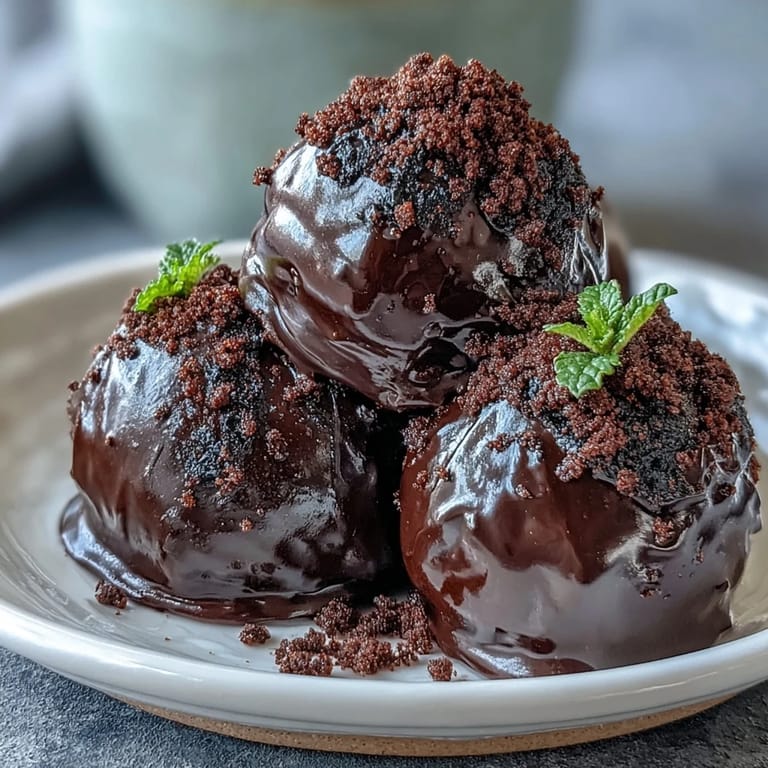
Save My neighbor brought over a box of black currant truffles from a fancy chocolatier one winter evening, and I became utterly obsessed with recreating them. The moment I bit into one, that sharp fruity tartness cutting through the deep chocolate made me pause mid-conversation—I knew I had to figure out how to make these at home. What started as curiosity turned into a kitchen project that took up an entire Saturday afternoon, complete with a double boiler mishap and chocolate on my sleeves.
I made these for my friend's book club night, and honestly the truffles disappeared faster than the conversation did. One guest asked if I'd bought them from somewhere fancy, and when I said no, she wanted the recipe immediately—that's when I knew I'd nailed something special.
Ingredients
- Dark chocolate (70% cocoa), finely chopped: The 70% cocoa level gives you that sophisticated bittersweet edge without being harsh; anything higher can taste too astringent when paired with the fruit.
- Heavy cream: Don't use half-and-half or milk here—you need the fat content to create that silky ganache texture that melts on your tongue.
- Unsalted butter, room temperature: Cold butter won't blend smoothly into the ganache, so let it sit out for about thirty minutes before starting.
- Black currant purée: Strain it carefully to remove any pulp that could affect your truffle shape; unsweetened is crucial because the chocolate and ganache already provide sweetness.
- Black currant liqueur (optional): This adds a sophisticated depth, but if you skip it, the truffles remain perfectly delicious.
- Dark chocolate for coating: Use the same quality as your ganache chocolate—consistency matters here.
- Freeze-dried black currants, crushed: These add a pop of visual appeal and a tart crunch that contrasts beautifully with the smooth center.
- Cocoa powder: A classic dusting that keeps things elegant and simple.
Tired of Takeout? 🥡
Get 10 meals you can make faster than delivery arrives. Seriously.
One email. No spam. Unsubscribe anytime.
Instructions
- Heat and bloom your chocolate:
- Warm the cream until you see little steam wisps rising, then pour it over your chopped chocolate and let it sit for a full minute—this patience is what turns chocolate into something creamy instead of gritty. Stir slowly and deliberately until the mixture looks glossy and smooth.
- Build the ganache flavor:
- Fold in the butter first, letting it melt into the warm chocolate, then add your black currant purée and liqueur if you're using it. The mixture should feel luxurious and smell incredible at this point.
- Chill with intention:
- Transfer everything to a shallow dish and refrigerate for one to two hours—you want it firm enough to scoop but not rock-hard. Check it around the one-hour mark so you know when it's ready.
- Roll with confidence:
- Grab a teaspoon, scoop out a portion, and roll it between your clean hands into a sphere; the warmth of your hands helps, but work quickly so it doesn't melt. Freeze these balls for twenty minutes on a parchment-lined tray so they hold their shape during dipping.
- Master the double boiler:
- Set your chocolate in a heatproof bowl over simmering water, making sure the bottom doesn't touch the water or you'll get grainy, seized chocolate. Stir frequently and let it cool just slightly before dipping so it sets with a nice thin shell.
- Dip like you mean it:
- Using a fork or proper dipping tool, plunge each ganache ball into the melted chocolate, tap off the excess, and return it to your lined tray. If your coating is too thick, it overwhelms the delicate ganache center, so thin is better here.
- Garnish while wet:
- Sprinkle your crushed freeze-dried currants or cocoa powder while the chocolate coating is still tacky so everything adheres. Work quickly but without rushing—this is the final impression.
- Let them set properly:
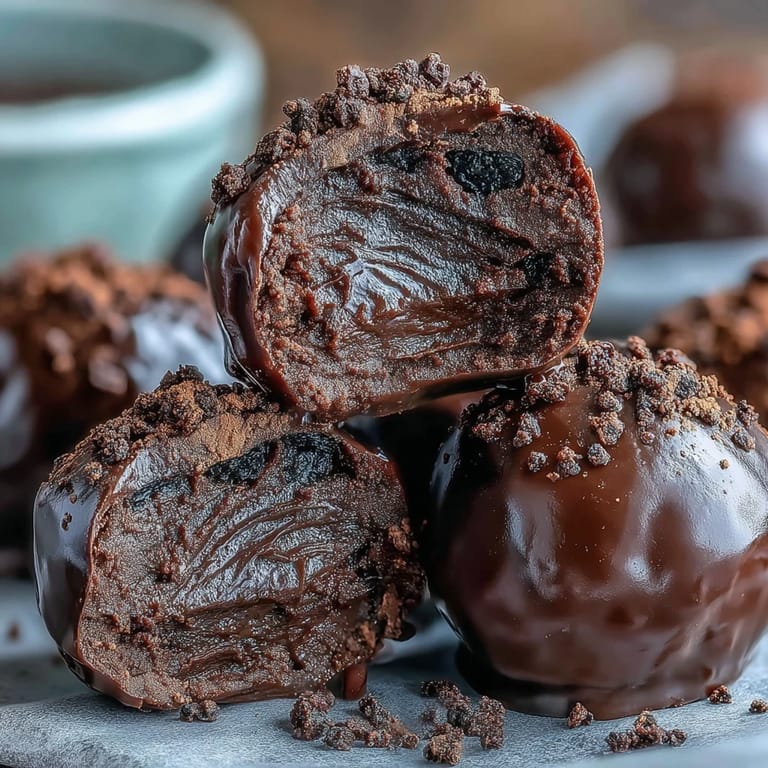
- Room temperature takes about thirty minutes, but if you're impatient, the refrigerator does it in half the time. Once set, store them in an airtight container in the refrigerator where they'll keep beautifully for a full week.
 Save
Save There's something almost meditative about the whole truffle-making process, from the quiet moment when chocolate first melts into cream to the satisfaction of holding a perfectly dipped sphere. My kitchen smelled like dark chocolate and tart berries for hours afterward, and I found myself just standing there for a moment, proud of something I'd made with my own hands.
The Magic of Black Currant
Black currants are tart and sophisticated in a way that regular berries aren't—they have this almost wine-like complexity that elevates chocolate from sweet indulgence to something more interesting. When you pair that tartness with deep cocoa, you're creating a flavor conversation rather than just a dessert, and people genuinely pause to notice the difference.
Tempering Without the Stress
You don't need to temper your chocolate for these truffles—the thin coating and quick setting mean you'll get a nice shell without the complicated temperature dance. This is where homemade truffles actually have an advantage over store-bought in terms of simplicity, even if the results look just as polished.
Making Them Your Own
The beauty of this recipe is how it welcomes experimentation without falling apart. Once you've made them once and understand the technique, you can start playing with different fruit purées, liqueurs, or even coating methods.
- Try swapping the black currant for raspberry or cherry purée and adjust the liqueur to match—same technique, completely different flavor profile.
- A light dusting of edible gold or silver shimmer powder applied after the cocoa powder creates an instantly elegant presentation.
- Store them in individual paper cups in a gift box and you've got something that looks professionally made but tastes like homemade love.
 Save
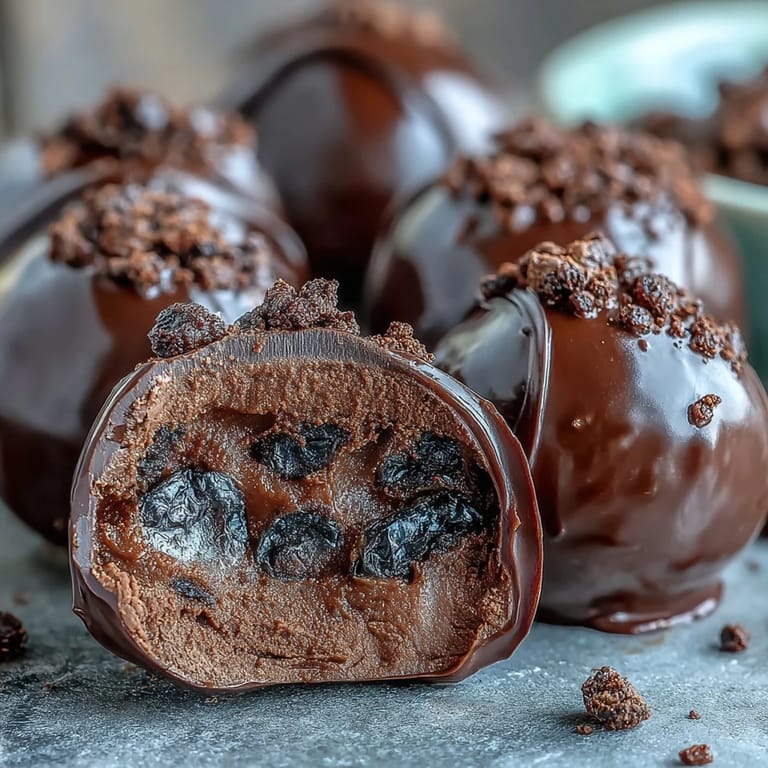
Save These truffles taught me that homemade doesn't mean complicated, and elegant doesn't require restaurant training. Each one is a little edible reminder that the best gifts are the ones made with attention and care.
Recipe FAQs
- → What makes black currant and chocolate work well together?
The natural tartness and bright acidity of black currants cut through the rich bitterness of dark chocolate, creating a sophisticated flavor profile. The fruity notes provide contrast to the deep cocoa flavors while the creaminess of the ganache helps bridge the two elements seamlessly.
- → Can I use frozen black currants instead of purée?
Yes, thaw frozen black currants and purée them in a blender or food processor, then strain through a fine-mesh sieve to remove seeds. You may need to reduce the purée slightly on the stove to achieve the proper consistency before incorporating it into your ganache.
- → Why does my ganache sometimes separate or become grainy?
This usually happens when the cream is too hot or when adding cold ingredients to warm chocolate. Ensure your cream is just simmering, not boiling, and let it sit with the chocolate for a full minute before stirring. Add room-temperature butter gradually and mix gently to maintain the emulsion.
- → How do I get perfectly smooth truffles without fingerprints?
Work with chilled ganache, use slightly cold hands, and handle each piece briefly. A melon baller or small cookie scoop helps create uniform shapes. If the ganache becomes too soft, return it to the refrigerator for 15-20 minutes before continuing.
- → What's the best way to melt chocolate for coating?
Use a double boiler method with simmering water, ensuring the bottom of your bowl doesn't touch the water. Stir constantly and remove from heat once mostly melted—the residual heat will complete the process. Let the chocolate cool to about 90°F (32°C) before dipping for the best sheen and snap.
- → How long do these keep and what's the best storage method?
Store in an airtight container in the refrigerator for up to one week. For longer storage, freeze individually wrapped truffles for up to three months. Bring to room temperature for 15-20 minutes before serving to experience the full texture and flavor profile.