 Save
Save A citrus-scented cloud of cake once filled my kitchen so brightly that even our usually sleepy cat perked up, tail flicking as she sniffed the air with confusion. That morning was all about quiet anticipation—my hands zested lemons while sunlight angled over the countertops, and the soft crack of eggs set a gentle pace. Edible flowers sat in a bowl, colors even more vivid than I’d expected, and the promise of a celebration settled into the room. There was no nervousness, just a kind of humming joy that only comes from knowing something a little bit special is about to happen.
I still laugh about the time my dad tried to help by ‘taste-testing’ the lemon curd with a spoon every few minutes, declaring quality control. That batch turned out to be the brightest I’d made, probably because I was extra vigilant after shooing him from the stove. When we gathered around the table, the cake was met with an excited hush—except for the burst of giggles over the slightly wonky swirl of my whipped cream. Somehow, those crooked edges made it feel just right for a family moment.
Ingredients
- All-purpose flour: Gives essential structure for a cake that stands tall and slices evenly; measuring with a light hand keeps the crumb delicate.
- Baking powder & baking soda: This dynamic duo ensures each layer rises evenly without bitterness; check that yours is fresh for the fluffiest result.
- Salt: Just a sprinkle brightens the lemon and balances sweetness—I learned never to skip it.
- Unsalted butter: Provides a rich, creamy base for both the sponge and curd; softening it makes creaming a breeze.
- Granulated sugar: Essential for sweetness and a tender crumb; I found superfine sugar blends especially well for the curd.
- Eggs: Reliable binding magic for both cake and curd, and using them at room temperature makes batters blend without lumps.
- Lemon zest: Packs the brightest, most aromatic lemon punch; zest only the yellow part for no bitterness.
- Fresh lemon juice: The real zest (pun intended) of the cake and curd; squeezing your own is worth every extra minute.
- Vanilla extract: Rounds out sharp citruses with gentle warmth—good vanilla makes a big difference.
- Whole milk: Keeps the cake wonderfully tender and moist; bringing it to room temp avoids curdling.
- Powdered sugar: Dissolves perfectly into whipped cream, giving smooth, cloud-like frosting.
- Heavy cream: Use it ice-cold for billowy, stable whipped cream that doesn’t droop after one slice.
- Assorted edible flowers: These turn the cake into an art piece—always double-check they’re safe to eat, and press them gently into the frosting at the last moment for a fresh look.
Tired of Takeout? 🥡
Get 10 meals you can make faster than delivery arrives. Seriously.
One email. No spam. Unsubscribe anytime.
Instructions
- Prep and Warm Up:
- Set your oven to 350°F and line your three cake pans—the scent of parchment always reminds me something good is coming. Laying out every ingredient before I start feels oddly calming, like a game plan on a happy mission.
- Mix the Dry Ingredients:
- Whisk together flour, baking powder, baking soda, and salt in a bowl so they’ll blend right into the batter without lumps.
- Make Cake Batter:
- Cream butter and sugar until it looks pale and fluffy; beating in eggs one by one makes the mix glossy and thick. The moment lemon zest and juice go in, you’ll smell pure brightness—don’t rush it.
- Add Flour and Milk:
- Mix in the dry ingredients and milk alternately, starting and ending with flour, and stop as soon as you can’t see any more streaks—overmixing makes everything dense instead of light.
- Bake the Layers:
- Spoon the batter evenly into your pans, smoothing the tops, and bake until a toothpick poked in the center comes out clean (about 25–28 minutes); your kitchen will smell like a lemon grove.
- Cool Completely:
- Let the cakes sit in their pans for a few minutes before turning out onto racks—this pause prevents sticking and keeps the layers intact.
- Cook the Lemon Curd:
- Whisk eggs, sugar, zest, and juice in a saucepan, stirring constantly over gentle heat, and watch as it thickens to a luscious, pudding-like texture—don’t wander off or the eggs might scramble. Stir in cold butter until it’s shiny, creamy, and ready to chill with plastic wrap touching its surface.
- Whip the Cream:
- Beat cold heavy cream with powdered sugar and vanilla until it just holds its shape—stop at firm peaks so it’ll be easy to spread but stay up on the cake.
- Assemble the Cake:
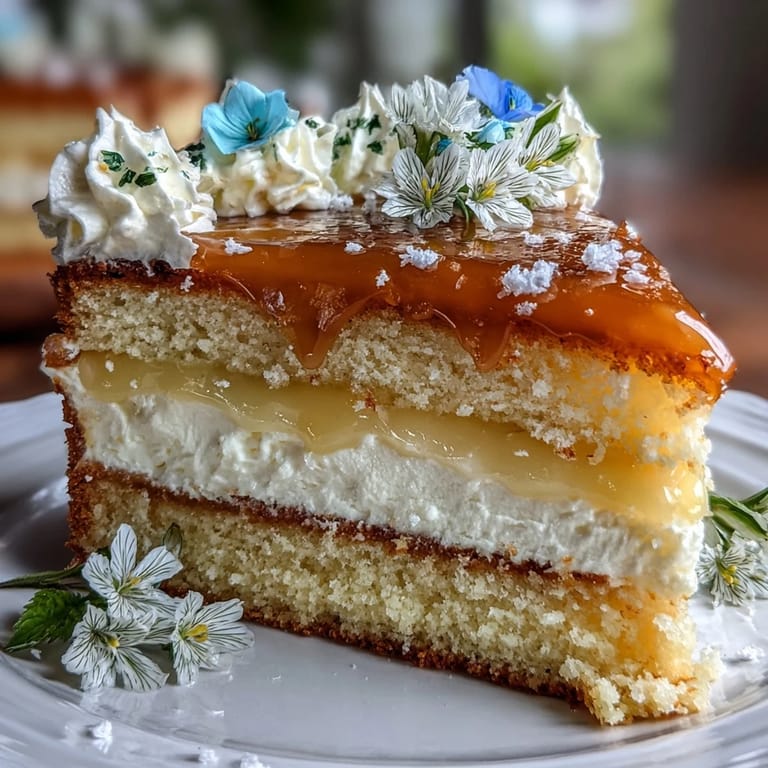
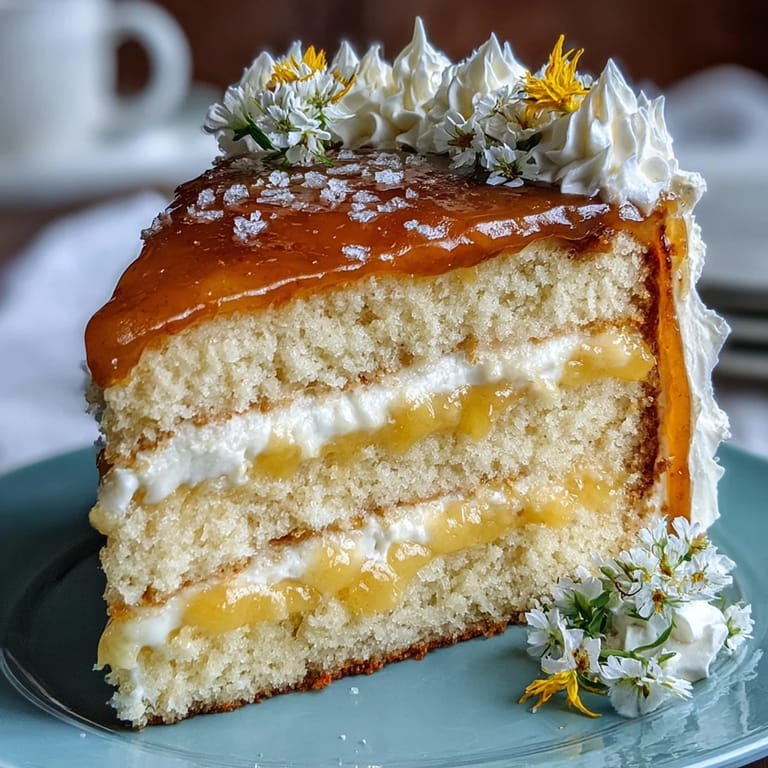
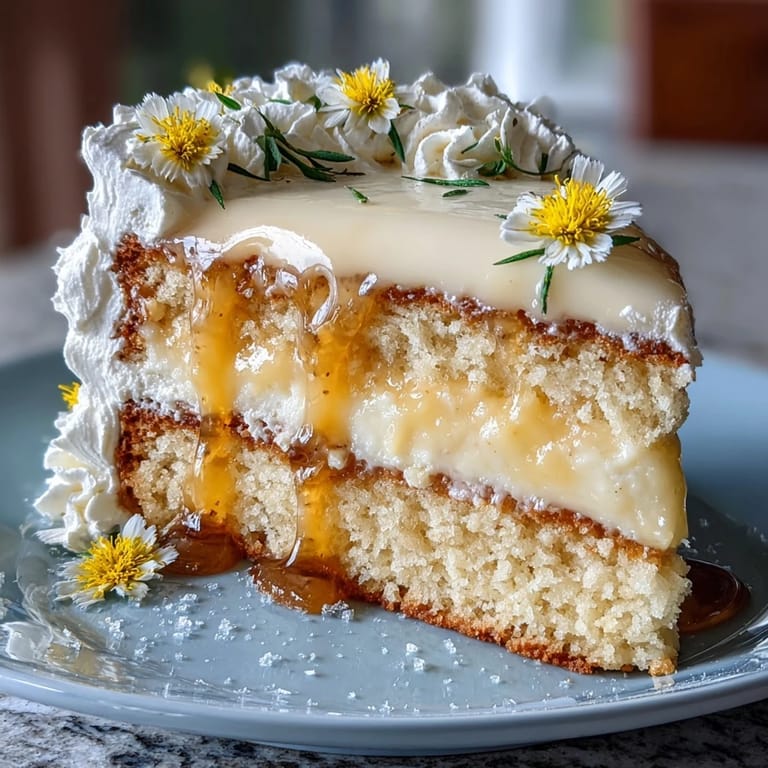
- Start with one cake layer, then spread a swoop of whipped cream and a thick swirl of lemon curd; repeat with the next layer, then top and frost the whole thing generously. You might get a little wild with the curd here—embrace it, those streaks add joy.
- Decorate with Flowers:
- Just before serving, dot edible flowers across the cake, pressing them in gently as you go—it’s a moment of pure kitchen artistry.
 Save
Save 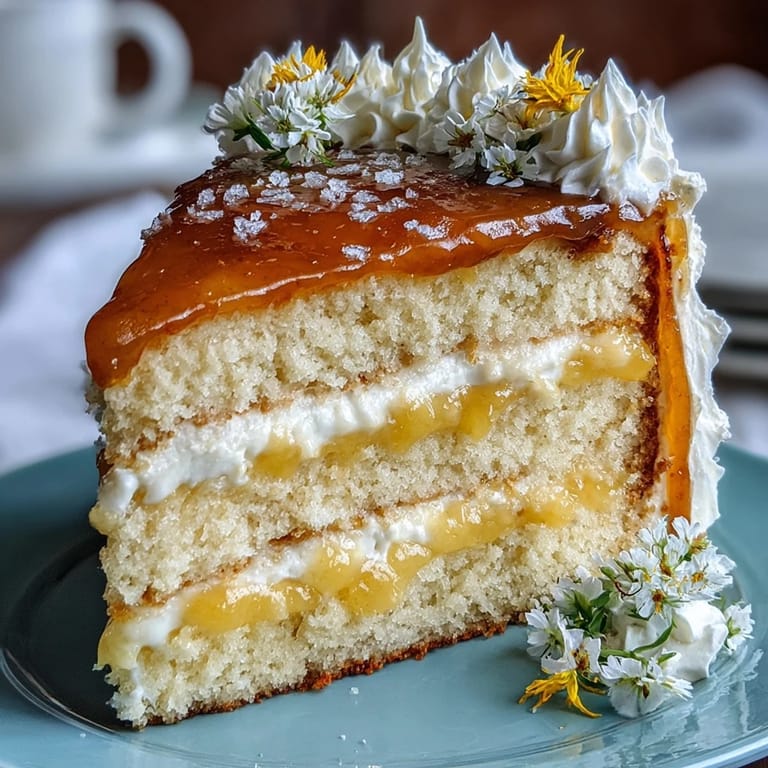 Save
Save The first time my mom saw the finished cake, she just smiled and touched a single flower on top, saying it looked ‘almost too pretty to eat.’ We sliced it anyway, and after that first, tangy bite, even my flower-skeptic uncle declared it a ‘keeper’—the highest of family honors.
Timing Is Everything—Here’s How I Plan Ahead
I’ve learned that making the lemon curd and cake layers the day before makes the big day so much sweeter and less stressful—the flavors develop, and you’re free for last-minute decorating fun. If there’s no rush, stash your cooled cakes in plastic wrap and the curd in a jar in the fridge; assembly the next day feels downright celebratory instead of rushed.
Swapping Flavors and Edible Flowers
When spring brings armfuls of edible blossoms, I swap types based on what’s freshest or most colorful—pansies can be delightfully peppery, while rose petals are all drama. If I can’t find enough edible blooms, I’ve dotted the top with a few fresh raspberries or thin-sliced strawberries for a burst of color and tartness.
What I Wish I’d Known My First Time
If your whipped cream starts to soften or your curd oozes a bit between layers, don’t sweat it—imperfection is practically an invitation to another slice. I always keep flowers refrigerated before using so they don’t wilt on the warm frosting, and pressing them in at the last second gives the cake that fresh-from-the-garden magic.
- Make space in your fridge ahead for the finished cake.
- Always taste the lemon curd before using—it should be tart, sweet, and silky.
- The flowers are the fun part! Let guests pick a petal to taste.
 Save
Save  Save
Save I love how every slice brings a burst of sunshine and a reminder that beauty belongs at the table. However you decorate yours, don’t forget to serve it with laughter—it’s the real centerpiece.
Recipe FAQs
- → How do I stop lemon curd from curdling?
Cook the curd over medium heat, whisking constantly until it thickens—about 5–7 minutes. Remove from heat as soon as it coats the back of a spoon and stir in butter off the heat to smooth it out.
- → Can I use store-bought lemon curd?
Yes, store-bought curd works and saves time, but taste for sweetness and chill before assembling so it spreads cleanly between layers.
- → How can I keep whipped cream stable for frosting?
Use cold cream and a chilled bowl, beat to stiff peaks, and sweeten with powdered sugar. For extra stability, fold in a tablespoon of mascarpone or a small amount of gelatin if needed.
- → Which edible flowers are safe to use?
Choose food-grade pansies, violas, nasturtiums, or small rose petals. Ensure flowers are pesticide-free and sourced from a reputable supplier before placing them on the cake.
- → Can I make components ahead of time?
Yes. Bake the layers and chill them, and make the curd a day ahead. Store both chilled and assemble on the day of serving for best texture and flavor.
- → Any tips for baking even layers?
Divide batter evenly among pans, tap out air bubbles, and bake until a toothpick comes out clean. Cool in pans 10 minutes before turning out to finish cooling on racks.