 Save
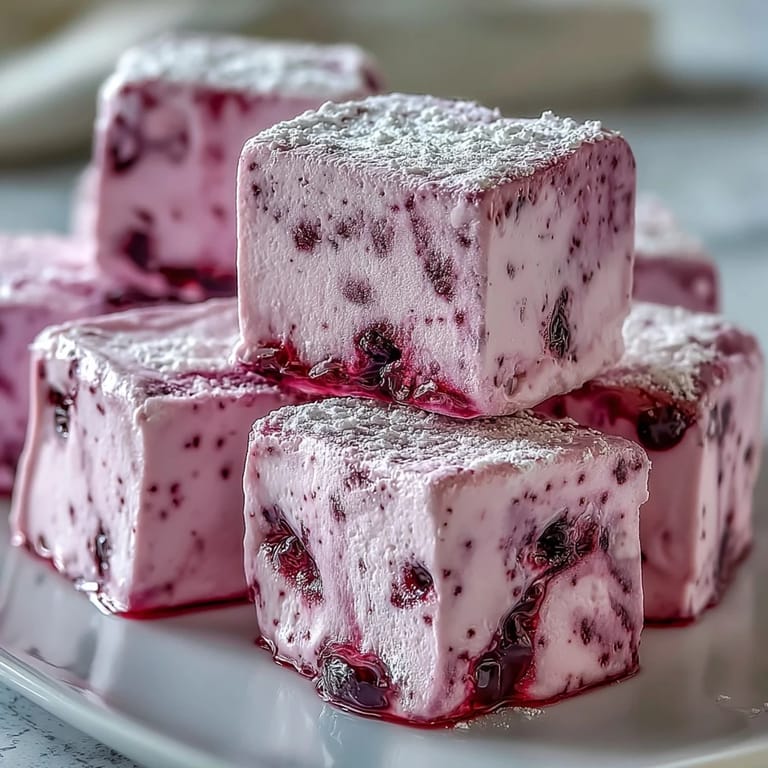
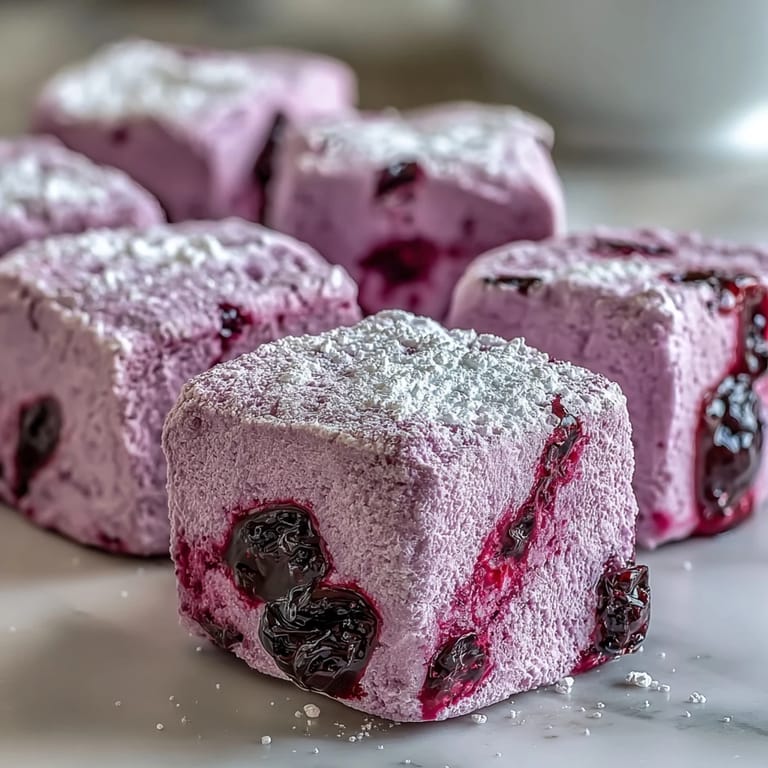
Save I stumbled onto making black currant marshmallows on a gray afternoon when a friend dropped off a bag of frozen berries she couldn't use. The deep purple color caught my eye, and I wondered what would happen if I took that tartness and turned it into something cloud-soft. That first batch was chaos—my mixer nearly walked off the counter—but biting into one of those pillowy squares felt like discovering something I didn't know I was missing.
My sister brought her kids over on a rainy weekend, and I handed them each a marshmallow still dusted with the sugar-cornstarch mixture. The way their eyes lit up when they tasted the fruity flavor instead of vanilla was worth every minute of standing at the stove. They called them purple fluff, and now that's the only name that sticks.
Ingredients
- Blackcurrant Purée (2/3 cup): Use fresh or frozen berries blended smooth, then strained to remove any seeds—this gives you that jewel-toned flavor without grittiness.
- Powdered Unflavored Gelatin (3 packets): This is what creates the structure and fluffiness; don't skip the blooming step or your marshmallows will be dense.
- Granulated Sugar (1 1/2 cups): Combined with corn syrup, this creates the candy-like sweetness that balances the tartness perfectly.
- Light Corn Syrup (1/2 cup): This prevents crystallization and keeps the marshmallows silky; it's non-negotiable for texture.
- Confectioners Sugar and Cornstarch (1/2 cup and 1/4 cup): The dusting mixture prevents sticking and adds a subtle sweetness to each bite.
- Vanilla Extract (1 tsp): A small amount ties everything together without overpowering the blackcurrant character.
- Salt (1/4 tsp): Just enough to heighten the berry flavor and prevent the sweetness from becoming cloying.
Tired of Takeout? 🥡
Get 10 meals you can make faster than delivery arrives. Seriously.
One email. No spam. Unsubscribe anytime.
Instructions
- Prepare Your Pan:
- Line your 8x8 baking pan with parchment paper and dust it generously with the confectioners sugar and cornstarch mixture—this prevents your marshmallows from sticking and creates a nice texture on the bottom edges.
- Concentrate the Blackcurrant:
- Simmer the purée with water and sugar for 4 to 5 minutes until it darkens slightly and thickens. You'll notice the flavor becomes more intense; let it cool completely before moving forward.
- Bloom the Gelatin:
- Sprinkle gelatin over cold water in your mixer bowl and let it sit untouched for 10 minutes. This allows the gelatin to fully hydrate, which is crucial for proper whipping.
- Make the Syrup:
- In a saucepan, combine sugar, corn syrup, and water, then heat without stirring once the sugar dissolves. Watch your candy thermometer carefully—240°F is the soft-ball stage, and hitting this temperature gives you the right structure.
- Whip to Clouds:
- Pour the hot syrup slowly into the bloomed gelatin while the mixer runs on low, then crank to high speed for 6 to 8 minutes. You'll watch it transform from a thin liquid into something thick, glossy, and tripled in volume—this is the magic moment.
- Add the Berry Character:
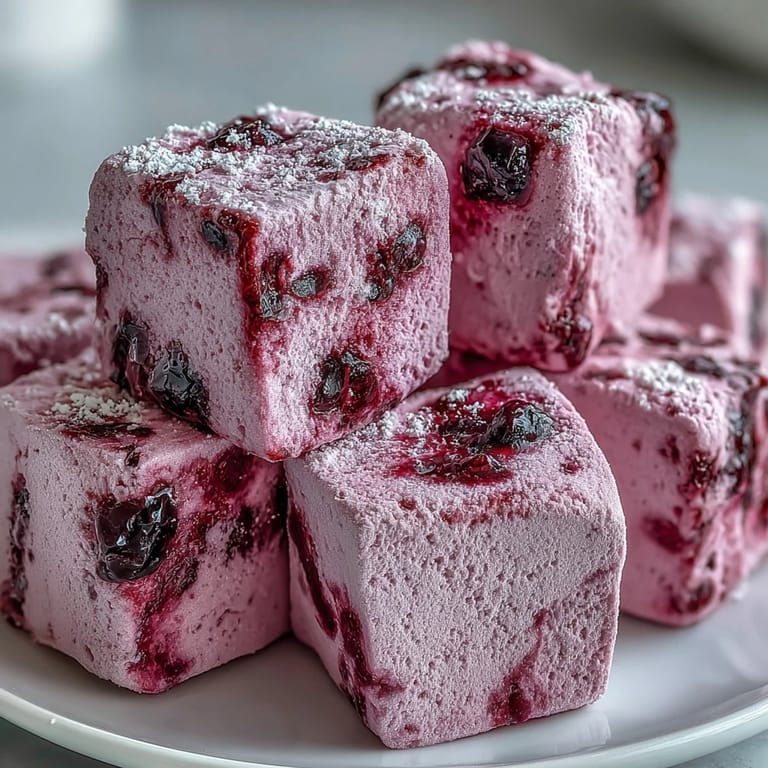
- Once the mixture is fluffy, add salt, vanilla, and your cooled blackcurrant purée, whipping for another 1 to 2 minutes until it's a soft lavender color and fully incorporated.
- Set and Rest:
- Pour immediately into your prepared pan, smooth the top, and dust generously with the sugar-cornstarch mixture. Let it sit uncovered at room temperature for at least 4 hours until completely firm.
- Cut with Confidence:
- Turn the slab onto a cutting board, peel away the parchment, dust all sides, and cut into squares using a sharp knife dipped in the sugar-cornstarch mixture. Clean your knife between cuts for neat edges.
 Save
Save There's something almost meditative about this recipe—the way you watch a simple mixture transform into something airy and impossibly light. I've made these dozens of times now, and each batch still feels like a small kitchen victory.
Flavor Variations That Work
Blackcurrant is special because of that tartness, but this method works beautifully with other fruit purées. I've tried blackberry, which gives you deep earthiness, and raspberry, which brings brightness without the punch. Cherry adds a completely different vibe—more sophisticated, almost floral. The key is that your purée should be strained and concentrated; watery fruit will mess with your setting time.
Why Temperature Matters So Much
The first time I didn't use a candy thermometer, my marshmallows turned out grainy instead of smooth. That 240°F mark is where the sugar syrup reaches soft-ball stage, which gives gelatin something to grip onto and create structure. Too hot and your mixture seizes; too cool and you get something more like divinity candy. Once I understood this, every batch became consistent.
Storage and Serving Suggestions
These marshmallows last about a week in an airtight container, though they rarely make it that long in my house. The dusting stays crispy on the outside while the inside stays pillowy, and they're perfect thrown into hot cocoa, paired with dark chocolate, or just eaten straight from the container on a quiet morning. I've also sandwiched them between two dark chocolate wafers for something genuinely special.
- Store in an airtight container with parchment between layers to prevent clumping.
- If they get slightly tacky after a few days, dust them again with the sugar-cornstarch mixture.
- Bring them to room temperature before serving so they taste at their fluffiest and most vibrant.
 Save
Save These marshmallows remind me why I love cooking at home—the chance to take something simple and transform it into something unexpected and delightful. Make a batch, and you might just find yourself making them again and again.
Recipe FAQs
- → Why must the sugar syrup reach 240°F?
The sugar syrup needs to reach 240°F (115°C) to achieve the proper concentration. This temperature ensures the marshmallows set correctly with the right texture—too low and they'll be sticky, too high and they'll become hard.
- → Can I use frozen blackcurrants instead of fresh?
Absolutely. Frozen blackcurrants work perfectly when blended and strained into purée. Thaw them first, then purée and strain to remove seeds before cooking with the sugar and water.
- → What's the purpose of blooming the gelatin?
Blooming allows gelatin granules to absorb water and soften evenly. This ensures smooth incorporation into the hot syrup and prevents lumpy texture in your finished marshmallows.
- → How long do these marshmallows stay fresh?
Stored in an airtight container at room temperature, these marshmallows keep well for up to one week. Avoid refrigerating as the moisture can make them sticky and cause them to weep.
- → Can I make these without a stand mixer?
While a stand mixer makes the process easier, you can use a hand mixer with similar results. Just expect a longer whipping time—8-12 minutes—to achieve the same fluffy, tripled volume.
- → Why dust with cornstarch and confectioners sugar?
The cornstarch-sugar mixture prevents marshmallows from sticking to the pan, knife, or each other. Cornstarch absorbs moisture while sugar provides sweetness and a smooth coating.