 Save
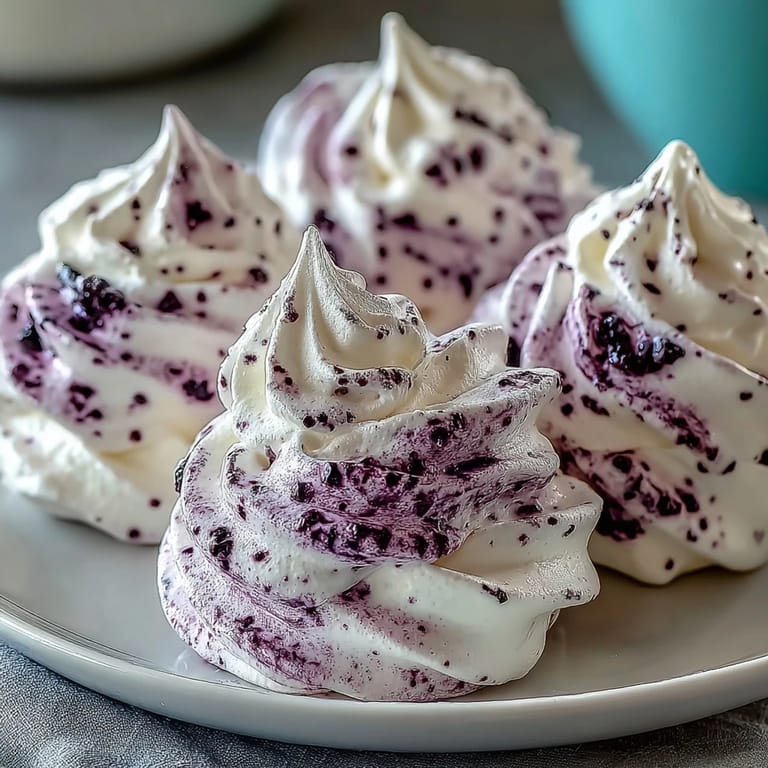
Save There's something almost magical about watching egg whites transform into clouds of meringue, and I discovered that magic on a gray afternoon when a friend brought over a jar of blackcurrant powder she'd found at a specialty market. We were standing in my kitchen, coffee getting cold, when she asked if I'd ever tried swirling it into meringues. I hadn't, but within the hour we were piping little purple-veined peaks onto parchment paper, giddy at how the tart powder seemed to dance through the glossy white mixture. These meringues became our secret weapon at dinner parties ever since.
I made these once for my sister's book club, and one woman came back three weeks later asking for the recipe because she'd been craving them. She said the tartness reminded her of walking through a European farmers market, which felt like the highest compliment I could get.
Ingredients
- Egg whites (4 large, at room temperature): Room temperature eggs whip up faster and create more volume—take them out of the fridge 15 minutes before you start, and your meringues will be noticeably airier.
- Superfine sugar (1 cup or 200 g): This dissolves more readily than regular sugar, which means less grainy texture in the final meringue; if you only have granulated, pulse it in a food processor for a minute.
- Cream of tartar (1/4 tsp): This stabilizes the egg whites so they hold their peaks longer and don't weep or collapse—don't skip it.
- Salt (1/4 tsp): A small pinch brightens the sweetness and deepens the flavor in ways you won't consciously detect but will definitely taste.
- Blackcurrant powder (2 tbsp freeze-dried, finely ground): The freeze-dried version is tart and intense; look for it online or at specialty markets, and make sure it's finely ground so it swirls smoothly without little grainy bits.
- Lemon juice (1 tsp, optional): This enhances the natural tartness of the blackcurrant and prevents the meringues from tasting too one-dimensionally sweet.
Tired of Takeout? 🥡
Get 10 meals you can make faster than delivery arrives. Seriously.
One email. No spam. Unsubscribe anytime.
Instructions
- Set your stage:
- Preheat the oven to 225°F (110°C) and line two baking sheets with parchment paper. A low, slow oven is key here—it dries out the meringues rather than baking them quickly, which would leave them gummy inside.
- Start whipping:
- In a clean, dry bowl (any moisture will sabotage your meringue), whisk the egg whites and cream of tartar on medium speed until they're foamy and frothy. This usually takes about two minutes, and you'll hear the mixer change pitch as it works through the whites.
- Add sugar slowly:
- Once foamy, add the superfine sugar one tablespoon at a time, whisking continuously. Patience here pays off—rushing this step means the sugar won't fully dissolve, and you'll end up with grainy meringues that feel sandy on your tongue.
- Reach stiff peaks:
- Keep whisking until the mixture forms stiff, glossy peaks that point straight up when you lift the whisk. This is the moment where the egg whites transform from liquid to cloud, and it feels like pure alchemy.
- Finish with flavor:
- Add the salt and lemon juice (if using), and whisk for 10 more seconds to incorporate. The meringue will stay stiff and glossy—don't overmix or it will start to break down.
- Swirl in the color:
- Gently fold in 1 tablespoon of the blackcurrant powder using a spatula, making long, slow strokes from the bottom of the bowl to the top. You want loose swirls throughout, not a uniform color—stop folding once the powder is partially incorporated so you get those beautiful purple veins.
- Pipe or scoop:
- Using a spoon or piping bag, scoop or pipe the meringues onto the prepared trays, spacing them about 1 inch apart. If you're using a piping bag, hold it at a 90-degree angle and squeeze gently until a little mound forms, then pull away with a quick motion.
- Dust the tops:
- Sprinkle the remaining blackcurrant powder over the tops of each meringue for extra color and flavor. This makes them look almost jewel-like, and the powder gets slightly more concentrated at the peak.
- Bake low and slow:
- Bake for 1 hour 30 minutes at that gentle 225°F temperature. The meringues are ready when they're crisp on the outside and lift easily from the parchment with no resistance—they should feel light as paper when you touch them.
- Cool in the oven:
- Turn off the oven and crack the door open a few inches, then let the meringues sit inside for at least 1 hour. This gradual cooling prevents them from cracking or becoming chewy, and the residual heat continues to dry them out gently.
- Store properly:
- Once completely cooled, transfer them to an airtight container to keep them crisp. They'll stay fresh for up to two weeks, though they rarely last that long.
 Save
Save The moment these meringues became part of my regular rotation was when my nephew, who's usually skeptical about anything fancy, grabbed a handful and asked if I made them myself. Seeing his face light up at something so delicate and simple reminded me that the best recipes are the ones that make people happy without pretension.
The Blackcurrant Advantage
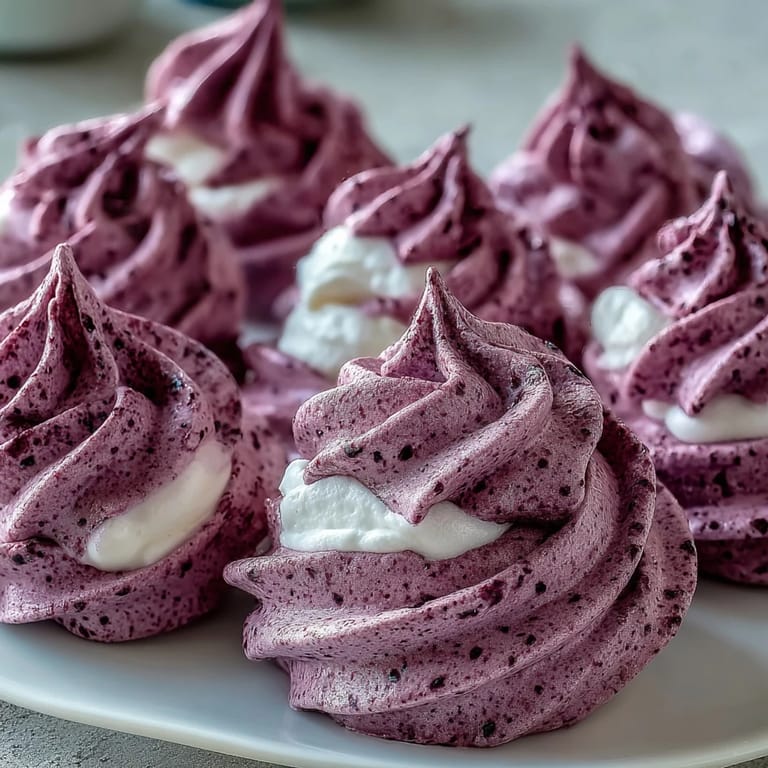
Blackcurrant powder is tart in a way that balances the pure sweetness of meringue, creating a flavor profile that's sophisticated without being complicated. The freeze-dried version holds its flavor beautifully through the baking process, unlike fresh blackcurrant juice which would weep and create wet patches. If you can't find blackcurrant powder, raspberry or blueberry work wonderfully as substitutes, though blackcurrant's slight earthiness is what makes these feel special.
Why Low Heat Matters
I learned this the hard way on my first attempt, when I turned the oven up to 300°F thinking it would speed things up. The meringues baked in 20 minutes but were brown on the outside and sticky inside—a complete disaster. The low temperature at 225°F is what creates that signature texture: crisp, delicate, and dry all the way through, with no gummy center lurking underneath.
Serving & Pairing Ideas
These meringues shine on their own as an afternoon treat with tea or coffee, but they're also elegant enough for special occasions. For a showstopper dessert, serve them alongside whipped cream and fresh berries—the tartness of the meringue plays beautifully against creamy, sweet accompaniments. They work as a palate cleanser after a heavy meal, or crushed into cream for an impromptu dessert when guests drop by.
- Pair with fresh raspberries, blueberries, or even sliced strawberries for a fruit-forward presentation.
- Dust with a tiny pinch of extra blackcurrant powder right before serving for an intense burst of flavor.
- Make them ahead for parties—they're actually better a day or two old, after they've fully crisped up.
 Save
Save These little meringues remind me that some of the best kitchen discoveries come from friends, accidents, and the willingness to try something unexpected. They're uncomplicated but feel indulgent, which is exactly what dessert should be.
Recipe FAQs
- → What makes these meringues different from regular ones?
The addition of freeze-dried blackcurrant powder creates striking purple marble patterns and adds an intense tart fruit flavor that cuts through the sweetness. The natural powder also provides beautiful color without artificial food dyes.
- → Why must meringues cool in the oven?
Cooling inside the turned-off oven prevents rapid temperature changes that could cause the delicate structure to crack or collapse. This gradual drying process ensures the crisp texture develops properly while maintaining the airy interior.
- → Can I use fresh blackcurrants instead of powder?
Fresh berries contain too much moisture and would cause the meringue to collapse. Only freeze-dried, finely ground powder works because it delivers concentrated flavor without adding liquid that would deflate the egg white foam.
- → How do I know when meringues are done baking?
Properly dried meringues will lift easily from the parchment paper without sticking and sound hollow when tapped underneath. They should feel dry to the touch, not sticky or soft, though the interior remains slightly chewy.
- → What's the purpose of cream of tartar?
Cream of tartar stabilizes the egg white foam, helping it reach greater volume and maintain structure during whipping. This acid also prevents the protein strands from over-tightening, resulting in smoother, glossier peaks.
- → How long do these meringues stay fresh?
Stored in an airtight container at room temperature, these meringues maintain their crisp texture for up to three weeks. Avoid refrigerating them, as humidity from the fridge can make them lose their signature crunch.