 Save
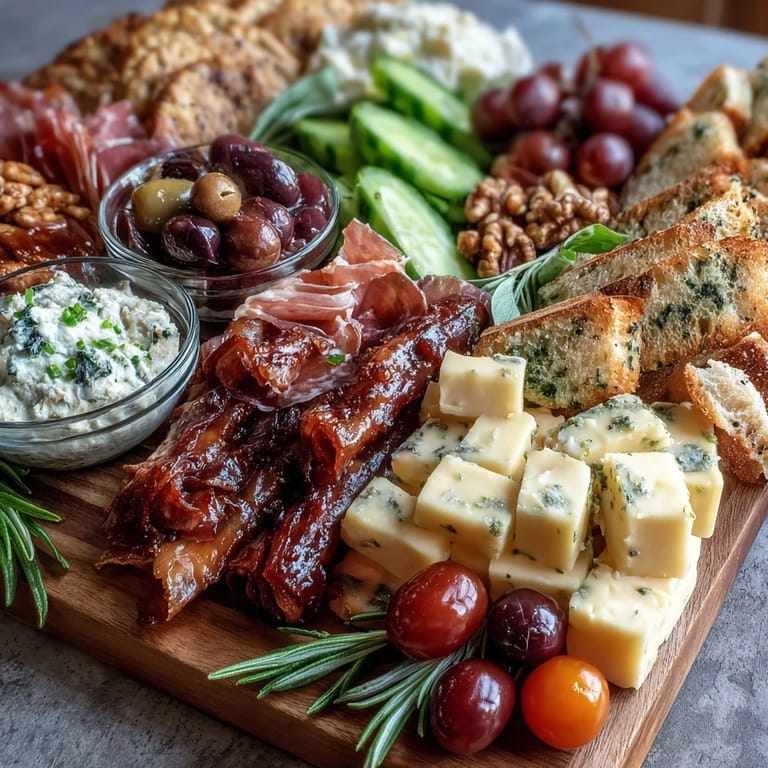
Save My neighbor knocked on my door with a bottle of wine and a knowing smile—she'd watched the moving trucks leave our driveway an hour earlier. I hadn't even unpacked the kitchen yet, but she was already pulling out a wooden board from her car, promising that the best way to christen a new home wasn't with a fancy meal but with something simple: a board so beautiful and abundant that people couldn't help but linger. That evening, surrounded by boxes and new faces, I understood what she meant.
That housewarming night taught me something I'd never forget: a board like this becomes a conversation starter. Strangers leaned in, pointed at things, asked questions, and somehow ended up talking about their own first apartments and favorite cheeses. My partner kept refilling the grapes because apparently nobody expected fresh fruit to be the MVP, but there it was, disappearing faster than the prosciutto.
Ingredients
- Prosciutto (120 g): Buy it sliced thin and at the counter if you can—it tastes exponentially better than pre-packaged, and you can ask them to fold it loosely so it doesn't clump up on the board.
- Salami (120 g): Choose a variety you actually enjoy eating because you'll definitely sneak slices while arranging; I learned this by doing it every time.
- Smoked ham (120 g): This is your crowd-pleaser meat—familiar enough that even cautious eaters will try it.
- Chorizo slices (100 g): The one that adds color and a little spice; pre-sliced works fine here and saves you a step.
- Brie (150 g), sliced: Soft cheese that melts on crackers—let it sit at room temperature for ten minutes before serving so it's actually spreadable.
- Aged cheddar (150 g), cubed: Sharp and satisfying; the cubes make it easy for guests to grab without needing a knife.
- Gouda (120 g), sliced: Mild and slightly sweet, this bridges the gap between adventurous eaters and traditionalists.
- Blue cheese (100 g), crumbled: Not for everyone, but the people who love it will seek it out first; keep it in a small bowl so it doesn't crumble all over everything.
- Hummus (100 g): Store-bought is perfectly fine—this isn't the time to make it from scratch.
- Tzatziki (100 g): Cooling and herbaceous; it pairs beautifully with the vegetables and gives people something refreshing to balance the richness of the meats and cheeses.
- Roasted red pepper dip (100 g): Sweet and slightly smoky; this is the one that surprises people with how good it is.
- Assorted crackers (150 g): Mix water crackers, multigrain, and any interesting ones you find—variety keeps people reaching.
- Baguette, sliced (100 g): Slice it yourself no more than two hours before serving so it doesn't dry out, and toast it lightly if you have time.
- Breadsticks (100 g): These stand up nicely on the board and look architectural; grab the ones that come in interesting shapes.
- Red and green grapes (2 cups total): Wash and dry them completely so they don't make everything soggy; they add color and give non-meat eaters a refreshing bite.
- Cherry tomatoes (1 cup): These disappear fastest because they're sweet and don't feel like a vegetable obligation.
- Cucumber slices (1 cup): Cool and crisp; arrange them just before serving or they'll start releasing water.
- Red bell pepper, sliced (1): Beautiful color and naturally sweet—slice them into strips so they're easy to grab.
- Baby carrots (1 cup): The one vegetable everyone actually eats, no matter their dietary philosophy.
- Mixed nuts (½ cup): Almonds, cashews, and walnuts add crunch and feel indulgent; toast them lightly before the party if you want them to taste even better.
- Olives (½ cup), pitted: Green and black together create visual contrast; pitted is non-negotiable unless you enjoy watching people fumble at parties.
- Dried apricots (¼ cup): Sweet and chewy against all the savory elements; they're the secret that makes people say 'what is that?'
- Dried figs (¼ cup): Luxurious looking and naturally pair with cheese; they signal that this board had thought behind it.
- Fresh herbs for garnish (rosemary, thyme): A few sprigs tucked around the board look intentional and smell incredible—this costs you nothing but makes everything feel elevated.
Tired of Takeout? 🥡
Get 10 meals you can make faster than delivery arrives. Seriously.
One email. No spam. Unsubscribe anytime.
Instructions
- Fold your meats:
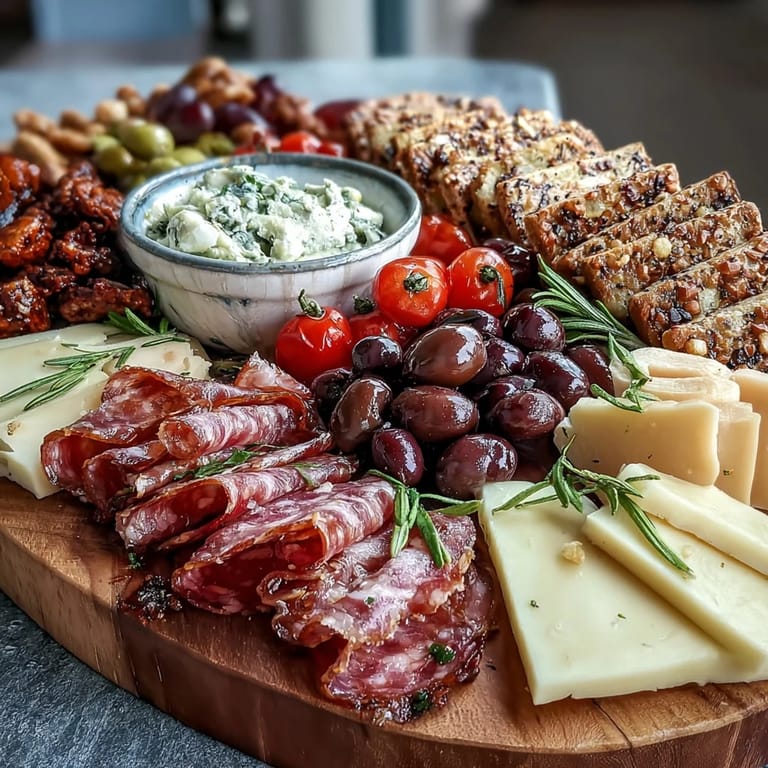
- Arrange the prosciutto, salami, smoked ham, and chorizo in loose folds or rolls directly on your board, leaving space between them so they don't stick together and so people can grab without destroying the whole pile. Think generous and slightly messy—too neat looks like a charcuterie board from a catalog, and those never taste as good.
- Position your cheeses strategically:
- Place the brie, cheddar, gouda, and blue cheese around the board with gaps between them, thinking about balance and color. I like to spread them in a loose circle or clustered groupings rather than a straight line, which feels more natural and easier for people to approach from different angles.
- Nestle the dips:
- Spoon your hummus, tzatziki, and roasted red pepper dip into small bowls and tuck them among the cheeses and meats—they become little oases of creaminess that people return to. Make sure there's space around each dip so guests can reach them without knocking over the entire board.
- Fan your crackers and breads:
- Arrange the crackers, baguette slices, and breadsticks in different sections or standing up at angles so they look abundant and are easy to grab. Don't hide them among other things; give them their own real estate so people know they're there.
- Fill the gaps with color:
- This is where the magic happens—scatter your grapes, cherry tomatoes, cucumber slices, bell pepper strips, and baby carrots throughout the board, using them to fill empty spaces and create pockets of brightness. The vegetables aren't just nutritional backup; they're the visual glue that makes everything feel intentional.
- Cluster your nuts and dried fruits:
- Scatter small handfuls of mixed nuts, olives, dried apricots, and figs throughout the board in loose groupings rather than spreading them uniformly. These little pockets of texture and flavor are what make people say 'I didn't expect that' in the best way possible.
- Add the finishing herbs:
- Tuck a few sprigs of fresh rosemary and thyme around the board—they add fragrance, visual interest, and a subtle reminder that this came from someone who cares. The herbs should look like happy accidents, not placed with architectural precision.
- Serve and replenish:
- Set everything out on the counter where people naturally gather, and keep an eye on what disappears first so you can add more of those items. The best boards are the ones that stay full and inviting throughout the party, never looking picked over.
 Save
Save Hours into that housewarming party, I noticed something I hadn't anticipated: people weren't just eating. They were building combinations, experimenting, asking each other what they'd discovered. Someone combined fig with gouda and announced it to the room like they'd invented something. This board had become less about appetizers and more about permission to play, to try things, to make small discoveries in someone's new kitchen.
Building Your Board: Layout Matters
The actual physical arrangement of a charcuterie board is surprisingly important, and I learned this by watching how people interact with it. If you pack everything too tightly, guests feel anxious about reaching for things and end up hovering rather than grazing. If you spread things too thin, it looks sparse and underwhelming. I've found that the sweet spot is filling about seventy percent of your board and leaving intentional negative space—it looks abundant without feeling chaotic, and it gives people room to move things around if they want to add their own discoveries.
The Cheese Game: What Actually Works Together
Not all cheese combinations are created equal, and I learned this the hard way by putting aged cheddar next to blue cheese and watching people's faces as they took bites. Now I think about contrast—pair a strong blue cheese with something mild like brie so people have options, and include at least one crowd-pleaser like gouda that bridges the gap between adventurous and cautious eaters. The real magic happens when you include one cheese that surprises people, something they didn't expect to be there.
Timing and Preparation: The Actual Timeline
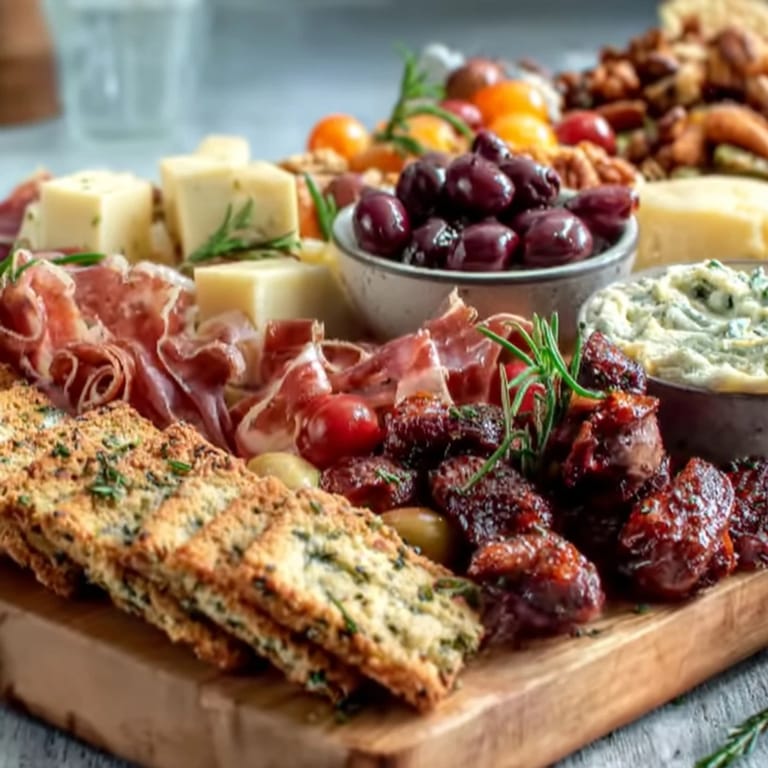
Build your board no more than two hours before your party starts, and do it in this order: meats first, then cheeses, then everything else. This prevents the meats from drying out or the cheeses from becoming too soft, and it gives you a good foundation to work with. If you're going earlier than two hours, store your components separately in the fridge and assemble right before guests arrive—your board will look fresher and more inviting, and nothing will have started sweating or oxidizing.
- Set out cheeses thirty minutes early to soften them to the perfect spreadable consistency.
- Slice vegetables and fruits as close to party time as possible so they stay crisp and don't release water into your board.
- Toast the baguette slices right before serving if you have time—warm bread and room-temperature cheese is a small detail that changes everything.
 Save
Save These boards have become my answer to the impossible question of what to bring when someone's starting over in a new place. They say 'welcome home' without needing words, and they create moments where strangers become friends over unexpected flavor combinations and shared discoveries. That's all a housewarming really needs.
Recipe FAQs
- → What cured meats work best on this board?
Prosciutto, salami, smoked ham, and chorizo slices provide a flavorful and varied selection.
- → Which cheeses complement the meats effectively?
A mix of brie, aged cheddar, gouda, and blue cheese offers a balance of creamy and sharp flavors.
- → What dips pair well with this assortment?
Hummus, tzatziki, and roasted red pepper dip add creamy texture and vibrant tastes to the board.
- → How can I accommodate gluten sensitivities?
Include gluten-free crackers or substitute bread options to ensure inclusivity.
- → What fresh produce enhances the presentation?
Grapes, cherry tomatoes, cucumber slices, red bell pepper, and baby carrots add color and freshness.
- → Are there simple ways to add sweetness to the board?
Adding honey or fig jam subtly enhances the cheese flavors with a touch of sweetness.