 Save
Save My uncle's kitchen in New Orleans always smelled like this—meat sizzling in cast iron while the holy trinity of onions, celery, and peppers softened into something golden and aromatic. He'd let me stand on a step stool to watch the rice tumble into the broth, and I remember thinking it looked like watching something come alive. Dirty rice became the dish I craved on cold evenings, the one that tasted like both comfort and adventure at the same time.
I made this for my partner's coworkers during a game night, worried they'd find it too spicy or too unfamiliar, and instead watched it disappear so fast someone joked there must be a secret ingredient I wasn't telling them. There wasn't—just honest cooking and letting the Cajun spices do their thing.
Ingredients
- Ground pork: The backbone of the dish, rendering fat as it browns to create that rich, savory base that makes everything else taste better.
- Ground beef or chicken livers: Beef adds depth, but traditional dirty rice uses livers for their iron and distinctive umami—go with your gut and what you can find.
- Onion, bell pepper, celery: The holy trinity of Cajun cooking, and you'll notice how they shift from raw and sharp to mellow and sweet as they soften in the meat's fat.
- Garlic: Mince it fine so it disappears into the whole dish rather than announcing itself.
- Long-grain white rice: Rinse it first to remove starch, otherwise you'll end up with gummy rice instead of separate, fluffy grains.
- Chicken broth: Use good broth if you can—it's the foundation of every grain's flavor.
- Cajun seasoning, thyme, smoked paprika: These three are non-negotiable; they're what make this taste like New Orleans and not just rice with meat.
- Salt, black pepper, cayenne: Taste as you go and adjust the heat to what makes you happy—cayenne is optional but welcome.
Tired of Takeout? 🥡
Get 10 meals you can make faster than delivery arrives. Seriously.
One email. No spam. Unsubscribe anytime.
Instructions
- Brown the meat:
- Heat oil in your skillet until it shimmers, then add the pork and beef together. Break it up with your spoon as it cooks, listening for that satisfying sizzle and watching for the color shift from pink to golden brown, about 6 to 7 minutes.
- Build the base:
- Toss in your chopped onion, bell pepper, celery, and garlic. You'll notice the vegetables release moisture and the pan will smell like somebody's grandmother's kitchen—let them soften for 5 minutes, stirring occasionally.
- Toast the spices:
- Sprinkle in the Cajun seasoning, thyme, smoked paprika, salt, pepper, and cayenne if you want it. Stir everything together so every piece of meat and vegetable gets coated, and let it sit for a moment so the spices bloom.
- Introduce the rice:
- Add your rinsed rice and stir it in, letting it toast for a minute or two so the grains get a slight edge of color. This small step prevents mushy rice later.
- Simmer until tender:
- Pour in the broth, bring it to a boil, then drop the heat to low, cover, and let it bubble gently for 20 to 22 minutes. Resist the urge to peek too much—you want steam to do its work.
- Rest and fluff:
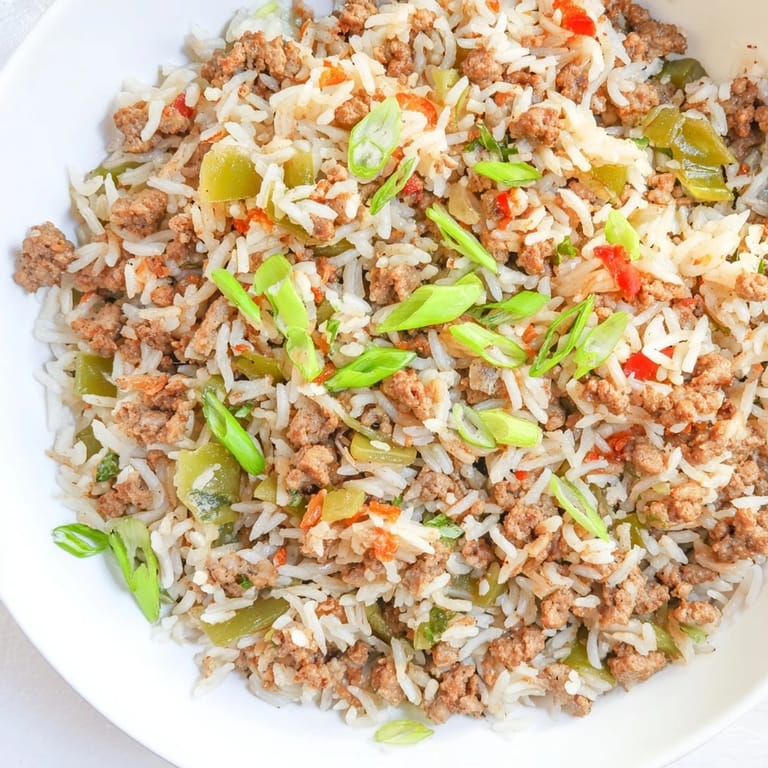
- Remove from heat and let it sit covered for 5 minutes. This gives the rice a chance to firm up slightly, then fluff it with a fork so each grain stays separate.
- Finish with spring onions:
- Scatter sliced spring onions over the top just before serving for brightness and a little raw bite that cuts through the richness.
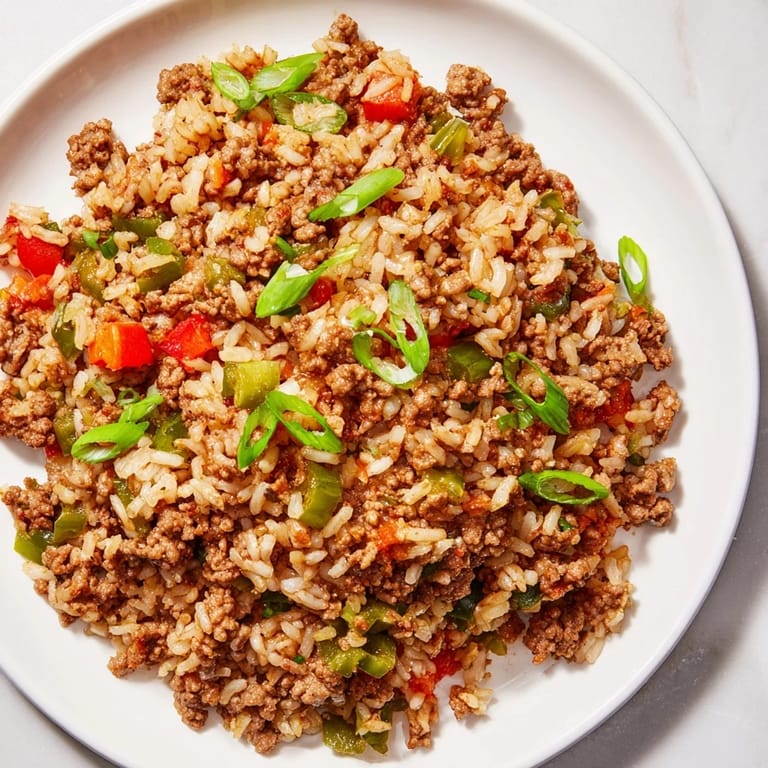 Save
Save This dish became something bigger the night my neighbor—who'd always been polite but distant—came over, took one bite, and asked for the recipe. We sat at the table talking until the food was gone, and I realized that sometimes the most powerful thing a meal can do is open a door.
When to Serve This
Dirty rice works beautifully as the centerpiece of a casual weeknight dinner, but it's equally at home at a gathering where you want something warming and unpretentious. I've made it for game nights, potlucks, and quiet evenings when I wanted something that felt special without being complicated. It also reheats beautifully—leftovers taste just as good the next day if you add a splash of broth and warm it gently on the stove.
Playing with Protein
The traditional version uses chicken livers, which add a deep, almost mineral quality to the dish if that's something you want to explore. Some cooks use only ground pork, some only beef, and both versions are completely valid. I've even made it with Italian sausage when that's what I had on hand, and the dish adapted beautifully—it's forgiving that way. Whatever protein you choose, the key is getting it well-browned first so you build that flavor foundation.
Heat Level and Seasoning Balance
Cajun seasoning varies wildly depending on the brand, so taste the dish as it comes together and adjust based on what you're tasting. If you like heat, cayenne is your friend, but add it gradually—a quarter teaspoon goes a long way. I've learned that smoked paprika is doing a lot of heavy lifting here, giving the whole dish its distinctive warmth and complexity.
- Start with less cayenne and add more at the table if someone wants extra punch.
- If your store-bought Cajun seasoning is very salty, reduce the additional salt slightly.
- Taste the broth before you pour it in; if it's already quite salty, your finished dish will be too.
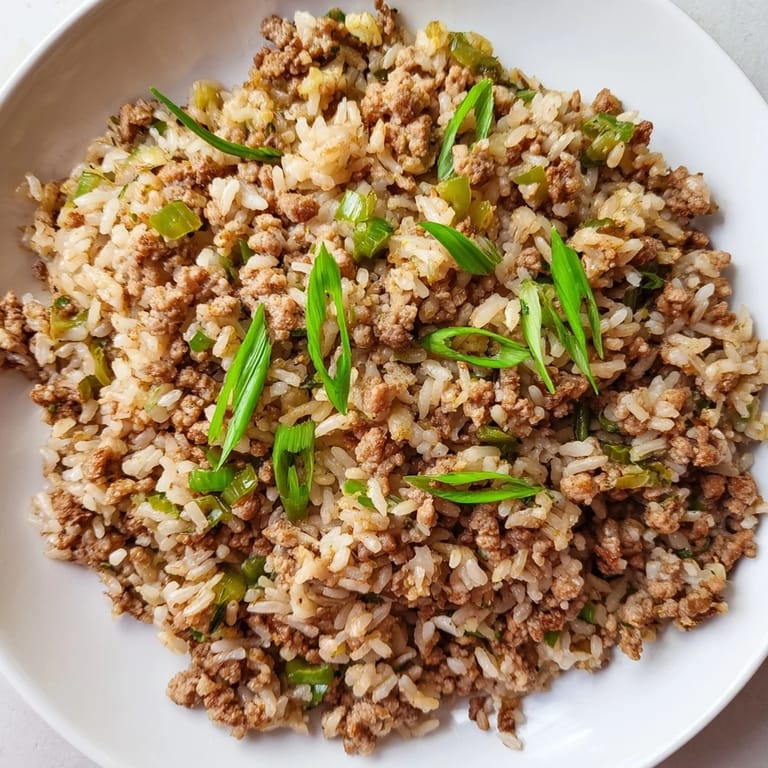 Save
Save This is the kind of dish that tastes like someone cares, even when you threw it together on a random Tuesday. Serve it hot, with hot sauce nearby for anyone who wants it, and watch it disappear.
Recipe FAQs
- → What meats are traditionally used in this dish?
Ground pork combined with either ground beef or chicken livers are common, with chicken livers offering a more traditional flavor.
- → Which vegetables enhance the dish's flavor?
Onion, green bell pepper, celery, and garlic provide a fragrant base, softening during sauté to enrich the overall taste.
- → How is the rice cooked for optimal texture?
Rice is rinsed and toasted lightly in the skillet before simmering in chicken broth to ensure tenderness and flavorful absorption.
- → What spices characterize the seasoning?
A blend of Cajun seasoning, thyme, smoked paprika, black pepper, and a hint of cayenne creates a robust, spicy profile.
- → How can I add extra freshness to the dish?
Adding chopped parsley as a garnish enhances brightness, while sliced spring onions provide a mild, fresh finish.