 Save
Save There's something about the smell of carnitas slow-cooking that makes a kitchen feel like home, even if you've only just arrived. I discovered this bowl on a lazy Sunday afternoon when I had a few hours to kill and a pork shoulder sitting in my fridge, practically begging for purpose. The combination of citrus, spices, and tender meat created this moment where I realized I didn't need a fancy restaurant to feel transported—just time, patience, and the right ingredients working together. What started as an experiment became the dish I now make whenever I want to impress people or simply remind myself why I love cooking in the first place.
I made this for friends on a Friday night when everyone was too tired to think about dinner, and watching them light up when they tasted the lime crema was pure magic. One friend asked if I'd added chocolate to the carnitas because of how deep and complex the flavors tasted—I hadn't, but her comment made me realize how the slow cooking and spice balance creates something that feels almost impossible in just a slow cooker. That night turned into one of those meals where people linger at the table, talking and laughing while the food becomes secondary to the moment, though nobody left without scraping their bowl clean.
Ingredients
- Pork shoulder (1.5 lbs): This cut has enough fat and connective tissue to become unbelievably tender when slow-cooked; trimming excess fat keeps it from becoming greasy, but don't remove it all or you'll lose flavor and moisture.
- Orange and lime juice: These citrus juices do double duty—they tenderize the meat while adding brightness that cuts through the richness, and the combination is more interesting than either alone.
- Spice blend (cumin, oregano, paprika, chili powder): Each spice layers differently; the cumin adds earthiness, oregano brings herbal notes, paprika gives subtle smoke, and chili powder ties everything together without overwhelming the dish.
- Long-grain white rice: This rice stays fluffy and doesn't clump, which means your bowl maintains different textures rather than becoming a mushy mess.
- Black beans: Rinsing canned beans removes excess sodium and starch, making them lighter and preventing that metallic aftertaste some people find off-putting.
- Lime crema: Sour cream mixed with fresh lime juice and zest creates a tangy contrast that brightens the entire bowl without being heavy.
Tired of Takeout? 🥡
Get 10 meals you can make faster than delivery arrives. Seriously.
One email. No spam. Unsubscribe anytime.
Instructions
- Build your flavor base:
- Combine the pork shoulder with all the seasonings, citrus juices, garlic, and onion in your slow cooker, making sure everything gets coated evenly. The onion and garlic will dissolve into the braising liquid, creating a silky sauce that the meat absorbs.
- Low and slow is the way:
- Cook on low for 7 to 8 hours if you have the time, or high for 3 to 4 hours—low is gentler and produces more tender results, but both work. You'll know it's ready when the meat shreds instantly with just a fork.
- Optional crisping moment:
- After shredding, if you want to add textural contrast, scatter the pork on a broiler pan and run it under high heat for 3 to 5 minutes until the edges turn golden and slightly crispy. This step isn't essential, but it transforms the dish from tender to textured.
- Rice that actually stays fluffy:
- Rinse the rice first to remove excess starch, then bring salted water to a boil before adding the rice, covering it, and reducing heat to low. After 15 minutes, resist the urge to stir—just let it sit covered for 5 more minutes before fluffing with a fork.
- Make the crema while everything cooks:
- Whisk sour cream, lime juice, lime zest, and salt together until completely smooth, then refrigerate it so it's cool and ready when you need it. The acid in the lime juice will thicken it slightly as it sits.
- Assemble with intention:
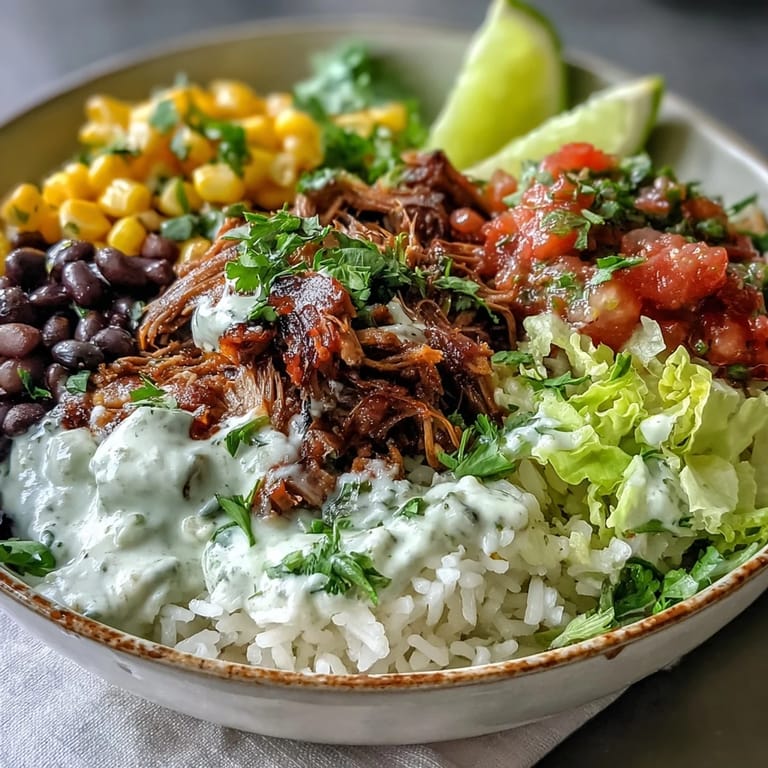
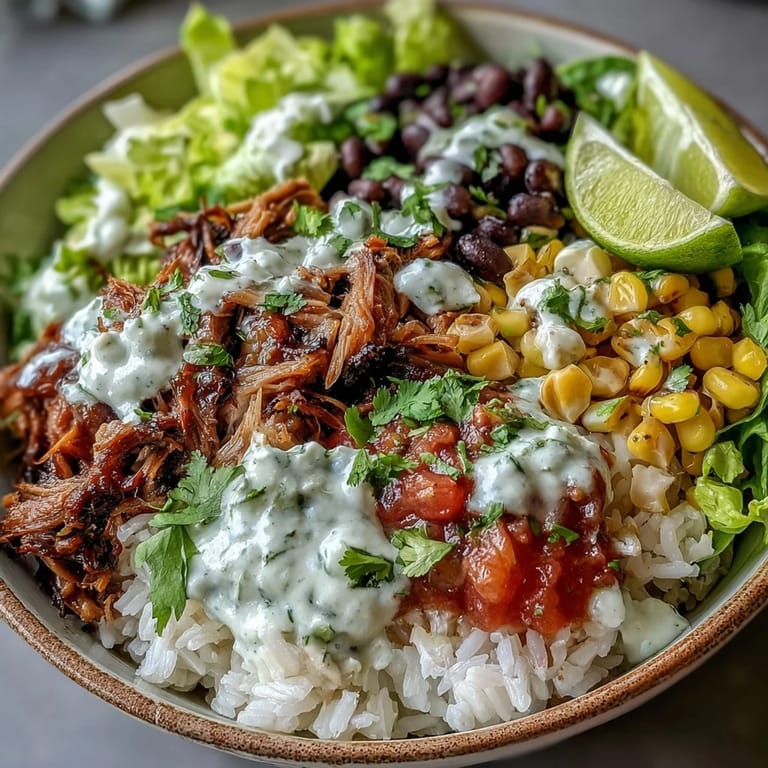
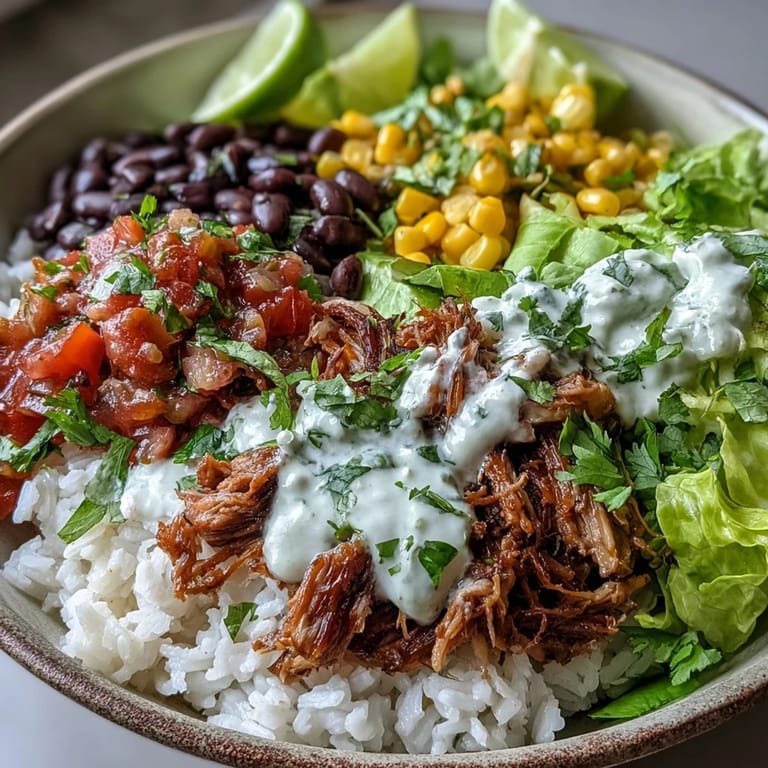
- Start with rice as your base, then arrange beans, corn, and lettuce around it, creating a rainbow of colors that makes the bowl visually exciting. Top with a generous handful of carnitas, drizzle the lime crema in a thin stream across everything, and finish with fresh cilantro and a lime wedge for brightness.
 Save
Save There was one evening when my partner and I ate these bowls sitting on the kitchen counter at midnight because we couldn't be bothered to move to the table, and somehow that made it taste even better. We talked about how simple food done well beats complicated recipes every single time, and this bowl became proof of that philosophy.
The Magic of Slow Cooking
Slow cooking isn't about laziness—it's about understanding that time transforms tough cuts into something sublime, and that patience in the kitchen teaches you things that rushing never will. The low, even heat breaks down the collagen in the pork shoulder, converting it into gelatin that makes every bite feel luxurious and rich. I learned this by accident the first time I made carnitas, and now I can't imagine making them any other way.
Building Flavor Through Layers
Each component of this bowl serves a purpose beyond just filling your stomach—the beans add earthiness, the corn brings subtle sweetness, the lettuce provides crunch, and the salsa adds acidity. Together, they create a complete experience where no single element overwhelms, and each bite tastes slightly different depending on the ratio of ingredients you grab. This is why I love bowls over tacos or burritos; you control the balance with every spoonful.
Customization Without Apology
One of the reasons this dish became my go-to is that it welcomes improvisation and never punishes you for it. I've made it with pickled red onions stacked on top, added creamy avocado slices, swapped the romaine for shredded cabbage, and even thrown in roasted peppers when they were on sale. The core—the carnitas, rice, and lime crema—stays solid, but everything else bends to your preferences and what's in your kitchen. Try adding sliced jalapeños for heat, or switch the sour cream to Greek yogurt if you want something lighter, or scatter toasted pumpkin seeds for crunch.
 Save
Save This bowl has become my answer to the question of what makes a meal feel special—not because it's difficult, but because it tastes like care and attention. Make it once and you'll understand why it keeps pulling you back into the kitchen.
Recipe FAQs
- → What cut of pork works best for carnitas?
Pork shoulder (also known as Boston butt) is ideal for carnitas. It has enough marbling and connective tissue to become tender and juicy during slow cooking, while still shredding beautifully.
- → Can I make carnitas ahead of time?
Absolutely. Carnitas actually taste better the next day as flavors develop. Cook and shred the pork, then refrigerate. Reheat in a skillet with a splash of oil to restore crispy edges before assembling bowls.
- → How do I get crispy carnitas?
After slow-cooking and shredding the pork, spread it on a baking sheet and broil for 3-5 minutes, or cook in a hot skillet with oil until edges are golden and slightly crisp. This step adds essential texture.
- → What toppings can I add to customize?
Sliced avocado, guacamole, pickled red onions, jalapeño slices, shredded cheese, or radishes all work beautifully. You can also swap rice for cauliflower rice or add different proteins.
- → Is this dish gluten-free?
Yes, this burrito bowl is naturally gluten-free when made with listed ingredients. Always check labels on packaged items like salsa and spices to ensure no gluten-containing additives.
- → Can I use a pressure cooker instead?
You can cook the pork in a pressure cooker for about 60-90 minutes until tender, then finish by crisping in a skillet or under the broiler. The texture will be similar with significantly less time.