 Save
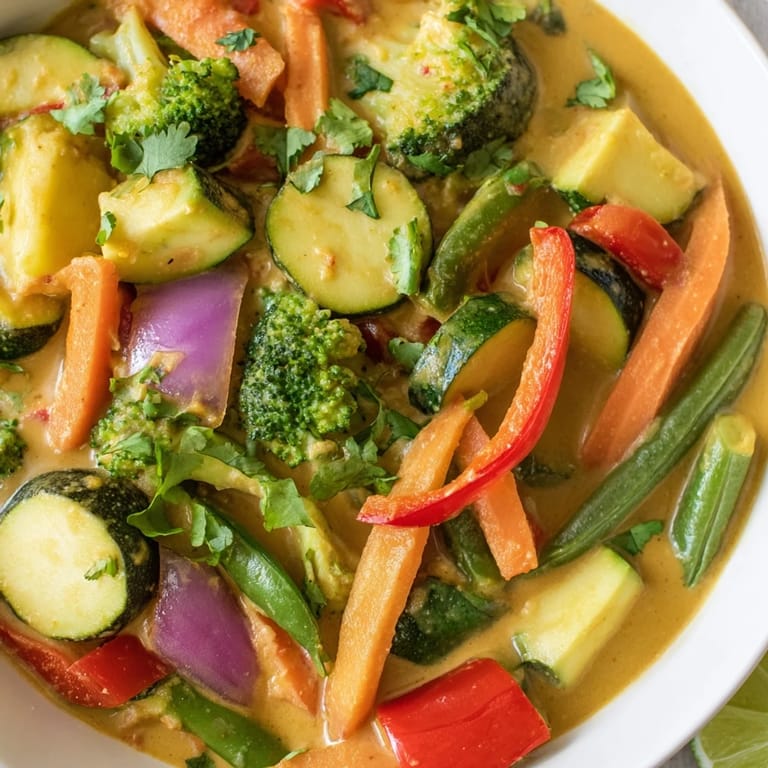
Save I stumbled onto this curry on a rainy Tuesday when my farmer's market haul threatened to wilt before I could use it. There was a half-head of broccoli, some sad bell peppers, and a carrot that had seen better days, but instead of tossing them, I remembered a can of coconut milk sitting in my pantry and thought, why not? That first pot bubbled quietly on the stove, filling my kitchen with such a warm, golden smell that my roommate actually came home early just to eat dinner with me.
The first time I made this for friends, someone asked if I'd studied Indian cooking professionally, and I nearly laughed while stirring—I was just playing around. But that moment of someone tasting it and closing their eyes, genuinely satisfied, made me realize how a few good spices and fresh vegetables could transform into something that feels both comforting and a little bit special.
Ingredients
- Red bell pepper and carrot: These two are your flavor foundation, adding natural sweetness that balances the spices beautifully.
- Broccoli and zucchini: They soak up the coconut sauce while keeping their own character, which is harder than it sounds.
- Snap peas: Add these toward the end so they stay snappy and don't turn to mush in the heat.
- Red onion: Goes in first to soften and build flavor, giving the curry its backbone.
- Coconut oil: Use the good stuff; cheap versions can taste waxy and weird.
- Garlic and ginger: Fresh is non-negotiable here—they're what make this smell like a real curry.
- Red curry paste, turmeric, cumin, and coriander: Toast these together briefly to wake up their flavors; it's the difference between okay and genuinely aromatic.
- Coconut milk: Full fat is essential; light versions turn the sauce thin and sad.
- Vegetable broth: Keeps things from getting too heavy while maintaining that creamy texture.
- Soy sauce or tamari: A tablespoon adds a quiet saltiness that ties everything together.
- Lime juice: The secret finale that brightens everything and makes people ask what your secret is.
Tired of Takeout? 🥡
Get 10 meals you can make faster than delivery arrives. Seriously.
One email. No spam. Unsubscribe anytime.
Instructions
- Start with aromatics:
- Heat coconut oil over medium heat and add sliced red onion, letting it soften for a couple of minutes. When it starts to turn translucent, you'll know the pan is ready for the next layer of flavor.
- Build the spice base:
- Stir in minced garlic and ginger, cooking for about a minute until your entire kitchen smells warm and spiced. Add the curry paste, turmeric, cumin, and coriander all at once, stirring constantly for just a minute—this releases their essential oils and prevents burning.
- Add the hearty vegetables:
- Toss in bell pepper, carrot, zucchini, and broccoli, stirring every so often for a few minutes so everything gets coated in that fragrant paste. The vegetables will start to glisten.
- Create the sauce:
- Pour in the coconut milk and vegetable broth, stirring gently until everything is submerged. Bring it to a soft simmer—you want it bubbling quietly, not aggressively.
- Finish with tenderness:
- Add snap peas and soy sauce, then cover and let it all simmer for ten to twelve minutes. You're aiming for vegetables that are tender but still hold their shape and color.
- Brighten and balance:
- Turn off the heat, squeeze in fresh lime juice, and taste as you go with salt and pepper. The lime brings everything into focus—it's the last puzzle piece.
- Plate and garnish:
- Serve it hot over rice or quinoa, scattered with fresh cilantro and lime wedges on the side for anyone who wants an extra zing.
 Save
Save There's something about serving a pot of curry that makes everyone at the table slow down and actually taste their food. Someone once told me it reminded them of traveling, even though we were sitting in my tiny kitchen—that's when I realized this dish does something more than fill a belly.
Why This Curry Hits Different
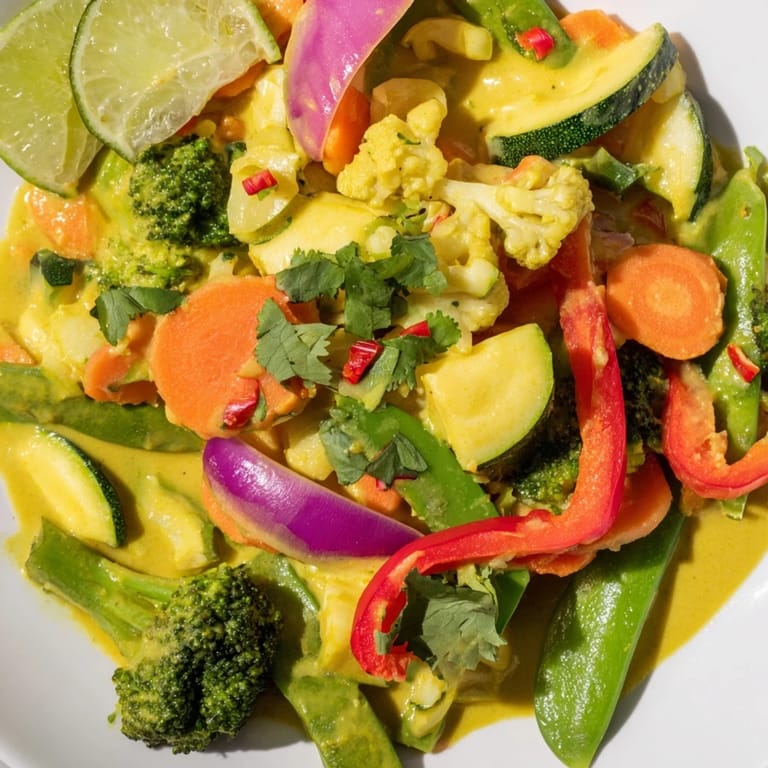
The magic here is in the balance—you've got creaminess from coconut milk, heat from the curry paste, earthiness from the spices, and brightness from lime juice all playing together. It's also remarkably forgiving, so even if you accidentally add an extra pinch of turmeric, it won't derail the whole thing. The vegetables stay colorful and crisp, which means it looks as good as it tastes.
How to Make It Your Own
This curry is a template more than a rigid rule, honestly. I've made it with whatever vegetables I had on hand—cauliflower, green beans, mushrooms, even sweet potato—and it works every single time. If you want protein, toss in some chickpeas or crumbled tofu in step six, and it becomes even more filling. For heat lovers, add more curry paste or a fresh chili at the beginning; for those who like it mild, use less paste and let the spices do the talking.
Storage and Serving Ideas
This curry actually tastes better the next day once the flavors have had time to get to know each other, so it's perfect for meal prep. Store it in an airtight container in the fridge for up to four days, or freeze it for a month and defrost when you need comfort food fast. Reheat it gently on the stovetop with a splash of water if it's gotten thick, and add fresh cilantro just before serving so it doesn't lose its brightness.
- Pair it with jasmine rice for something light or naan bread if you want something more substantial.
- A squeeze of extra lime juice right before eating lifts the whole dish.
- Make a double batch—trust me on this.
 Save
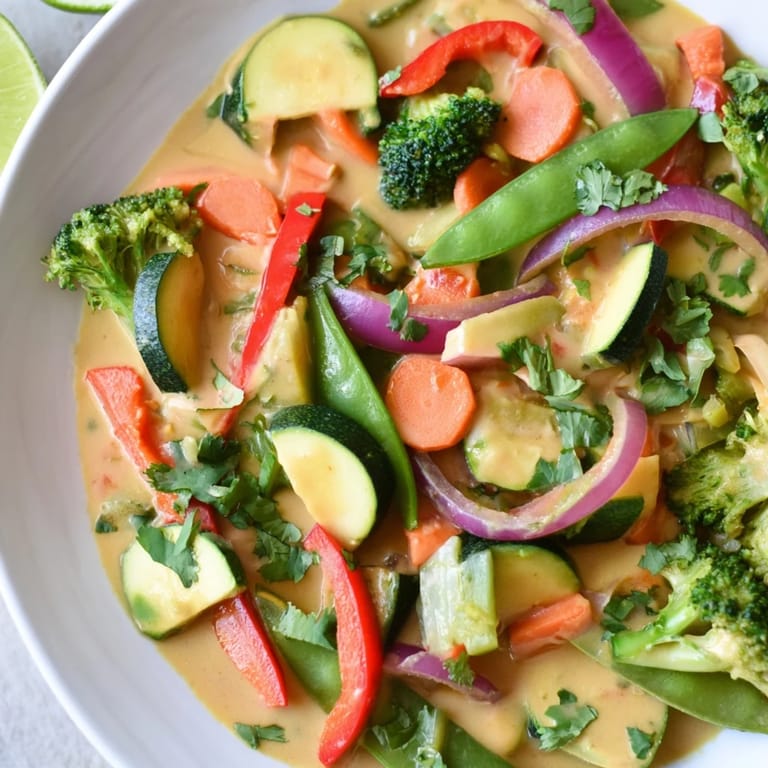
Save This curry has become the recipe I make when I want to cook something that feels special without any of the stress. It's the kind of dish that makes you feel generous and capable, even on nights when you're running on empty.
Recipe FAQs
- → What vegetables are best for this dish?
Bell pepper, carrot, zucchini, broccoli, snap peas, and red onion work beautifully, but cauliflower or green beans can be added for variety.
- → How can I adjust the spiciness?
Modify the amount of red curry paste to make the dish milder or spicier according to your preference.
- → Can I add protein to this dish?
Yes, adding chickpeas or tofu during simmering adds protein while complementing the flavors well.
- → What sides pair well with this curry?
Steamed jasmine rice, quinoa, or naan bread are excellent choices to accompany this flavorful dish.
- → How do I keep the vegetables tender yet vibrant?
Simmer vegetables gently and avoid overcooking so they retain their color and slight crunch.
- → Are there allergy considerations?
This dish contains soy through tamari or soy sauce and coconut milk; check ingredients if allergic or use substitutes.