 Save
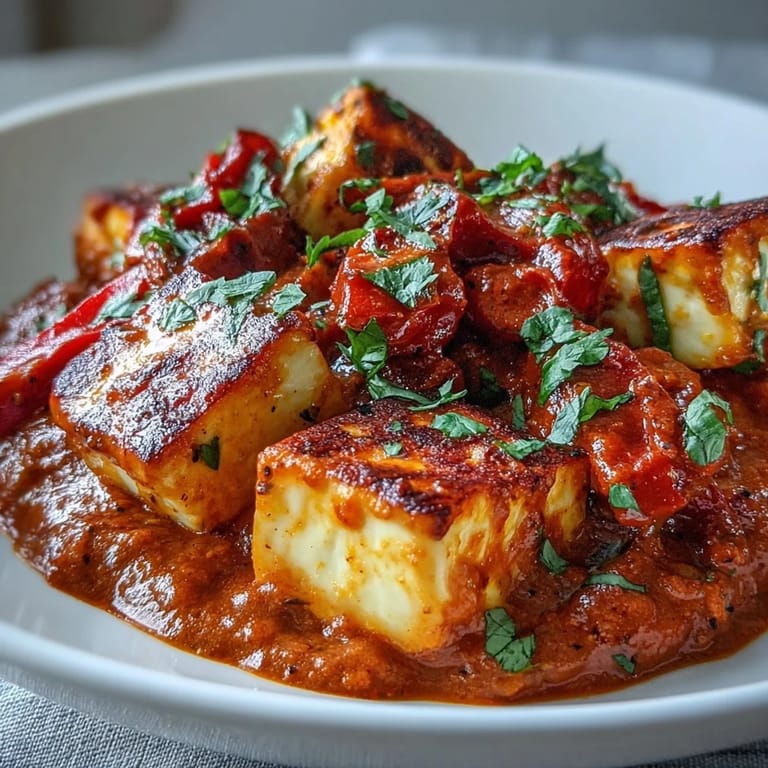
Save My neighbor knocked on the door one Thursday evening holding a block of halloumi and asked if I knew what to do with it. I didn't, but twenty minutes later we were standing over the stove watching golden cubes sizzle in a pan, and by the time the coconut milk hit the tomatoes, we both knew we'd stumbled onto something special. The curry smelled like comfort, tasted like a hug, and required no expertise whatsoever. It's been my go-to ever since when I want something impressive without the fuss. That halloumi, with its squeaky bite and ability to hold its shape, turned a simple weeknight into a small celebration.
I made this for my sister's family on a rainy Sunday, and her kids, who usually pick apart anything green or saucy, cleaned their plates without complaint. My brother-in-law asked for the recipe twice before he left. I think it was the combination of creamy sauce and those little golden cheese bites that won them over. There's something about the texture of halloumi that feels familiar, almost like chicken nuggets decided to go vegetarian and got a major upgrade.
Ingredients
- Halloumi cheese (400 g, cubed): This firm, salty cheese is the star here. It fries beautifully without melting into a puddle, and its slight squeak when you bite into it is part of the charm.
- Onion (1 medium, finely chopped): The base of the sauce. Cooking it until soft and translucent builds sweetness that balances the spices.
- Garlic (2 cloves, minced): Adds depth and that unmistakable savory note. Fresh is always better than jarred.
- Fresh ginger (2 cm piece, grated): Brings warmth and a slight zing. I learned to grate it on the fine side of a box grater to avoid fibrous bits.
- Red bell pepper (1, diced): Adds color, sweetness, and a little crunch. You can swap for yellow or orange if that's what you have.
- Canned chopped tomatoes (400 g): The backbone of the sauce. I prefer the canned kind for consistency and that rich, cooked-down flavor.
- Garam masala (1 tbsp): A warm, aromatic blend that does most of the heavy lifting. Buy a good quality one or make your own if you're feeling ambitious.
- Ground cumin (1 tsp): Earthy and essential. It smells like every curry I've ever loved.
- Ground coriander (1 tsp): Mild and citrusy, it rounds out the spice blend without overpowering.
- Turmeric (½ tsp): Gives the sauce that golden glow and a subtle earthiness.
- Chili powder (½ tsp): Adjust this to your comfort level. I keep it mild for mixed company.
- Paprika (½ tsp): Adds color and a gentle sweetness, not heat.
- Coconut milk (200 ml, full fat): This is what makes the sauce creamy and luxurious. Light coconut milk works, but you'll lose some richness.
- Tomato paste (2 tbsp): Concentrated tomato flavor that thickens and deepens the sauce.
- Vegetable oil (1 tbsp): For frying the halloumi and sautéing the aromatics. Neutral flavor is best.
- Fresh cilantro (chopped): Bright, herby, and the perfect finishing touch. Some people love it, some people don't. You do you.
- Lemon wedges: A squeeze of lemon at the end cuts through the richness and wakes everything up.
- Salt and black pepper: Essential for bringing all the flavors into focus.
Tired of Takeout? 🥡
Get 10 meals you can make faster than delivery arrives. Seriously.
One email. No spam. Unsubscribe anytime.
Instructions
- Fry the halloumi:
- Heat the oil in a large nonstick skillet over medium-high heat. Add the halloumi cubes and fry for 2 to 3 minutes per side until golden and slightly crispy. Remove and set aside on a plate.
- Cook the onion:
- In the same pan, reduce the heat to medium and add the chopped onion. Sauté for 3 to 4 minutes until soft and translucent, scraping up any browned bits from the halloumi.
- Add aromatics and pepper:
- Stir in the garlic, ginger, and red bell pepper. Cook for another 2 to 3 minutes until the kitchen smells amazing and the pepper starts to soften.
- Bloom the spices:
- Add the tomato paste, garam masala, cumin, coriander, turmeric, chili powder, and paprika. Cook for 1 minute, stirring constantly, until the spices are fragrant and the paste darkens slightly.
- Build the sauce:
- Pour in the canned tomatoes and coconut milk. Stir to combine, then season with salt and black pepper. Let it simmer for 8 to 10 minutes, stirring occasionally, until the sauce thickens and the flavors meld together.
- Add the halloumi back:
- Return the fried halloumi to the pan. Gently simmer for 5 minutes, allowing the cheese to soak up the curry flavors without falling apart.
- Taste and finish:
- Taste and adjust seasoning if needed. Garnish with fresh cilantro and serve with lemon wedges on the side for squeezing.
 Save
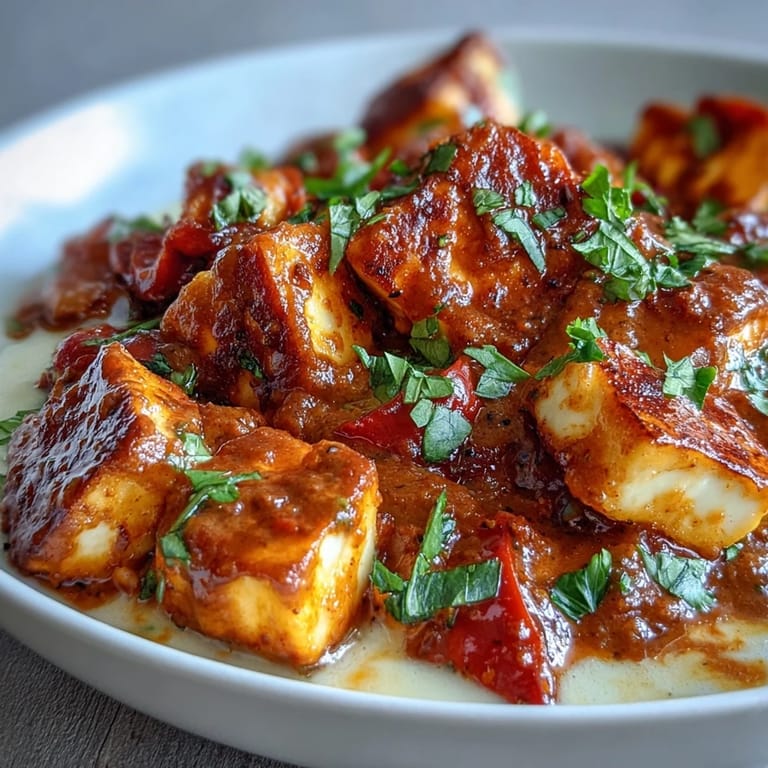
Save The first time I served this to friends, one of them said it reminded her of her favorite restaurant curry, but warmer somehow, like it had been made just for us. I think that's what homemade food does. It doesn't have to be fancy or authentic or perfect. It just has to taste like care, like you took the time to stand at the stove and stir something good into being.
Serving Suggestions
This curry begs to be scooped up with warm naan or spooned over a mound of fluffy basmati rice. I've also served it with flatbread, roti, or even a simple side of roasted vegetables when I want to keep things light. A cool cucumber raita or a dollop of plain yogurt on the side helps balance the richness and adds a refreshing contrast. If you're feeding a crowd, double the recipe and set out bowls of toppings like chopped cilantro, sliced green chilies, and extra lemon wedges so everyone can customize their plate.
Storage and Reheating
Leftovers keep beautifully in an airtight container in the fridge for up to three days. The halloumi will soften a bit as it sits in the sauce, but that's not a bad thing. It just becomes more tender and flavor-packed. Reheat gently on the stovetop over low heat, adding a splash of water or coconut milk if the sauce has thickened too much. I don't recommend freezing this one because halloumi can get a little grainy when thawed, but if you must, freeze the sauce separately and fry fresh halloumi when you're ready to eat.
Variations and Swaps
If you can't find halloumi, paneer is the closest substitute and will give you a more traditional Indian flavor. You could also use firm tofu, though it won't have that same salty, squeaky bite. For a spicier version, add a chopped green chili with the garlic and ginger, or stir in a spoonful of your favorite hot sauce at the end. If you want more vegetables, throw in some spinach, peas, or diced zucchini during the last few minutes of simmering.
- Swap red bell pepper for green or yellow depending on what's in your fridge.
- Use Greek yogurt instead of coconut milk for a tangy, lighter sauce.
- Add a pinch of sugar if your tomatoes are too acidic.
 Save
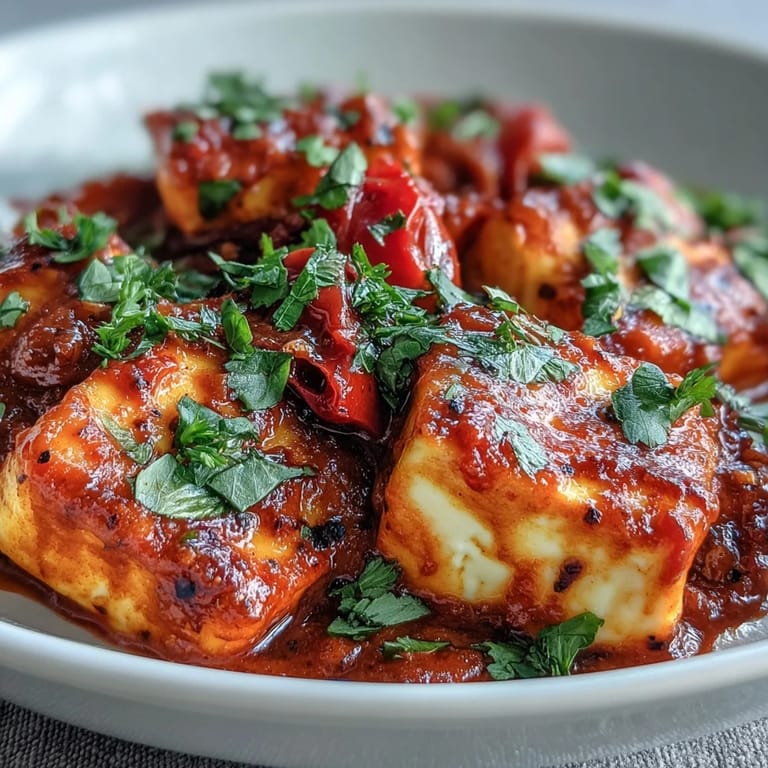
Save This curry has become one of those recipes I make without thinking, the kind that feels like muscle memory and tastes like home. I hope it does the same for you.
Recipe FAQs
- → Can I use paneer instead of halloumi?
Yes, paneer works beautifully as a substitute and provides a more traditional Indian flavor. It has a similar texture and will absorb the curry sauce wonderfully.
- → How can I make this curry spicier?
Add a chopped green chili with the aromatics, increase the chili powder to 1 teaspoon, or stir in cayenne pepper to taste. You can also serve with hot sauce on the side.
- → Can I prepare this dish ahead of time?
Yes, you can make the curry sauce in advance and refrigerate for up to 2 days. Fry the halloumi fresh before serving and simmer together for the best texture and flavor.
- → What should I serve with this curry?
Steamed basmati rice and warm naan bread are perfect accompaniments. You can also serve with roti, quinoa, or cauliflower rice for a lighter option.
- → Can I use light coconut milk instead of full-fat?
Yes, light coconut milk works but produces a thinner, less creamy sauce. For best results, use full-fat coconut milk or add a splash of heavy cream to light coconut milk.
- → How do I prevent the halloumi from becoming rubbery?
Fry the halloumi quickly over medium-high heat until golden, then remove from the pan. Only return it to the sauce for the final 5 minutes of simmering to keep it tender.