 Save
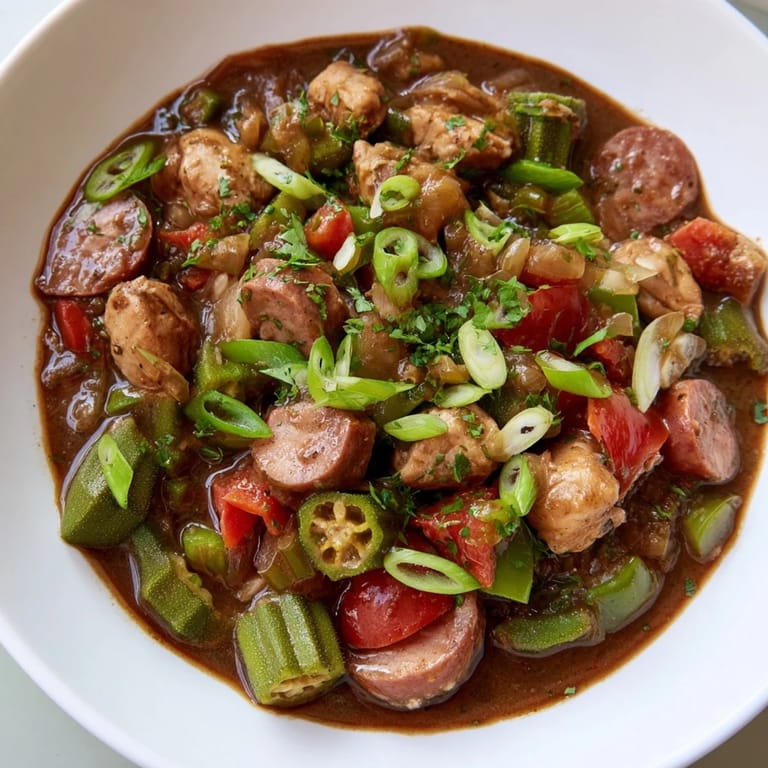
Save The first time I made gumbo, I wasn't trying to be authentic—I was just hungry and had a Dutch oven that had been sitting in the back of my cabinet. What started as following a recipe became an obsession with getting that roux the right shade of brown, watching it transform from pale sandy flour to something that smelled like toasted chestnuts and smoke. My kitchen filled with this rich, almost primal aroma, and I knew I'd found something special. Now, whenever I make it, that smell is the first sign that something good is about to happen.
I served this to my neighbor on a rainy evening without any warning—just knocked on her door with a ladle and a container. She'd been having a rough week, and watching her face light up when she tasted it reminded me that comfort food isn't really about the ingredients at all. It's about showing someone you care enough to spend an hour and a half stirring a pot.
Ingredients
- Boneless, skinless chicken thighs (350 g): Thighs stay tender and flavorful through long simmering, unlike breasts which can turn dry—this is non-negotiable for gumbo.
- Smoked andouille sausage (225 g): The smokiness layers into the broth and does half the seasoning work for you.
- Fresh or frozen okra (250 g): Okra is the traditional thickener; thaw frozen okra completely and pat it dry or it'll release too much moisture.
- The holy trinity: onion, bell pepper, celery (1 each, chopped): This combination is the backbone of every Louisiana dish—use equal-ish amounts and don't skip any.
- Garlic (3 cloves, minced): Add it after the softer vegetables so it doesn't burn and turn bitter.
- Tomatoes (2 fresh or 1 drained can): Fresh tomatoes in season are brighter, but canned work just as well if you drain them thoroughly.
- All-purpose flour (60 g) and vegetable oil (60 ml): This 1:1 ratio makes a roux that's forgiving to mix—equal parts by weight is the secret.
- Chicken stock (1.5 liters): Use homemade if you have it; store-bought works fine but taste before you add extra salt.
- Bay leaves, thyme, smoked paprika, cayenne (the aromatics): Smoked paprika adds depth without harsh heat—cayenne is your dial for spice level.
- Spring onions and parsley (for garnish): Fresh herbs at the end taste bright and cut through the richness.
- White rice and filé powder (optional): Rice is the traditional base; filé powder is ground sassafras and adds authentic flavor, but okra already thickens the gumbo.
Tired of Takeout? 🥡
Get 10 meals you can make faster than delivery arrives. Seriously.
One email. No spam. Unsubscribe anytime.
Instructions
- Make the roux, low and slow:
- Heat oil in your Dutch oven over medium heat, then whisk in flour until it's completely smooth. Stir constantly for 15–20 minutes—this is the part where patience matters most. You're watching it go from pale and sandy to peanut-butter colored to deep mahogany to nearly chocolate brown. The whole kitchen will smell toasted and almost nutty. Stop right before it looks black, or it'll taste burnt and bitter.
- Build flavor with the holy trinity:
- Add chopped onion, bell pepper, and celery all at once—they'll sizzle and release steam. Stir for 3–4 minutes until they soften and start sticking slightly to the bottom, then add minced garlic and cook one more minute until fragrant.
- Brown the proteins:
- Toss in the sliced andouille and chicken pieces and let them sit undisturbed for about two minutes so they get some color. Stir occasionally for the next 5 minutes, breaking up any pieces that stick together—you're not fully cooking them, just sealing in flavor.
- Add the okra and tomatoes:
- Stir in the okra and cook for 3–4 minutes—it'll release a subtle green smell and start releasing its thickening properties. Add the diced tomatoes and mix everything together so nothing sticks to the bottom.
- Pour in the stock and seasonings:
- Add all the chicken stock, bay leaves, thyme, paprika, cayenne, Worcestershire sauce, salt, and pepper. Bring everything to a rolling boil—this takes about 5–8 minutes and the steam will roll out of the pot. Once it boils, turn the heat down to low and let it simmer uncovered for 45–50 minutes, stirring every 15 minutes or so.
- Taste and adjust:
- Remove the bay leaves and taste carefully. If it needs more depth, that's often more salt or a dash more Worcestershire. If it needs more heat, add cayenne a pinch at a time. For extra thickness, sprinkle in filé powder off the heat and stir until it dissolves.
- Serve and garnish:
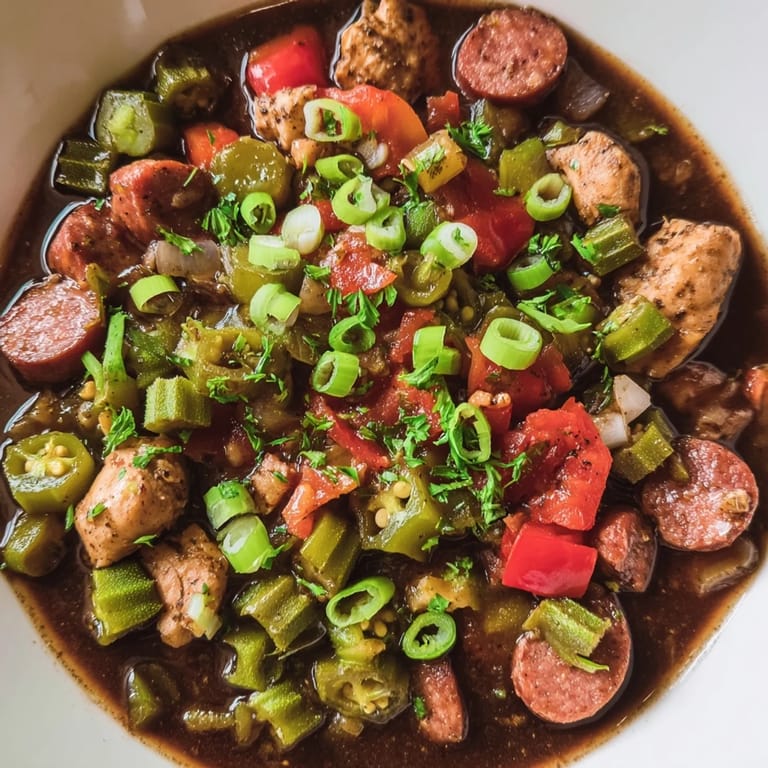
- Ladle the gumbo over hot white rice so the rice soaks up all the broth. Scatter spring onions and parsley on top, and let people add hot sauce to their own taste at the table.
 Save
Save There's a moment about halfway through cooking when you step back and realize you've made something that tastes like it came from a restaurant kitchen in New Orleans, even though you're standing in your own kitchen in regular clothes. That's the moment I understood why my grandmother would spend hours on dishes like this—it wasn't about impressing anyone, it was about the quiet satisfaction of creating something warm and complete from scratch.
Getting the Roux Right
The roux is where most people get nervous, but it's actually more forgiving than it seems. The key is medium heat and constant stirring—you're not trying to rush it. Watch the color change from pale to golden to caramel to that deep chocolate brown, and trust that your nose will tell you when it's ready. If you're making gumbo for the second time, you'll realize you probably made it perfectly the first time and just didn't trust yourself.
Why Okra Matters
Fresh okra in season is noticeably different from frozen, but either works—the texture might be slightly different, but the flavor profile stays true. If you're squeamish about okra's slimy quality, remember that it's not a flaw, it's the vegetable doing exactly what it's supposed to do. The slime is pectin, the same thing that thickens jam, and it's what makes gumbo silky instead of brothy.
Variations and Adaptations
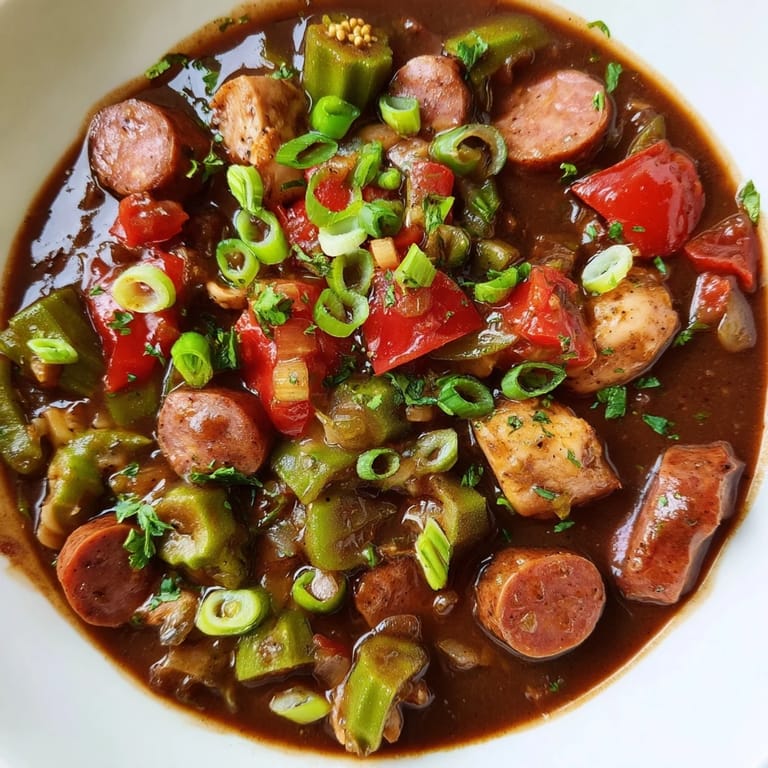
Once you understand the structure, gumbo becomes a template rather than a rigid recipe. Some people add shrimp in the last ten minutes for a mixed protein version, or swap in crab meat if they're near the coast. Others skip the meat entirely and build it around vegetables, or add okra earlier if they want a thicker consistency. The beauty is that the roux-and-trinity foundation stays solid no matter what you're adding to it.
- For a seafood version, add shrimp or crab during the last 10 minutes so they don't turn rubbery from overcooking.
- Filé powder sprinkled on the plate at the end adds authentic flavor without affecting the cooking process.
- Leftover gumbo often tastes even better the next day, and it freezes beautifully for up to three months.
 Save
Save This gumbo is the kind of dish that makes you feel like you've accomplished something real in the kitchen. Serve it to people who are hungry, and watch how it becomes the centerpiece of the meal, not just the food.
Recipe FAQs
- → What is the role of the roux in this dish?
The dark roux creates a rich, nutty base that thickens the broth and adds deep flavor, essential for authentic Louisiana gumbo.
- → Can I substitute the meats used here?
Yes, smoked andouille sausage can be replaced with any smoked sausage, and chicken thighs can be swapped with seafood like shrimp or crab for variation.
- → How do I handle frozen okra in this preparation?
Thaw and drain frozen okra before adding to prevent excess moisture, maintaining the stew's desired consistency.
- → What spices add heat and flavor to the broth?
Cayenne pepper and smoked paprika contribute warmth and smokiness, balanced by thyme and Worcestershire sauce for depth.
- → Is there an optional ingredient to thicken and flavor further?
Filé powder, made from sassafras leaves, can be added off heat to thicken the stew and impart a distinctive earthy flavor.
- → What are suitable serving suggestions for this dish?
Serve hot over cooked white rice and garnish with fresh spring onions and parsley. Crusty French bread pairs well for a complete meal.