 Save
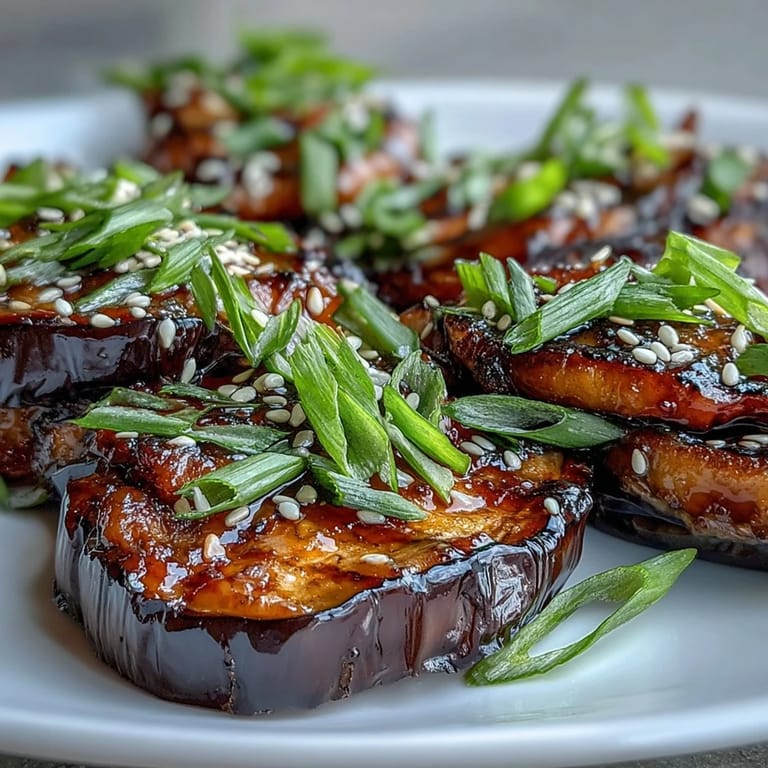
Save My neighbor handed me a Japanese eggplant from her garden one summer evening, still warm from the sun, and asked if I knew what to do with it. I didn't, not really, so I started experimenting with what I had in my pantry—white miso, a bottle of mirin tucked behind the soy sauce. The result was so unexpectedly silky and umami-rich that I've made this dish countless times since, always thinking of that generous gesture and how the best recipes often come from someone else's abundance.
I served this to a friend who was skeptical about eggplant, convinced he'd never like it no matter how it was prepared. He went back for seconds without saying a word, just raised his eyebrows at me with his mouth full, and I knew right then this recipe had converted him. Now it's the first thing he requests when he comes over, which always makes me smile because it proves that the right technique and flavoring can change someone's mind entirely.
Ingredients
- Japanese eggplants (2 medium): These are smaller and more tender than globe eggplants, with thinner skins and fewer seeds, so they don't require salting before cooking and finish silky rather than spongy.
- White miso paste (3 tbsp): This is milder and slightly sweeter than red miso, letting the delicate eggplant shine while providing that essential savory depth that makes people ask for the recipe.
- Mirin (1 tbsp): This sweet rice wine adds a subtle shine and gentle sweetness that balances the miso's saltiness and caramelizes beautifully under the broiler.
- Sake (1 tbsp): It cuts through richness and adds complexity to the glaze, though you can use water or more mirin if you don't have it on hand.
- Sugar (1 tbsp): This helps the glaze caramelize and bubble, creating those irresistible dark, sticky patches on top.
- Sesame oil (1 tbsp): Use it to brush the eggplant before roasting and in the glaze itself for that toasted, nutty note that whispers Japanese kitchen at every bite.
- Toasted sesame seeds (1 tbsp) and green onions (2, sliced): These aren't just garnish—they're the final flourish that adds textural contrast and a bright, fresh finish that cuts through the richness.
Tired of Takeout? 🥡
Get 10 meals you can make faster than delivery arrives. Seriously.
One email. No spam. Unsubscribe anytime.
Instructions
- Set your stage:
- Preheat your oven to 400°F (200°C) and line a baking sheet with parchment paper so nothing sticks and cleanup stays easy.
- Prepare the eggplants:
- Slice each eggplant in half lengthwise and score the flesh in a crosshatch pattern, cutting deep enough to let heat penetrate but not so deep you pierce the skin. This pattern helps the eggplant cook evenly and gives the glaze somewhere to cling.
- Oil and roast:
- Brush the cut sides lightly with sesame oil, place them cut-side up on your prepared sheet, and roast for 20–25 minutes until the flesh turns golden and yields easily to a fork. You'll smell the sesame getting toastier as it roasts, which is a good sign things are happening.
- Make the glaze while they cook:
- In a small bowl, whisk together the miso paste, mirin, sake, sugar, and remaining sesame oil until completely smooth—no lumps of miso hiding at the bottom. It should look like a thick, glossy paste that's ready to transform.
- Glaze and broil:
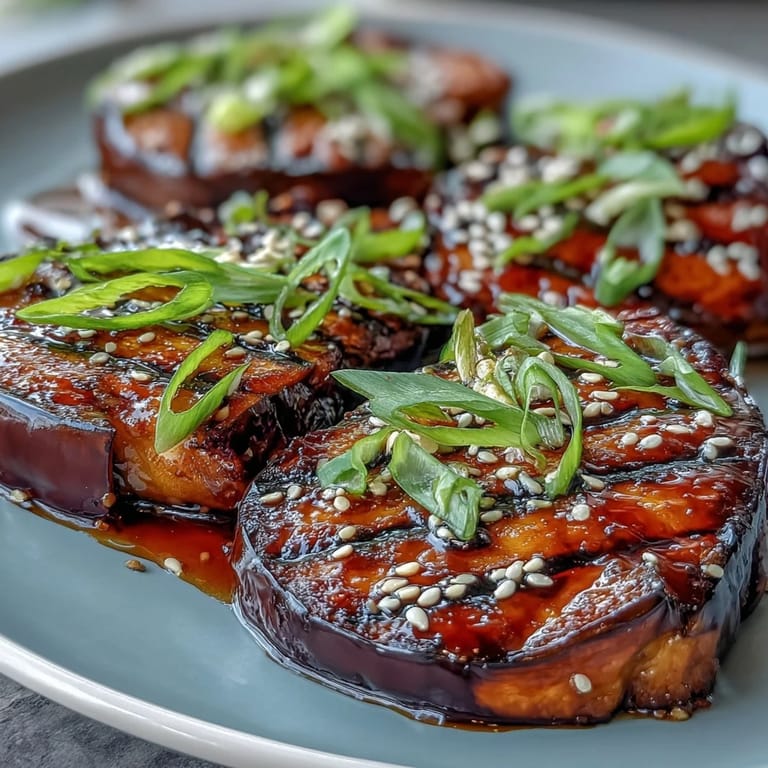
- Once the eggplants come out of the oven, spread a generous layer of miso glaze over each cut side, then switch your oven to broil and return them to the top rack. Watch closely for 2–3 minutes—the glaze will bubble and darken at the edges, creating caramelized pockets of intense flavor, but if you blink you might burn it.
- Finish with flourish:
- Remove from the broiler while the glaze still glistens, sprinkle with toasted sesame seeds and sliced green onions, and serve while everything is still warm and the textures are at their best.
 Save
Save There's a moment right after you pull these from the broiler when the kitchen fills with this incredible aroma—toasted sesame and caramelized miso mixing with soft eggplant—and you realize something humble has become something memorable. That's when it stops being just dinner and becomes the kind of food that makes people feel cared for.
Why Japanese Eggplant Matters Here
The first time I used a globe eggplant for this recipe thinking it wouldn't matter, I learned a hard lesson about why Japanese eggplants are specifically called for in Japanese cooking. They're bred to be tender, with thin skins and minimal seeds, so they surrender to heat gracefully instead of becoming mealy or spongy. Once you've had the silky, almost buttery texture that Japanese eggplants deliver, going back feels like settling, and you understand why your Japanese grandmother's recipes always specified exactly what to use.
The Glaze Is Everything
The magic of this dish lives entirely in the miso glaze and how it behaves under the broiler's heat. White miso is gentler than its darker cousins, providing umami without overpowering the delicate eggplant, while the mirin, sake, and sugar create a glaze that's complex enough to taste like it took hours but simple enough to whisk together while your eggplants roast. I've tried shortcuts like using store-bought sauces, and they never capture that balance of salty, sweet, and savory that feels perfectly calibrated when you mix it yourself from basic ingredients.
How to Make This Work for Your Table
This dish plays beautifully with both rice and other Japanese sides—I've served it alongside grilled chicken, with miso soup and pickled vegetables, or even as a vegetarian main with extra rice and a simple salad. The eggplant's richness means it doesn't need much else to feel substantial, but it also knows how to share the spotlight without demanding all the attention. Some adjustments to keep in your back pocket:
- If you can't find mirin, use honey or maple syrup plus a splash of water, though the final glaze won't have quite the same sheen and complexity.
- Sake can be replaced with water or a dry white wine if that's what's in your kitchen, trading some subtle depth for practicality.
- For gluten-free versions, check your miso and mirin labels carefully since some brands sneak gluten in, and seek out explicitly gluten-free sake if you can.
 Save
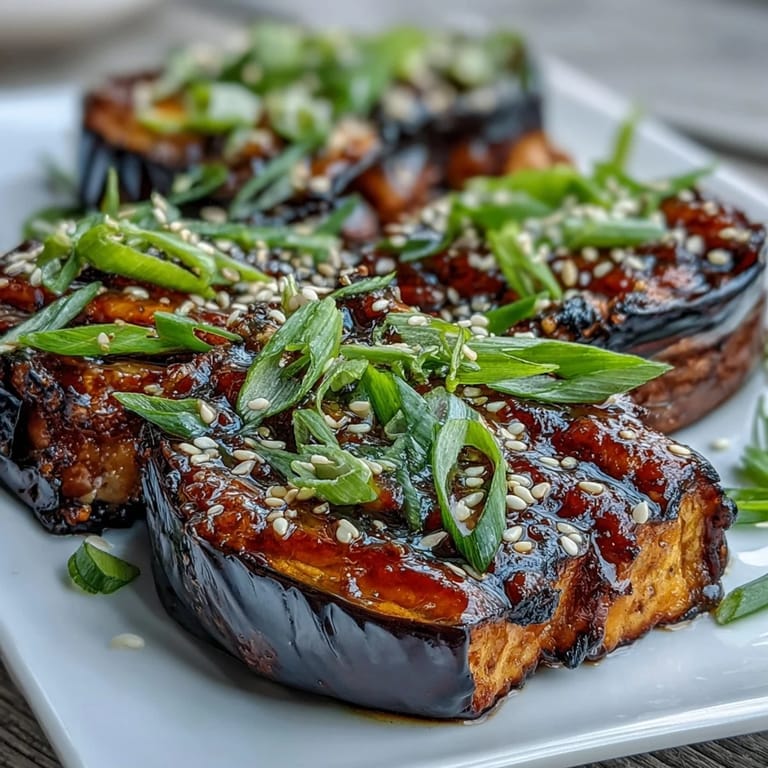
Save This recipe taught me that eggplant doesn't need to be complicated or fussy to be delicious—it just needs respect for its nature and the right flavors to highlight what makes it special. Every time I make it, I think of that neighbor's garden and how generosity in cooking often leads to the simplest, most rewarding discoveries.
Recipe FAQs
- → What type of eggplant works best?
Japanese eggplants are ideal for their tender, less bitter flesh and thinner skin. They roast beautifully and absorb the glaze while maintaining a creamy texture.
- → Can I prepare the glaze ahead of time?
Yes, whisk together the miso, mirin, sake, sugar, and sesame oil up to a week in advance. Store refrigerated in an airtight container.
- → Why score the eggplant flesh?
Scoring in a crosshatch pattern allows the glaze to penetrate deeper into the flesh while helping the eggplant cook more evenly and absorb flavors.
- → What can I serve alongside this dish?
Pairs perfectly with steamed jasmine rice, pickled vegetables, miso soup, or grilled fish for a complete Japanese-inspired meal.
- → How do I prevent the glaze from burning under the broiler?
Watch closely during the final 2-3 minutes of broiling. The high sugar content means it can go from caramelized to burned quickly.