 Save
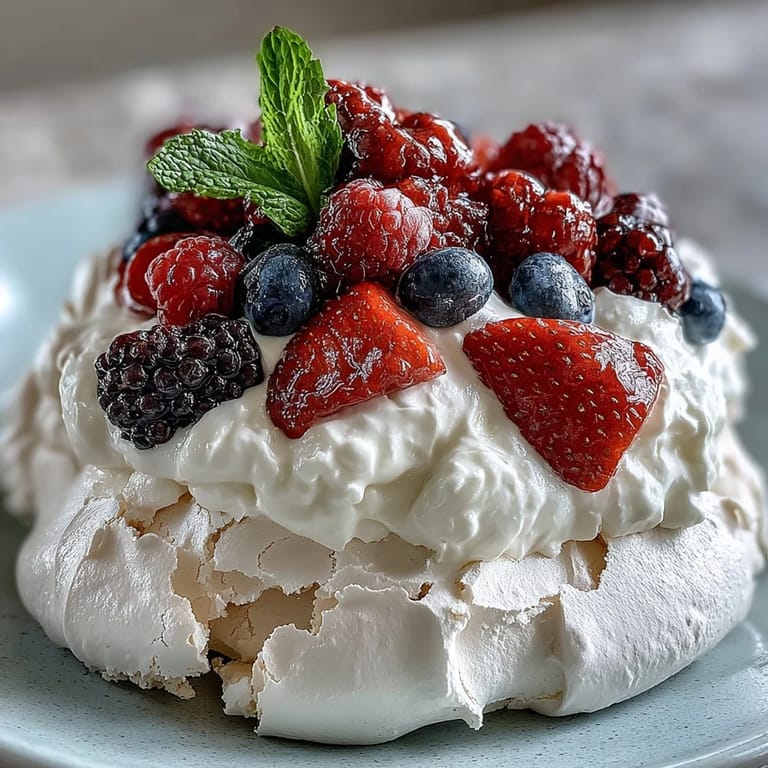
Save The first time a pavlova appeared in my kitchen was after I'd spent an afternoon flipping through recipes for something light yet impressive. Honestly, it was the crackle of the meringue as it cooled that convinced me I had done it right—not a fancy occasion, just a quiet spring day with fresh berries tempting me from the market. I remember the oven’s hum, the sweet scent wafting through the house, and the moment I saw the glossy peaks and thought, maybe I am a proper dessert maker after all. There’s a joy in building a pavlova—it feels almost sculptural, gathering cloudlike swirls and piling them high. You’ll notice, every time, how anticipation builds with the soft crunch and silky cream to come.
Last spring, when family was gathered for Sunday lunch, I found myself whisking egg whites with my cousin, laughing over how we once thought pavlova was sorcery. She dusted berries with sugar, I shaped the meringue, and we watched it through the oven window while swapping kitchen stories. It became the star of that meal—crisp, pillowy, and crowned with mint. Even those who claimed not to like desserts asked for seconds.
Ingredients
- Egg Whites: Room temperature helps them whip higher—if I forget, a gentle rinse in warm water is my fix.
- Superfine Sugar: It dissolves easily, making the meringue smooth and glossy, so I always weigh it carefully.
- Cornstarch: This light touch preserves the marshmallow center—a must for texture.
- White Vinegar: Just a splash stabilizes the egg whites and keeps the pavlova from collapsing.
- Vanilla Extract: Adds fragrance and warmth that pairs beautifully with cream.
- Heavy Whipping Cream: Cold cream whips faster—chill the bowl for good measure.
- Powdered Sugar: Sweetens the cream delicately without graininess.
- Fresh Berries: Choose a mix for color and tartness; dry them well after rinsing so the pavlova stays crisp.
- Mint Leaves (Optional): A fresh garnish—skip if you prefer simplicity.
Tired of Takeout? 🥡
Get 10 meals you can make faster than delivery arrives. Seriously.
One email. No spam. Unsubscribe anytime.
Instructions
- Get Ready
- Preheat your oven and draw a circle on parchment—the guide keeps the pavlova neat, but flipping over means no ink gets on the dessert.
- Whip the Whites
- Start the egg whites at medium speed; watch for cloudlike peaks, pausing to scrape the bowl if needed.
- Build Structure
- Add sugar little by little, listening for the sound to change—it should become thick and glossy, not grainy.
- Fold and Flavor
- Gently fold in cornstarch, vinegar, and vanilla—don't deflate the mixture, treat it like a fragile pillow.
- Shape
- Spoon the meringue onto your template, swirling edges upward—this creates the well for cream and berries.
- Bake and Cool
- Let it bake low and slow; then switch off the oven and crack the door, letting the pavlova cool gently to avoid cracks.
- Whip Cream
- Whisk cold cream with powdered sugar and vanilla until it forms soft peaks—when it clings to the whisk, you're done.
- Assemble
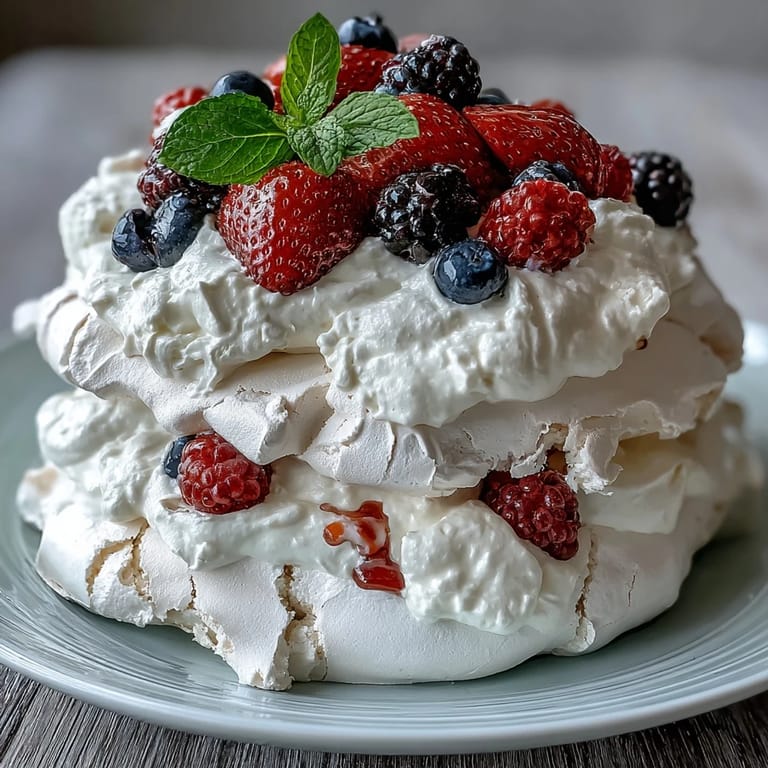
- Carefully transfer pavlova to a platter, generously topping with cream and a heap of berries.
- Garnish
- Scatter mint if desired; serve right away for best texture.
 Save
Save There was one moment, after a birthday dinner, when my pavlova disappeared before I could even slice a second helping. Friends told me the sparkling crunch and pillowy filling made it unforgettable—sometimes food achieves memory, not just flavor.
How to Avoid Pavlova Mishaps
Once, I tried to rush cooling and the shell cracked badly. Since then, patience means leaving the pavlova undisturbed in the oven with the door ajar—a small habit with a big payoff in texture and appearance.
Berry Topping Combinations
Swapping out berries or blending in seasonal fruits brings a new mood each time. I like sliced peaches in summer, or pomegranate seeds when winter calls for sparkle.
Serving and Storage Advice
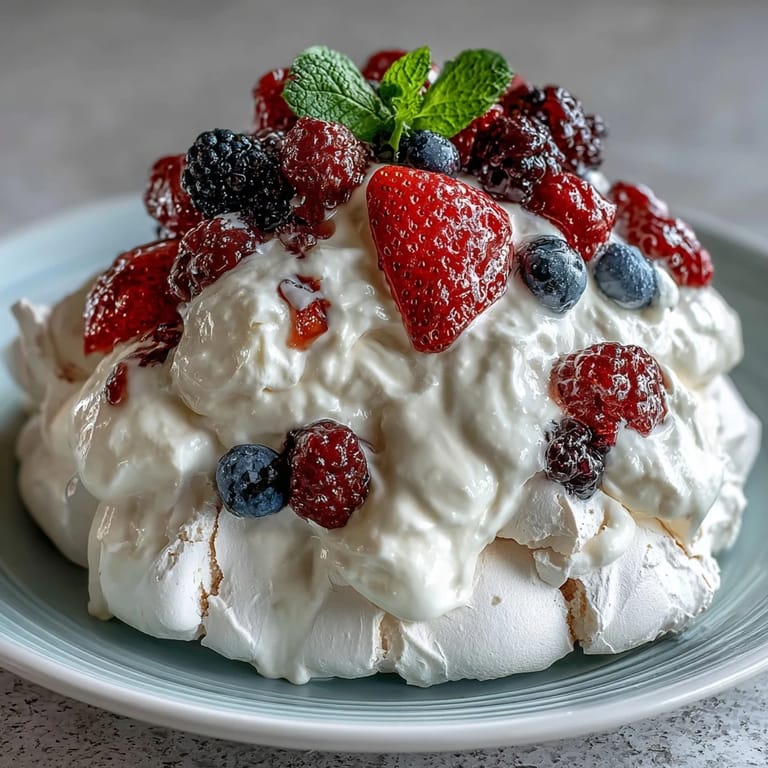
If you serve this pavlova within an hour, crispness lingers and berries sit prettily atop the cream—leave it longer, and the shell goes soft (but still delicious).
- Keep leftovers in the fridge, loosely covered.
- Serve chilled for a new texture the next day.
- Never freeze—the meringue won't survive.
 Save
Save Whenever you make pavlova, expect a bit of drama and plenty of delight. It's a celebration on a plate, ready to surprise anyone who takes the first bite.
Recipe FAQs
- → How do you achieve a crisp meringue exterior?
Baking the meringue slowly at a low temperature and allowing it to cool in the oven creates a crisp outer shell.
- → Which berries pair best with pavlova?
Strawberries, blueberries, raspberries, and blackberries are ideal, but you can use any seasonal fruit for topping.
- → Can this dessert be made gluten-free?
Yes, all ingredients are naturally gluten-free. Always check labels to ensure no cross-contamination.
- → Why add vinegar and cornstarch to the meringue?
These ingredients help stabilize the meringue and create a soft, marshmallowy texture inside.
- → What is the ideal serving occasion?
Pavlova is perfect for spring gatherings, celebrations, or as a festive dessert paired with sparkling wine.
- → How should you garnish the finished pavlova?
Fresh mint leaves add an aromatic touch and visual appeal, but they are entirely optional.