 Save
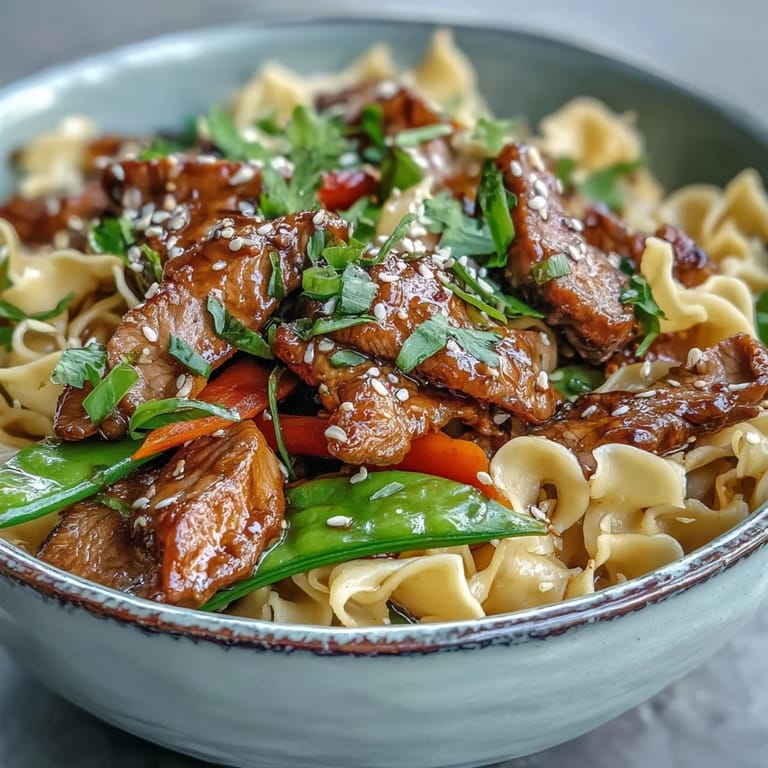
Save The sizzle of pork hitting a screaming hot wok still makes my shoulders relax. This stir-fry came into my life during a particularly chaotic month when I needed something fast, filling, and actually worth eating. I'd been cycling through the same three boring dinners until a neighbor mentioned her go-to weeknight noodle dish. One attempt later, I understood why she made it twice a week.
I made this for my sister when she was between apartments and camping on my couch. She wandered into the kitchen halfway through, drawn by the smell of ginger and garlic, and declared it better than anything we'd ordered in weeks. We ate straight from the wok, standing at the counter, and she asked for the recipe before her bowl was even empty. That's when I knew this one was a keeper.
Ingredients
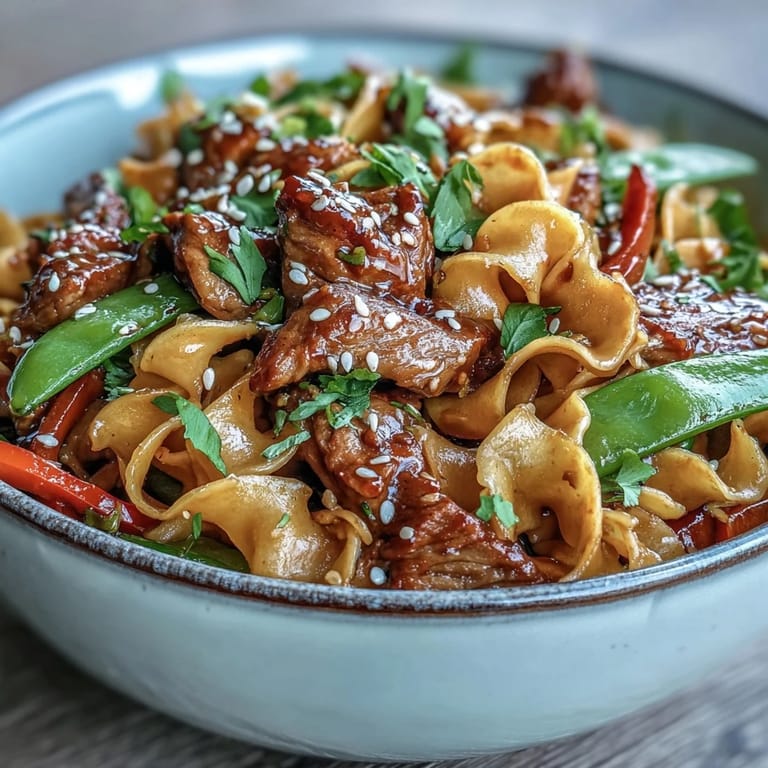
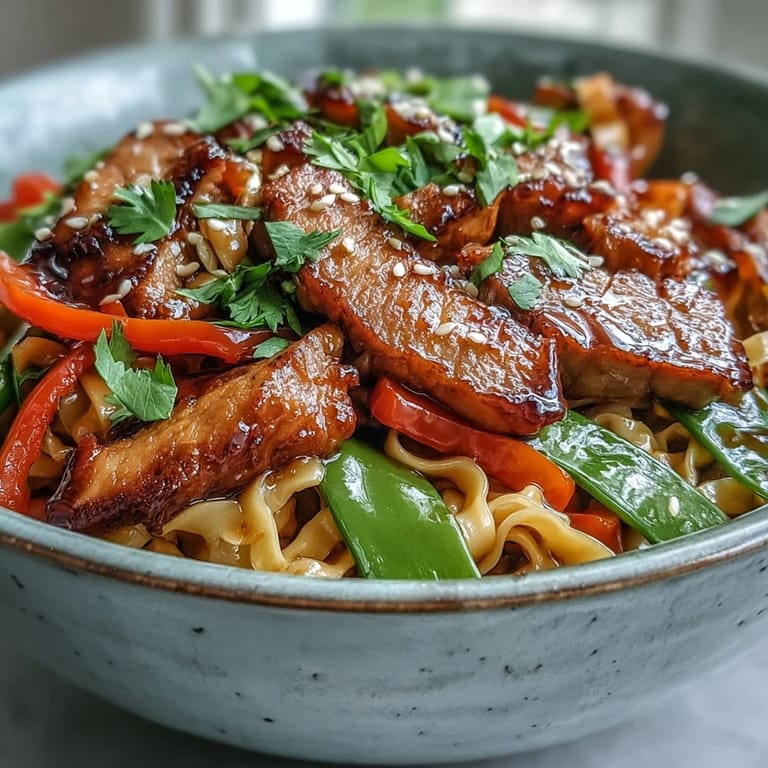
- Pork loin or tenderloin: Slicing it thin ensures quick cooking and tender bites, and freezing it for 20 minutes beforehand makes slicing much easier.
- Soy sauce (marinade): This helps the cornstarch stick and seasons the meat from the inside out.
- Cornstarch: It gives the pork a light coating that browns beautifully and keeps it juicy.
- Egg noodles or rice noodles: Either works wonderfully, just make sure they're slightly undercooked since they'll finish in the wok.
- Red bell pepper: Adds sweetness and a pop of color that makes the dish look as good as it tastes.
- Carrot: Julienned carrots cook quickly and give a pleasant crunch if you don't overdo them.
- Sugar snap peas: These stay crisp and bright green if you add them at the right moment.
- Spring onions: I toss them in at the very end so they stay fresh and sharp.
- Garlic cloves: Minced fine, they perfume the oil and set the foundation for everything else.
- Fresh ginger: Grated ginger brings warmth and a slight bite that balances the sweetness of the sauce.
- Soy sauce (stir-fry sauce): The backbone of the sauce, providing salty depth.
- Oyster sauce: This adds umami and a subtle sweetness that rounds out the flavor.
- Hoisin sauce: A touch of hoisin brings richness and a hint of spice.
- Sesame oil: Just a teaspoon is enough to give that nutty, toasted aroma.
- Brown sugar: Balances the saltiness and helps the sauce caramelize slightly.
- Water: Loosens the sauce just enough to coat the noodles without making them soggy.
- Vegetable oil: High smoke point oil is essential for stir-frying at high heat.
- Sesame seeds: Optional, but they add a nice crunch and visual appeal.
- Fresh coriander or sliced chili: A fresh garnish that brightens the whole dish.
Tired of Takeout? 🥡
Get 10 meals you can make faster than delivery arrives. Seriously.
One email. No spam. Unsubscribe anytime.
Instructions
- Marinate the pork:
- Toss the pork slices with soy sauce and cornstarch in a bowl, making sure each piece is coated. Let it sit for 10 minutes while you prep everything else.
- Cook the noodles:
- Boil the noodles according to the package directions, but pull them a minute early so they stay firm. Drain them well and set them aside.
- Mix the sauce:
- Whisk together all the stir-fry sauce ingredients in a small bowl. Having it ready means you won't be scrambling later.
- Sear the pork:
- Heat one tablespoon of oil in your wok over high heat until it shimmers. Add the pork in a single layer and let it sear for 2 to 3 minutes until browned, then remove it and set it aside.
- Stir-fry the vegetables:
- Add the remaining oil, then toss in the garlic, ginger, bell pepper, carrot, and sugar snap peas. Stir-fry for 3 to 4 minutes until they soften but still have some bite.
- Combine everything:
- Return the pork to the wok along with the cooked noodles and the sauce. Toss everything together for 2 to 3 minutes, making sure the noodles are well coated and heated through.
- Finish and serve:
- Add the spring onions, give it one last toss, and take it off the heat. Serve immediately with sesame seeds and fresh coriander or chili if you like.
 Save
Save There was one evening when I made this after a long day and forgot to add the spring onions until after plating. I scattered them on top anyway, and the raw sharpness actually worked perfectly against the rich sauce. Sometimes the little slip-ups teach you something new. Now I keep a few back on purpose to add a fresh bite at the end.
Choosing Your Protein
Pork loin is my default because it's lean and cooks quickly, but I've swapped it for chicken thighs, firm tofu, or shrimp depending on what's in the fridge. Chicken takes about the same time, tofu needs a firmer sear to get crispy edges, and shrimp cooks even faster so watch them closely. Each version brings its own character, and the sauce is forgiving enough to handle them all.
Getting the Wok Hot Enough
The first time I made this, my wok wasn't hot enough and everything steamed instead of seared. Now I let the wok heat for a full two minutes before adding oil, and I wait until the oil just starts to shimmer. That high heat is what gives you those charred edges and deep flavor. If your stove runs cool, work in smaller batches so the temperature stays high.
Making It Your Own
This recipe is a template more than a rule. I've added mushrooms, baby corn, and bok choy when I had them, and every variation worked. Sometimes I skip the hoisin and add a splash of rice vinegar for brightness, or I double the ginger when I'm feeling under the weather. The key is keeping the ratios of the sauce balanced and not overloading the wok with too many vegetables at once.
- Add a handful of cashews or peanuts in the last minute for extra crunch and richness.
- A squeeze of lime juice right before serving brightens everything up and cuts through the richness.
- If you like heat, a teaspoon of chili paste or a few sliced fresh chilies in with the garlic will do the trick.
 Save
Save This dish has become my answer to weeknight chaos, the one I can make half-asleep and still be proud to serve. I hope it does the same for you.
Recipe FAQs
- → Can I use a different protein instead of pork?
Yes, you can easily substitute chicken, tofu, shrimp, or beef. Adjust cooking times accordingly—chicken takes about the same time, while shrimp cooks faster.
- → What type of noodles work best for this stir-fry?
Egg noodles or rice noodles both work wonderfully. You can also use udon, lo mein, or even spaghetti in a pinch. Just cook according to package directions.
- → How do I make this dish gluten-free?
Use tamari instead of soy sauce, choose rice noodles, and select a gluten-free oyster sauce alternative. Always check product labels to ensure they're certified gluten-free.
- → Can I prepare any components ahead of time?
Absolutely. Marinate the pork and chop all vegetables up to 24 hours in advance. Mix the sauce and store in the refrigerator. This makes final cooking quick and easy.
- → What vegetables can I add or substitute?
Feel free to add mushrooms, baby corn, bok choy, broccoli, or snow peas. Use whatever fresh vegetables you have on hand for a customized stir-fry.
- → How do I prevent the noodles from sticking together?
Toss cooked noodles with a small amount of oil after draining. Add them to the wok just before serving and toss quickly with the sauce to coat evenly.