 Save
Save My partner brought home a package of shirataki noodles one evening with a skeptical look, unsure if these translucent strands would actually satisfy. We'd been experimenting with low-carb meals, and honestly, I was tired of feeling like I was eating rabbit food. But when I poured that silky bone broth over them—the one we'd been simmering for hours—something clicked. The noodles disappeared into the warmth, soaking up every drop of umami, and suddenly this felt less like a compromise and more like the real thing.
I made this for a friend who'd just started intermittent fasting, and she stared at the bowl with the kind of suspicion only someone new to shirataki noodles can muster. By the third spoonful, her whole face changed. She asked for the recipe right then, and now it's her go-to lunch when she wants something warm without derailing her day. That moment taught me that comfort food doesn't need heavy carbs—it just needs intention and flavor.
Ingredients
- Bone broth (4 cups): The foundation of everything here—buy high-quality stuff or make your own if you have the time, because this is where all your flavor comes from, and there's no hiding weak broth under noodles.
- Fresh ginger (1 thumb-sized piece, sliced): Slicing rather than mincing lets you fish out the pieces later, and it releases a gentle heat that warms you from the inside.
- Garlic (2 cloves, smashed): Smashing cracks the cloves open and lets them perfume the entire pot without overpowering.
- Soy sauce or tamari (2 tablespoons): Use tamari if you're avoiding gluten, and honestly, I've started preferring it because it tastes slightly cleaner to me.
- Rice vinegar (1 tablespoon): This adds a subtle brightness that keeps the broth from tasting one-dimensional—trust the vinegar.
- Sesame oil (1 teaspoon): Just a teaspoon, because sesame oil is bossy and a little goes a long way, but it's absolutely essential.
- Shirataki noodles (400 g, drained and rinsed): They have a slight smell straight from the package, but rinsing thoroughly under cold water fixes that completely, and yes, the boiling water pour-over step matters.
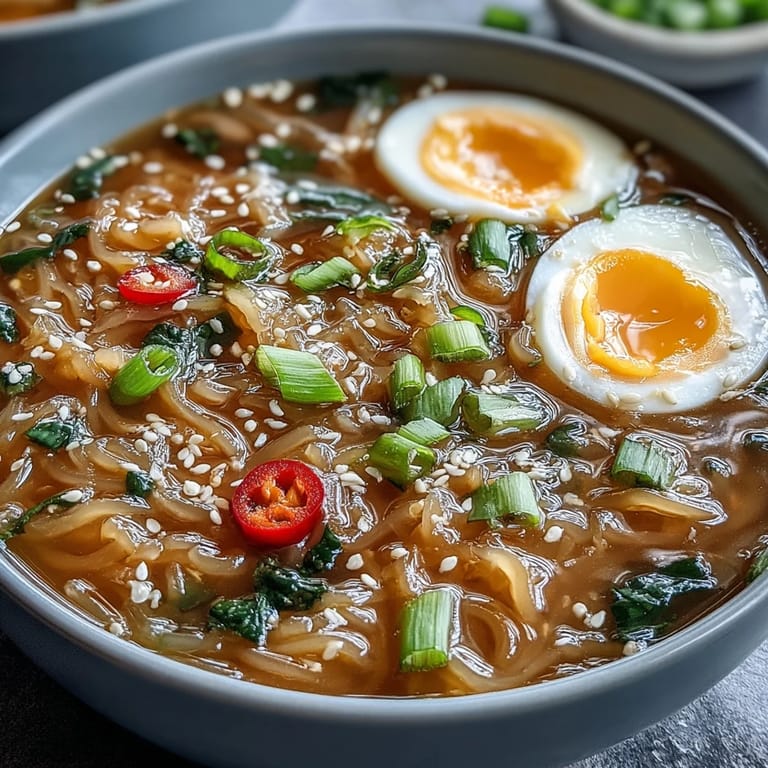
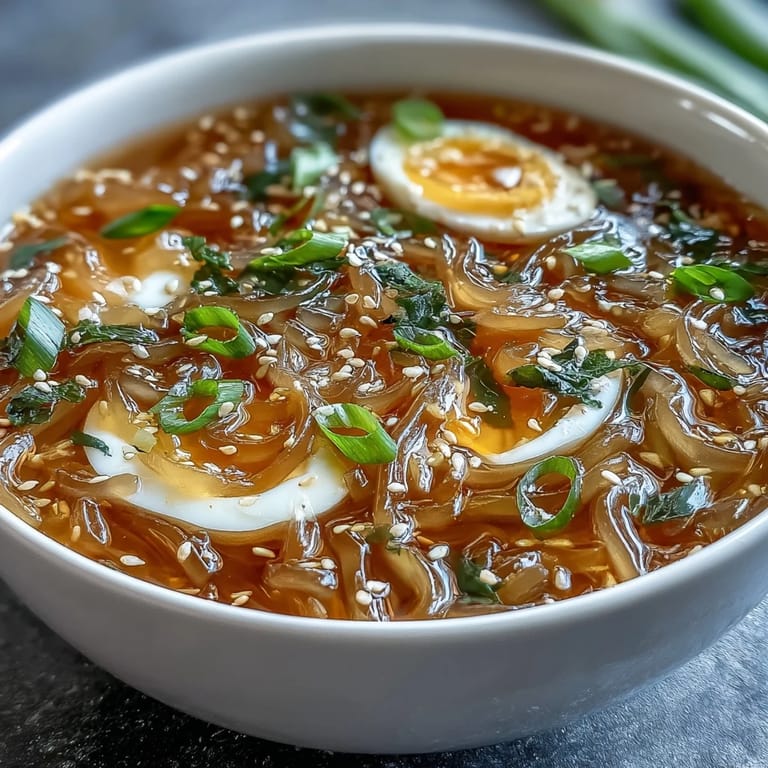
- Soft-boiled eggs (2, halved): Optional but they're the difference between a bowl and a meal—the yolk melts into the broth and adds richness.
- Spring onion, red chili, fresh herbs, sesame seeds: These are your personality—pile them on or keep it minimal depending on your mood.
Tired of Takeout? 🥡
Get 10 meals you can make faster than delivery arrives. Seriously.
One email. No spam. Unsubscribe anytime.
Instructions
- Build your flavor base:
- Pour the bone broth into a medium pot, then add the ginger slices and smashed garlic cloves. This is your moment to appreciate how the kitchen smells instantly—that ginger-garlic perfume is a promise of what's coming. Bring everything to a gentle boil over medium heat, letting the broth wake up slowly.
- Let it infuse:
- Once it's boiling, dial the heat back to a simmer and add the soy sauce, rice vinegar, and sesame oil. Let this bubble quietly for 10 minutes while you prep everything else—the longer it sits, the deeper the flavors get.
- Rescue the noodles from their funk:
- While the broth is infusing, drain your shirataki noodles into a colander and rinse them under cold running water, getting in there with your fingers to separate any clumps. Fill a kettle or pot with water and bring it to a boil, then pour the boiling water over the drained noodles in the sieve—this step removes the slightly fishy smell they come with.
- Marry the noodles and broth:
- When the broth has infused for 10 minutes, add the prepared noodles and let them heat through for 2 to 3 minutes. They don't need long—they're already tender, they just need to warm up and drink in the broth.
- Finish and serve:
- Fish out the ginger and garlic slices with a slotted spoon or just by tilting the pot and fishing with your spoon. Divide the noodles and broth between two bowls, then crown each with whatever toppings call to you—the soft-boiled eggs are non-negotiable in my kitchen.
 Save
Save There's something sacred about a bowl of hot broth on a cold day, even when you're eating it for health reasons rather than pure indulgence. One afternoon when I was stressed about everything at once, I made this for myself and sat at the kitchen counter with nowhere to be for 20 minutes. By the time I finished, something had shifted—not my problems, but how I was holding them. Food shouldn't have to be medicine, but sometimes it is.
Preparing Shirataki Noodles Like a Pro
The shirataki noodle learning curve is real, but once you understand what they are—essentially water and fiber shaped into noodles—handling them becomes intuitive. The smell comes from the liquid they're packed in, and it's completely harmless but absolutely needs to go. I've started keeping a dedicated strainer just for this step because the smell lingers if you're not careful, and there's something satisfying about having the right tool for the job.
Building Broth Depth Without Hours of Simmering
When you're working with quality bone broth, you don't need to simmer for days—the broth is already rich and nourishing. What you need is to wake it up with complementary flavors that don't compete but enhance. The ginger-garlic-vinegar combination is almost scientific in how well it works: ginger adds warmth, garlic brings depth, vinegar brightens everything and keeps it from feeling heavy. I started experimenting with this ratio after reading about how Asian kitchens use acidity, and it changed how I approach broth-based bowls entirely.
Customizing Your Bowl to Match Your Hunger
This recipe is deceptively flexible, and I've made it a dozen different ways depending on what I have and what my body needs that day. Some mornings I add shredded rotisserie chicken and call it breakfast; other times I'll stir in some miso paste for extra umami or throw in baby bok choy if vegetables are calling. The base stays the same, but the toppings are your permission slip to make it yours.
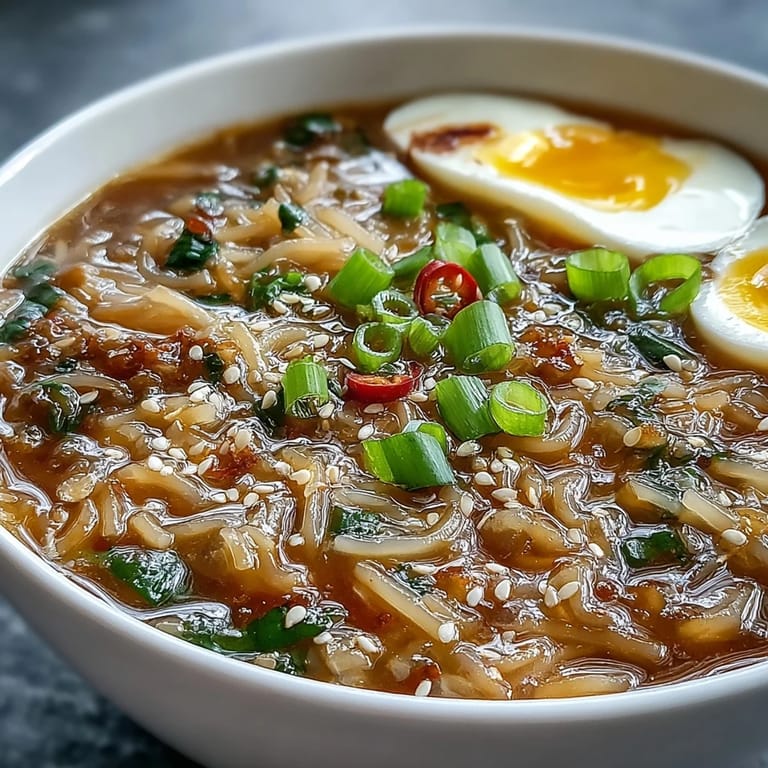
- Soft-boiled eggs are the MVP topping—if you have two minutes and a pot of water, you have protein and richness.
- Fresh herbs matter more than you'd think, so don't skip them even if it seems like a small detail.
- Toasted sesame seeds are the last-minute crunch that makes people think you tried harder than you actually did.
 Save
Save This bowl has become my quiet rebellion against the idea that eating well means eating boring things. Every time someone takes a bite and their eyes get a little wider, I remember that moment my partner brought home those mysterious noodles, and I'm grateful we gave them a chance.
Recipe FAQs
- → What do shirataki noodles taste like?
Shirataki noodles have a very mild, neutral taste on their own. They absorb the flavors of the broth and seasonings they're cooked with, making them perfect for this dish where they take on the savory ginger-garlic bone broth profile.
- → Do I need to cook shirataki noodles before adding them to the broth?
No additional cooking is required. Simply drain, rinse thoroughly under cold water, and pour boiling water over them to remove any natural odor. Then add them directly to the simmering broth for 2-3 minutes to heat through.
- → Can I make this dish vegetarian?
Absolutely. Substitute the bone broth with a high-quality vegetable broth and omit the eggs or replace them with marinated tofu cubes. The flavor profile remains delicious with the ginger, garlic, and sesame seasonings.
- → How long does this dish keep in the refrigerator?
The broth can be stored separately for up to 4 days. Shirataki noodles are best enjoyed immediately as they can become mushy when refrigerated. For meal prep, store the broth and prepare fresh noodles when ready to serve.
- → What protein options work well with this dish?
Soft-boiled eggs are traditional, but you can also add shredded cooked chicken, seared tofu slices, poached shrimp, or thinly sliced beef. The protein can be served atop the noodles or simmered directly in the broth.
- → Is this suitable for keto or low-carb diets?
Yes, shirataki noodles are virtually zero-carb, making this an excellent choice for ketogenic and low-carb lifestyles. The entire bowl contains approximately 3 grams of carbohydrates per serving while remaining satisfying and flavorful.