 Save
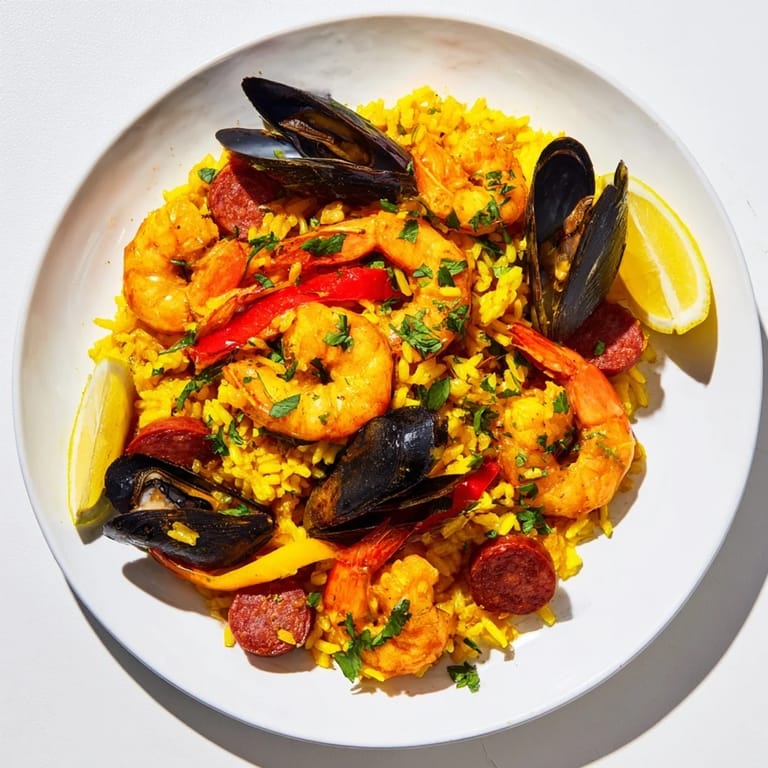
Save The first time I made paella, I stood in front of a borrowed paella pan feeling completely out of my depth—but something about the smell of saffron hitting the hot stock pulled me in. I'd watched a friend make it once during a summer in Barcelona, and years later, that golden aroma stuck with me. When I finally tried it myself, I realized paella wasn't about perfection or fancy technique; it was about letting the rice listen to the heat, watching the seafood nestle into the grains, and trusting that one pan could hold an entire celebration.
I made this for my sister's engagement party on a chilly October evening, and I'll never forget how everyone gathered around the kitchen when they caught the scent of chorizo and saffron hitting the pan. She stood next to me, sneaking shrimp straight from the dish while it rested, laughing about her own kitchen disasters. That moment—her joy, the warmth of the paella, the way the whole night felt less formal and more like home—is exactly why I keep making this.
Ingredients
- Chorizo sausage: Use a good-quality Spanish chorizo, sliced thick enough to hold its shape; it releases its paprika-infused oils into the rice and becomes the flavor backbone.
- Chicken thighs: They're forgiving and stay juicy, unlike chicken breast which can dry out in the time it takes to cook the rice properly.
- Shrimp, mussels, and calamari: Buy the freshest you can find; they finish cooking in just minutes, so don't skip the ice if you're not using them right away.
- Paella or Arborio rice: Short grains are essential—they absorb the stock without turning mushy and create that prized crust called socarrat if you're feeling adventurous.
- Saffron threads: Steep them in hot stock first; this blooms their flavor and distributes the color evenly through the rice, never waste saffron by dumping it straight in.
- Smoked paprika: This is non-negotiable—it gives paella its signature warmth and that memory of smoke from Spanish kitchens.
- Bell peppers and onion: They soften into the rice and add sweetness that balances the salty seafood and spicy chorizo.
Tired of Takeout? 🥡
Get 10 meals you can make faster than delivery arrives. Seriously.
One email. No spam. Unsubscribe anytime.
Instructions
- Bloom the saffron:
- Steep the threads in hot stock and let them sit; the golden liquid becomes liquid gold for your rice, infusing every grain with color and subtle earthiness.
- Brown the proteins:
- Heat oil in your pan, then add chorizo and chicken, listening for that satisfying sizzle—you want a deep golden crust that means the flavors are concentrating.
- Build the soffritto:
- Once the meat is out, soften your onion and peppers slowly, then add garlic and tomatoes; this vegetable base is where the soul of the dish forms.
- Toast the rice:
- Stir the rice with the paprika and oil so each grain gets coated—this quick toasting adds depth and helps the grains stay separate as they cook.
- Simmer the rice:
- Pour in your saffron-infused stock and remaining liquid, bring it to a boil, then drop the heat low and let it sit untouched for 15 minutes; the quiet cooking is where magic happens, and stirring breaks the grains.
- Nestle in the seafood:
- Push the shrimp and mussels into the rice, scatter the peas on top, cover loosely, and finish cooking until the mussels open and the shrimp turns pink—this usually takes 10–12 minutes.
- Rest and finish:
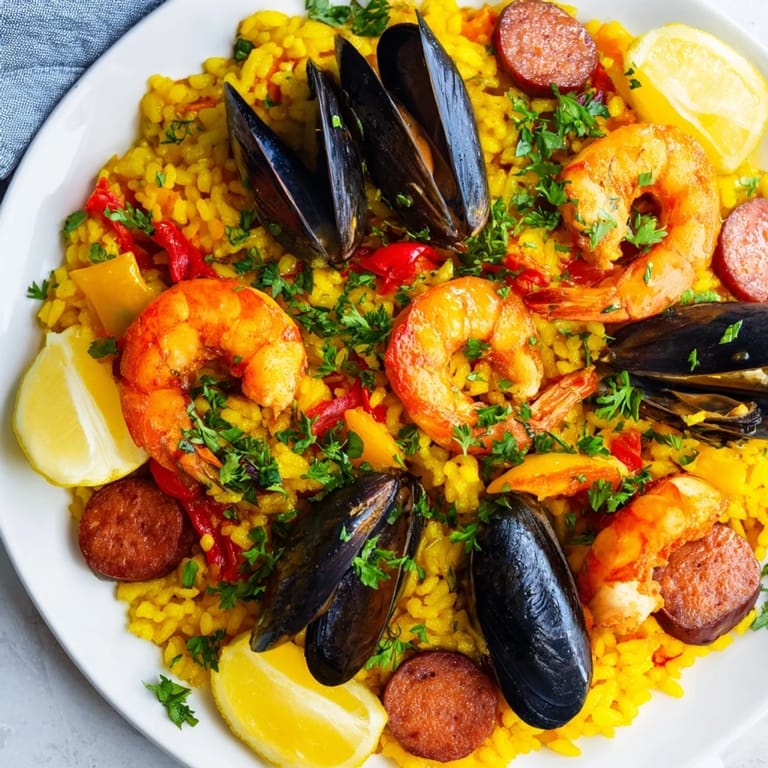
- Let the whole pan sit covered for 5 minutes off the heat; this allows the rice to relax and any remaining liquid to absorb, then scatter fresh parsley and lemon wedges over the top.
 Save
Save There's a moment during paella cooking when you stop checking the clock and just trust the process—when the rice stops rattling against the pan and softens into submission, when the seafood starts releasing its briny perfume. That's when I know it's almost ready, and I pour myself a glass of wine and stop worrying.
Choosing Your Seafood
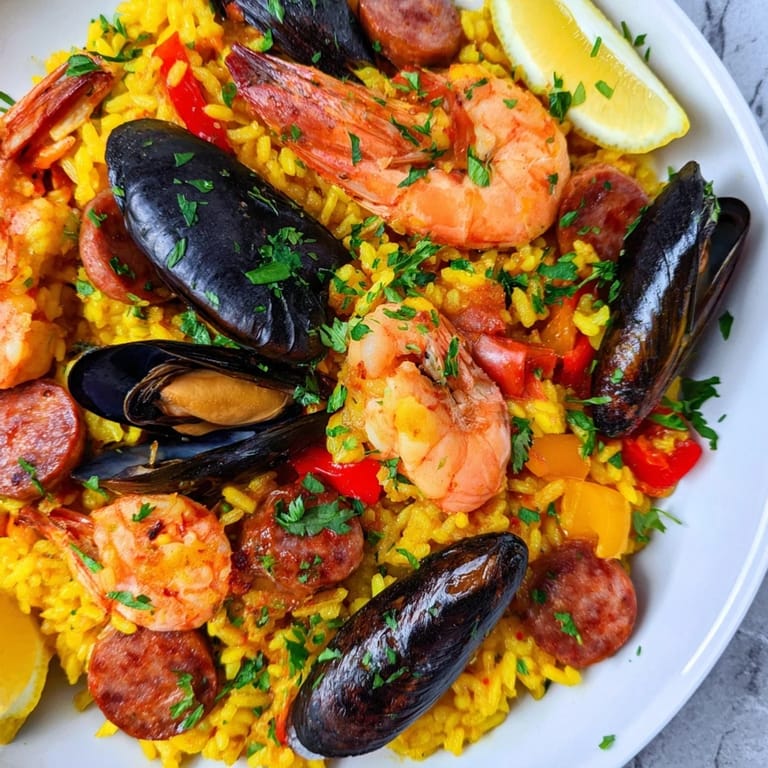
The beauty of paella is its flexibility with seafood, though your choices matter more than you'd think. Mussels and clams open as they cook, showing you they're done; shrimp and scallops turn opaque and firm. I've seen people panic when a mussel doesn't open, but honestly, just remove it and move on—there's enough abundance on that pan already. If you can't find fresh seafood, frozen works fine; just thaw it gently in the fridge the night before so it doesn't weep when it hits the heat.
The Saffron Question
Saffron is expensive, and I spent years making paella without it because of sticker shock—until a friend pointed out that a little goes a long way, and skipping it entirely just makes expensive rice. A half teaspoon blooms into something magical, and the investment pays off the moment your guests taste it. There's no real substitute, though some people use turmeric for color; it's not the same, but it works if that's what you have.
Making It Your Own
I've made paella with whatever was in the market that day—sometimes with scallops instead of shrimp, once with artichokes when I was low on protein. A vegetarian friend asked me to make it without seafood, and I loaded it with chickpeas and roasted vegetables; it was still golden and satisfying. The structure stays the same, but the specifics are yours to decide, so pay attention to what looks good and what you're craving.
- Pair with a crisp Spanish white wine like Albariño to cut through the richness.
- If you can't find smoked paprika, regular paprika plus a tiny pinch of liquid smoke works in a pinch.
- Cook in a wide, shallow pan rather than a deep pot—the wider surface means more rice touches the heat, and that's where the real flavor develops.
 Save
Save Paella is one of those dishes that brings people together without trying—it's meant to be shared, passed around, eaten straight from the pan with crusty bread and good company. Make it, and the rest takes care of itself.
Recipe FAQs
- → What type of rice works best?
Short-grain paella rice or Arborio rice are ideal for absorbing flavors and maintaining texture.
- → Can I substitute the seafood?
Yes, clams or scallops make excellent alternatives depending on availability and preference.
- → How do I achieve the signature saffron flavor?
Steep saffron threads in hot stock before adding to the dish to release their aroma and color.
- → What is the purpose of not stirring during cooking?
Avoiding stirring helps form the prized crispy bottom layer known as socarrat, enhancing texture and flavor.
- → Which spices enhance this dish's smoky profile?
Smoked Spanish paprika (pimentón) adds depth and a subtle smoky note complementing the sausage and seafood.
- → Can this dish be prepared vegetarian?
Omit the meats and seafood, replacing them with vegetables like artichokes, green beans, or chickpeas for satisfying plant-based options.