 Save
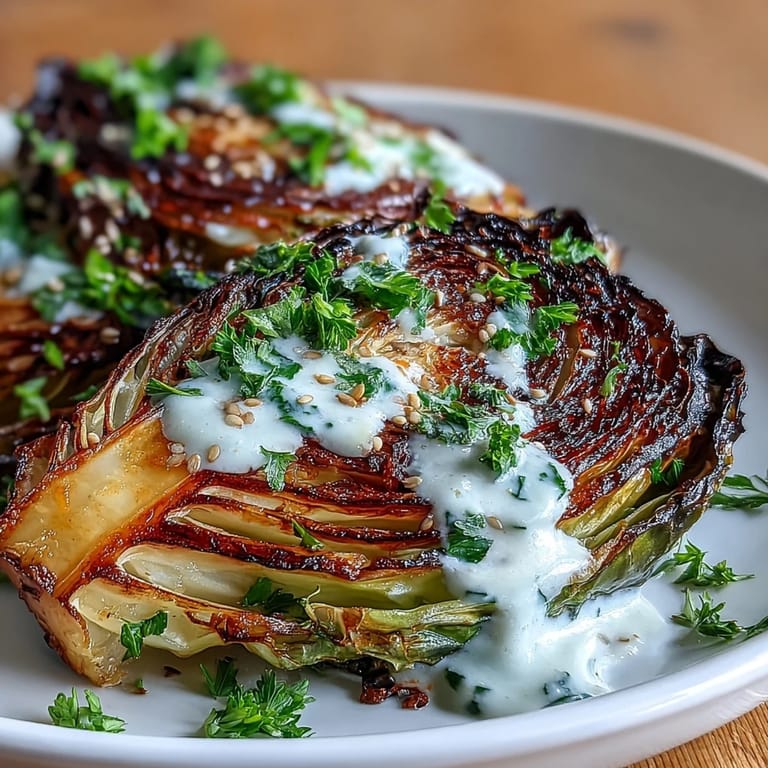
Save My neighbor handed me a thick slice of roasted cabbage at a potluck, and I hesitated for exactly one second before taking a bite. The outside was charred and crispy, almost nutty, while the inside had gone sweet and tender in a way I didn't know cabbage could manage. She laughed at my surprised face and whispered that tahini was the secret—not just drizzled on top, but whisked smooth with lemon and garlic until it became something almost creamy. I've been making these steaks ever since, and they've quietly become the dish people ask for.
Last winter, I served these to a friend who claimed she didn't like cabbage, and she ate two steaks without realizing what she was eating. When she found out, she actually laughed—the kind where you realize a single dish can shift someone's entire relationship with a vegetable. That moment stuck with me more than any compliment about the tahini could.
Ingredients
- 1 large green cabbage: Choose one that feels heavy and compact, with leaves that snap slightly when you bend them—this signals good, tight structure that won't fall apart during roasting.
- 3 tbsp olive oil: Don't skimp here; quality olive oil brings its own subtle flavor that shows up especially after the cabbage caramelizes.
- 1 tsp ground cumin: This is your warmth and earthiness; it makes the cabbage taste deeper somehow, almost mysterious.
- 1 tsp smoked paprika: Adds a gentle smokiness that feels like the cabbage has been kissed by fire—it's what makes people ask what you did differently.
- ½ tsp garlic powder: Just enough to whisper garlic without overpowering; fresh garlic can burn at high heat, so the powder is your friend here.
- Salt and freshly ground black pepper: Taste as you go; the seasoning intensity grows as the cabbage reduces and caramelizes.
- ⅓ cup tahini: The tahini needs to be creamy and fresh; stir the jar well before measuring because the oil separates.
- 2 tbsp freshly squeezed lemon juice: Fresh is non-negotiable—bottled lemon juice won't give you that brightness that cuts through the richness of tahini.
- 1 small garlic clove, finely minced: Raw garlic here brings a sharp note that balances the creamy sauce beautifully.
- 2–4 tbsp cold water: Add gradually; the amount varies depending on how loose your tahini started, so trust the texture over the measurement.
- 2 tbsp chopped fresh parsley: Fresh herbs at the end feel like the final brushstroke on a painting; they brighten everything.
- 2 tbsp toasted sesame seeds (optional): Toasting them yourself takes thirty seconds and completely changes their depth and flavor.
Tired of Takeout? 🥡
Get 10 meals you can make faster than delivery arrives. Seriously.
One email. No spam. Unsubscribe anytime.
Instructions
- Heat your oven and prepare the stage:
- Set your oven to 425°F and line a baking sheet with parchment paper—this prevents sticking and makes cleanup feel effortless. The parchment also helps the cabbage brown more evenly because heat distributes underneath it beautifully.
- Slice the cabbage into steaks:
- Remove and discard any bruised outer leaves, then slice the cabbage vertically into 1-inch thick rounds, aiming for 4 to 5 sturdy steaks. Some pieces at the ends might be smaller—save those for another use or roast them too if you want extra crispy edges.
- Season generously and brush with oil:
- Place steaks on the sheet and brush both sides with olive oil until they glisten lightly, then sprinkle cumin, smoked paprika, garlic powder, salt, and pepper across both sides. Don't be shy with seasoning; the spices stick better to the oil and taste bolder once things caramelize.
- Roast until edges turn golden:
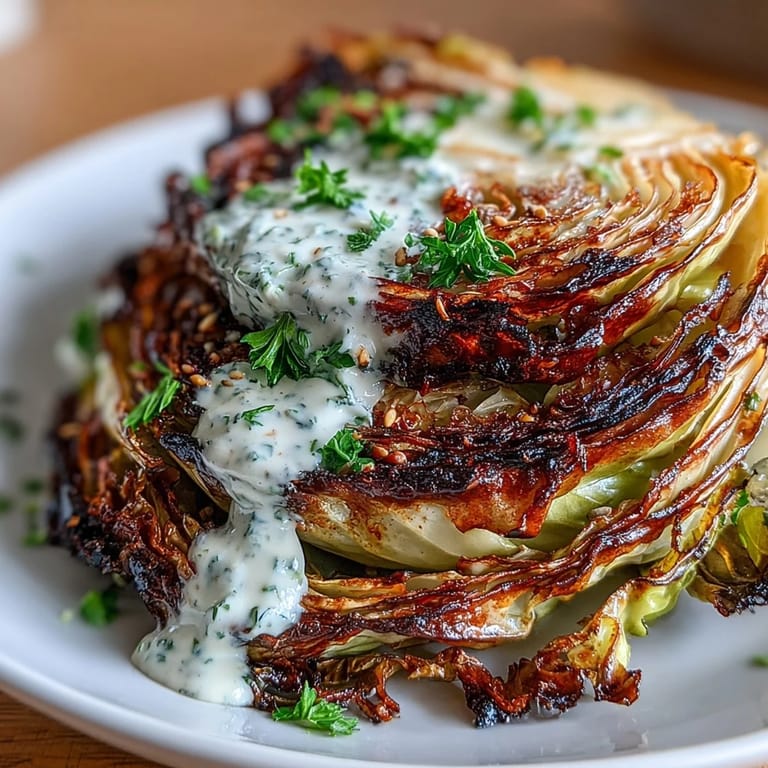
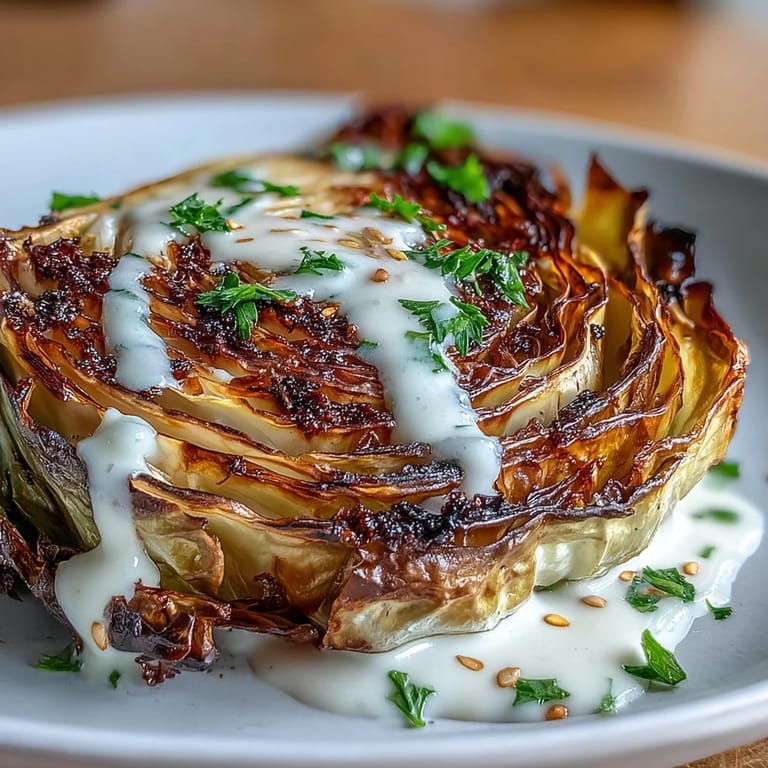
- Slide into the oven for 25 to 30 minutes, flipping halfway through the cooking time. You'll know they're ready when the cut edges are deeply browned and caramelized, and a fork slides through the center easily.
- Whisk the tahini sauce together:
- While cabbage roasts, combine tahini, lemon juice, minced garlic, and a small pinch of salt in a bowl, whisking until combined. Slowly add cold water one tablespoon at a time, whisking constantly, until the sauce becomes silky and pourable—it should flow but not be runny.
- Bring it all together:
- Transfer the warm roasted steaks to a serving platter and drizzle tahini sauce generously over the top, then scatter parsley, sesame seeds, and lemon wedges around. Serve warm while the cabbage still holds some heat and the tahini sauce coats everything perfectly.
 Save
Save I once served these to a dinner party where three different guests turned out to be plant-based, and instead of scrambling, I simply had exactly the right dish already on the table. It felt less like luck and more like the universe gently confirming I'd found something genuinely good.
Why Roasting Changes Everything
Raw cabbage tastes bright and crisp, almost sharp, but heat transforms it into something completely different. The sugars within the vegetable concentrate and caramelize, turning bitter edges sweet while the interior softens to an almost buttery texture that doesn't exist in the raw version. Roasting at high heat specifically—rather than steaming or boiling—creates those crispy, browned edges that make people lean in closer to their plate.
The Magic Behind Tahini
Tahini is ground sesame seeds, but when whisked with lemon juice and water, it becomes this luxurious, creamy emulsion that tastes almost like a sauce you'd find at a fine restaurant. The acid from the lemon brightens it, the garlic gives it character, and the cold water loosens it without diluting the intensity. It's one of those simple formulas that feels like kitchen magic—three humble ingredients create something entirely elevated.
Making This Dish Work for Your Table
These cabbage steaks exist in that perfect space between vegetarian main course and elegant side dish, so they adapt easily to whatever you're serving. Pair them with grains like quinoa or farro if you want a complete meal, or serve alongside grilled proteins if you're feeding mixed preferences at one table. They're equally good served warm right from the oven or at room temperature the next day, making them excellent for meal prep or unexpected gatherings.
- Add a pinch of chili flakes or zaatar to the dry spice mix if you want extra heat and complexity.
- Swap the fresh parsley for cilantro or mint depending on what feels right to you or what you have on hand.
- Toast your own sesame seeds in a dry skillet for two minutes if you want their flavor to be even more pronounced and nutty.
 Save
Save This is the kind of dish that quietly proves vegetables need nothing more than good technique, simple spices, and one excellent sauce to become genuinely exciting. Once you've made it once, you'll find yourself returning to it again and again.
Recipe FAQs
- → How do I cut cabbage steaks properly?
Remove any damaged outer leaves, then slice the entire head crosswise into 1-inch thick rounds. Aim for 4–5 steaks per cabbage, keeping the core intact to hold each slice together during roasting.
- → Can I make this ahead?
Roast the cabbage steaks up to a day in advance and reheat at 400°F for 10 minutes. Store the tahini sauce separately in the refrigerator and whisk in a splash of water before serving to restore consistency.
- → What other vegetables work with tahini drizzle?
This tahini sauce pairs beautifully with roasted cauliflower, sweet potato wedges, eggplant, or even grilled halloumi. The creamy, nutty flavor complements almost any roasted vegetable.
- → My tahini sauce keeps separating. What went wrong?
Whisk tahini and lemon juice first until thick and pasty, then gradually add cold water while whisking continuously. If it still separates, add another tablespoon of water and keep whisking until emulsified and smooth.
- → Can I use red cabbage instead?
Absolutely! Red cabbage works wonderfully and adds vibrant color. Note that red cabbage may take a few extra minutes to become tender and will turn slightly blueish when cooked with baking soda or acidic ingredients.
- → How can I add more protein to this dish?
Serve alongside chickpeas, lentils, or quinoa for a complete protein. You can also top with crumbled feta, toasted pine nuts, or hemp seeds for extra protein and texture.