 Save
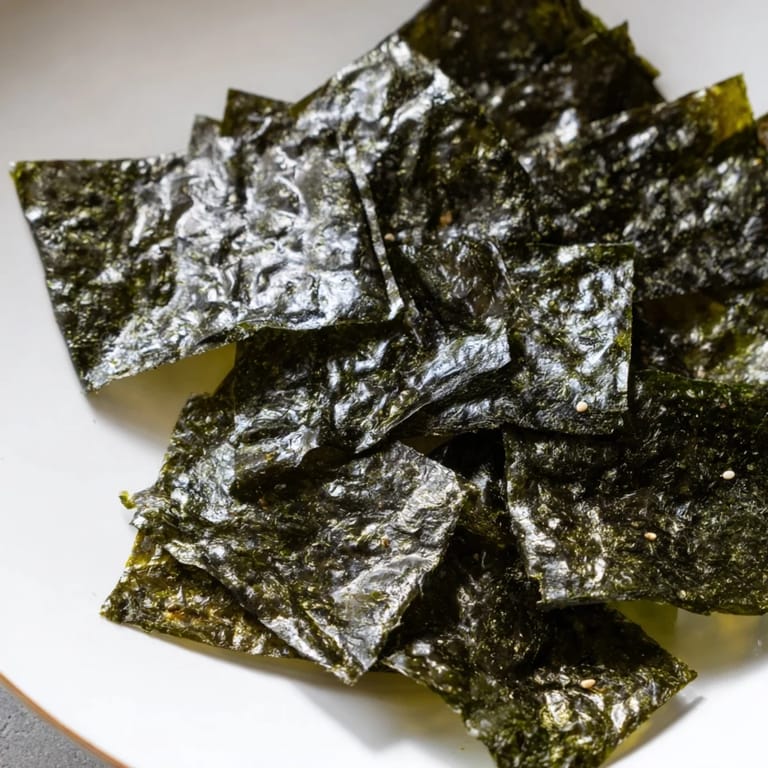
Save My daughter came home from a sleepover once asking why her friend's pantry had so many shiny green packages. That curiosity led us to our first attempt at making seaweed chips at home, and I was shocked at how something so simple could taste so much better than store-bought. The smell of toasted sesame oil filling the kitchen while those delicate sheets crisped up in the oven became an instant Saturday ritual. Now we make them every weekend, and she packs them in her lunchbox like tiny treasures. It's one of those recipes that feels like a small kitchen victory every single time.
I brought these to a potluck once, nervously setting them next to someone's fancy charcuterie board. By the end of the night, my tray was empty and three people had asked for the recipe. One friend admitted she'd never liked seaweed before but couldn't stop eating these. That moment taught me that simple food, done right, doesn't need to compete with anything fancy. It just needs to taste honest and good.
Ingredients
- Dried nori sheets: Use sushi-grade quality for the best flavor and texture, the cheap stuff tends to taste a little fishy and won't crisp up as nicely.
- Toasted sesame oil: This is where most of the flavor comes from, so don't skip it or swap it for plain sesame oil, the toasted version has a deeper, nuttier richness.
- Fine sea salt: A light sprinkle is all you need, but make sure it's fine so it sticks evenly and doesn't create salty pockets.
Tired of Takeout? 🥡
Get 10 meals you can make faster than delivery arrives. Seriously.
One email. No spam. Unsubscribe anytime.
Instructions
- Get the oven ready:
- Preheat your oven to 300°F and line a baking sheet with parchment paper. This low temperature ensures the seaweed crisps without burning.
- Prep the first layer:
- Lay one nori sheet shiny side down on the parchment, then lightly brush the top with sesame oil and sprinkle with a pinch of salt. Don't drench it, just a thin coating will do.
- Build the sandwiches:
- Place another nori sheet on top, brush with oil, and season again, repeating until you've made three double-layer pairs. This layering gives you extra crunch and helps the seasoning stick.
- Cut into pieces:
- Use kitchen scissors or a sharp knife to cut each pair into 2-inch strips or squares. Scissors work best because they're fast and keep the layers together.
- Arrange on the sheet:
- Spread the pieces out in a single layer without overlapping. Crowding them will cause uneven roasting and sad, floppy chips.
- Roast until crispy:
- Bake for 6 to 8 minutes, watching closely near the end because they go from perfect to burnt in seconds. They should be dark green and crisp to the touch.
- Cool and serve:
- Let them cool completely on the baking sheet before eating or storing. They'll firm up even more as they sit.
 Save
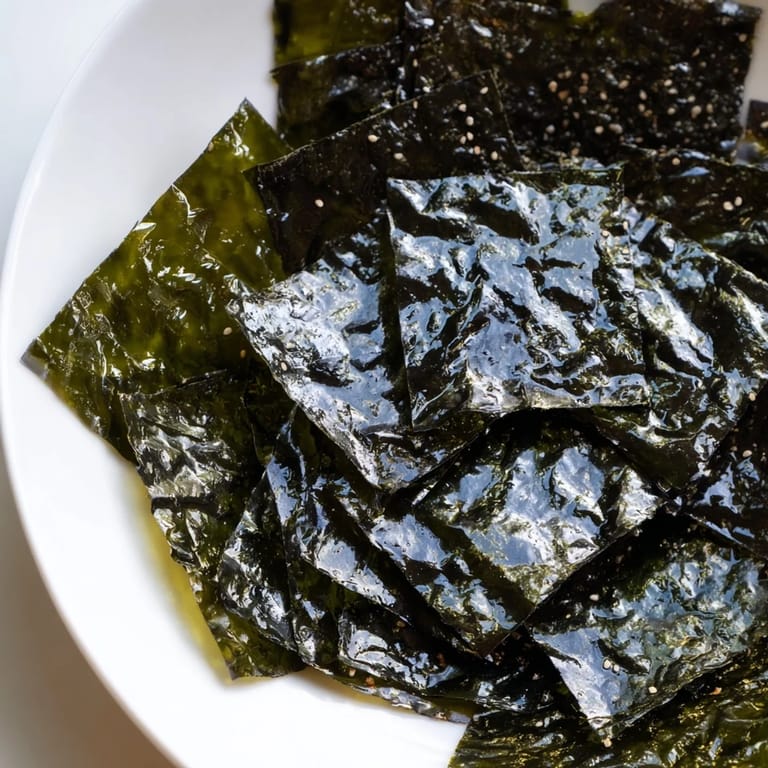
Save There's something quietly satisfying about pulling a warm tray of these out of the oven and hearing that first crackle when you pick one up. My kids have started requesting them instead of popcorn during movie nights, and I love that they're getting excited about something so simple and wholesome. It's become one of those recipes that makes me feel like I'm doing something right, even on the messiest of days.
Flavor Variations
Once you've mastered the basic version, it's fun to play around with seasonings before roasting. I've sprinkled chili flakes and garlic powder on one batch and it tasted like spicy umami magic. Another time I dusted them with furikake seasoning, and they disappeared in minutes. You can also try a tiny drizzle of soy sauce mixed into the oil for extra depth, just be careful not to make them soggy.
Serving Ideas
These chips are perfect straight out of the jar, but they're also incredible crumbled over a bowl of steamed rice or tossed into a salad for salty crunch. I've even tucked them into sandwiches and wraps for an unexpected texture boost. They work as a side for ramen, a topping for avocado toast, or just something to munch on while you're cooking dinner and need a little bite of something savory.
Storage and Shelf Life
If you manage not to eat them all in one sitting, store your seaweed chips in an airtight container or a glass jar with a tight lid. They'll stay crispy for up to a week if kept completely dry. I like to tuck a small silica packet inside the jar to absorb any moisture, especially in humid weather. If they do lose their crunch, a quick reheat in a low oven brings them right back to life.
- Never store them in the fridge, the moisture will make them limp and sad.
- Keep them away from heat sources like the stove or sunny windowsills.
- Label your jar with the date so you remember when you made them, though they rarely last that long anyway.
 Save
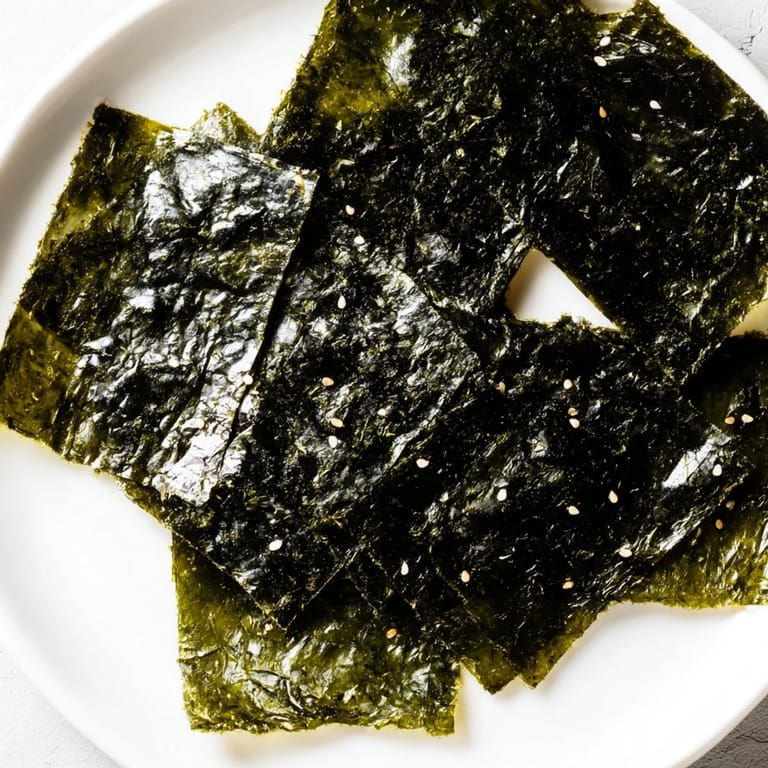
Save These little chips have become one of my favorite things to make when I need a win in the kitchen. They're proof that you don't need complicated ingredients or fancy techniques to create something people actually get excited about.
Recipe FAQs
- → How do I prevent the seaweed chips from burning?
Watch closely during the final 2–3 minutes of roasting. Oven temperatures vary, so begin checking at 6 minutes. Chips should be dark green and crispy but not charred. Remove immediately when they reach desired crispness to avoid overcooking.
- → Can I make these ahead of time?
Yes. Store cooled chips in an airtight container at room temperature for up to 5 days. They maintain their crispiness best in sealed containers that keep out moisture. Avoid refrigerating, as this can soften them.
- → What oil works best for this preparation?
Toasted sesame oil delivers authentic Asian flavor, but neutral oils like avocado, grapeseed, or light olive oil work equally well. Choose based on your flavor preference and any dietary restrictions. Sesame oil is an allergen—substitute if needed.
- → How can I add more flavor?
Experiment with chili flakes, garlic powder, furikake, white sesame seeds, or nori seasoning blends. Sprinkle these additions before roasting for integrated flavor. Start with small amounts and adjust to taste preference.
- → Are these chips truly gluten-free?
Plain nori sheets are naturally gluten-free, but always verify your brand's label. Some flavored or seasoned seaweed products may contain gluten additives. Purchase from certified gluten-free sources if this is a dietary concern.
- → Can I use regular nori instead of sushi-grade?
Sushi-grade nori is recommended for optimal flavor and texture, but standard nori works. Sushi-grade sheets tend to be higher quality and crisp better when roasted. Quality differences are noticeable in the final result.