 Save
Save My grandmother kept a worn index card tucked in her kitchen drawer with basbousa instructions written in fading ink, and for years I walked past it, convinced such a delicate, moist cake required secrets I didn't possess. Then one afternoon when she was distracted, I finally attempted it, and the moment that golden syrup soaked into the warm semolina, I understood why she'd made it for every celebration. Now whenever I bake this, that same kitchen fills with the same smell of toasted coconut and butter, and I feel her watching me score the diamonds with care.
I brought basbousa to a potluck once, expecting it to disappear last among all the elaborate desserts, but three people asked for my recipe before the evening ended—including someone who claimed they never liked coconut. Watching them reach for a second piece, eyes half-closed in quiet contentment, I realized this humble cake had a kind of power that fancy plating simply couldn't match.
Ingredients
- Fine semolina: The foundation that creates that tender, almost melt-on-your-tongue crumb; don't use coarse polenta by mistake, or you'll end up with something gritty.
- Desiccated coconut, unsweetened: Look for this specifically in the baking aisle, as sweetened versions will throw off the balance and make it cloying.
- Plain yogurt: This keeps everything moist and adds a subtle tang that balances the sweetness beautifully.
- Unsalted butter or ghee: Ghee gives it an authentic, richer flavor, but melted butter works just as well and is usually easier to find.
- Granulated sugar: Use the amount specified; this dessert should be sweet, but not to the point where your teeth ache.
- Rose water or orange blossom water: Optional, but if you can find it, a teaspoon transforms the syrup into something that tastes like a memory.
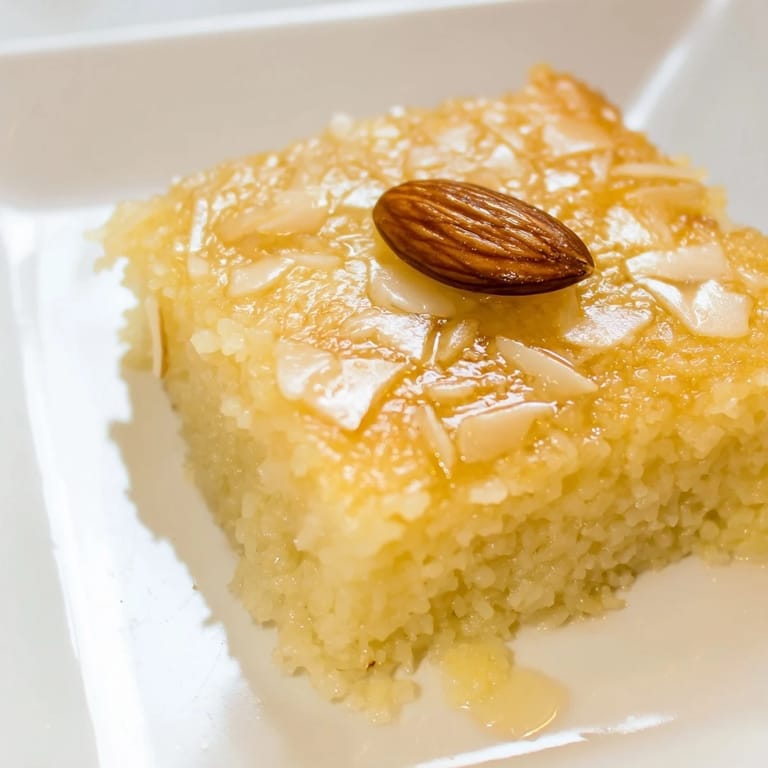
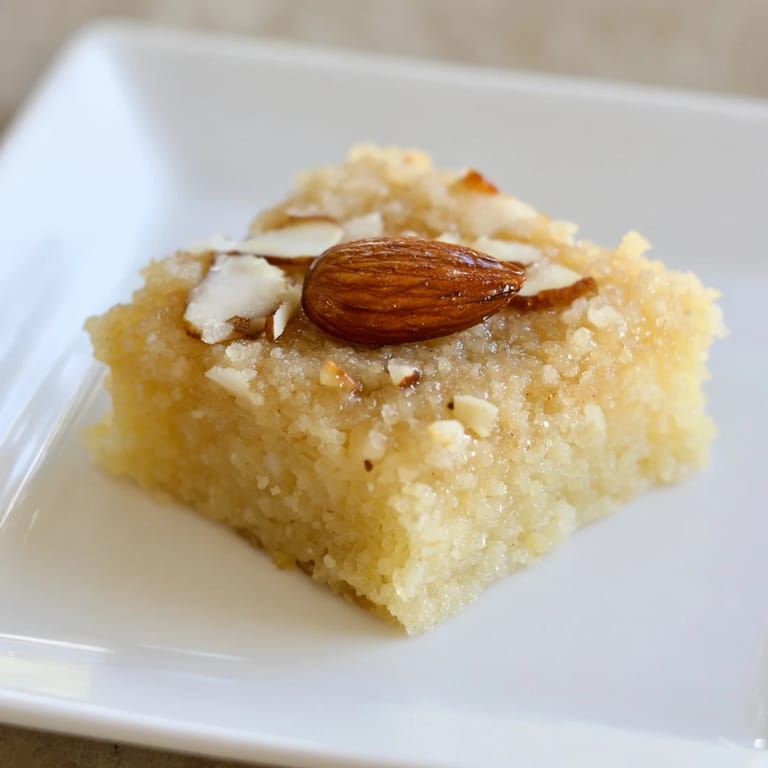
- Whole blanched almonds: These sit on top like little jewels and add a subtle contrast in texture; pistachios are a worthy substitute if that's what you have.
Tired of Takeout? 🥡
Get 10 meals you can make faster than delivery arrives. Seriously.
One email. No spam. Unsubscribe anytime.
Instructions
- Prepare your pan and preheat:
- Grease a 9x9 inch baking pan generously with butter or tahini so nothing sticks, then set your oven to 350°F. This early step prevents frustration when you're ready to cut and serve.
- Mix the dry base:
- In a large bowl, whisk together semolina, sugar, coconut, baking powder, and salt until everything looks evenly combined. This ensures no pockets of baking powder will surprise you later.
- Bring it together:
- Pour in the yogurt, melted butter, and vanilla, then stir until a thick, cohesive batter forms that holds its shape when you scoop it. The texture should resemble wet sand that clings to itself.
- Spread and score:
- Press the batter firmly and evenly into your pan, smoothing the top with a spatula or damp hand, then cut it into 12 squares or diamonds before it bakes, making your lines deep enough that they'll guide you later. Place one almond in the center of each piece so it bakes right in.
- Bake until golden:
- Slide the pan into the oven for 30 to 35 minutes, watching until the top turns golden and a toothpick emerges clean from the center. The edges should smell deeply nutty and caramelized.
- Make the syrup while it bakes:
- In a saucepan, stir sugar, water, and lemon juice together, bring it to a boil, then let it simmer gently for 8 to 10 minutes until it thickens slightly and coats the back of a spoon. Remove from heat and stir in rose or orange blossom water if you're using it, then let it cool to room temperature.
- The crucial moment:
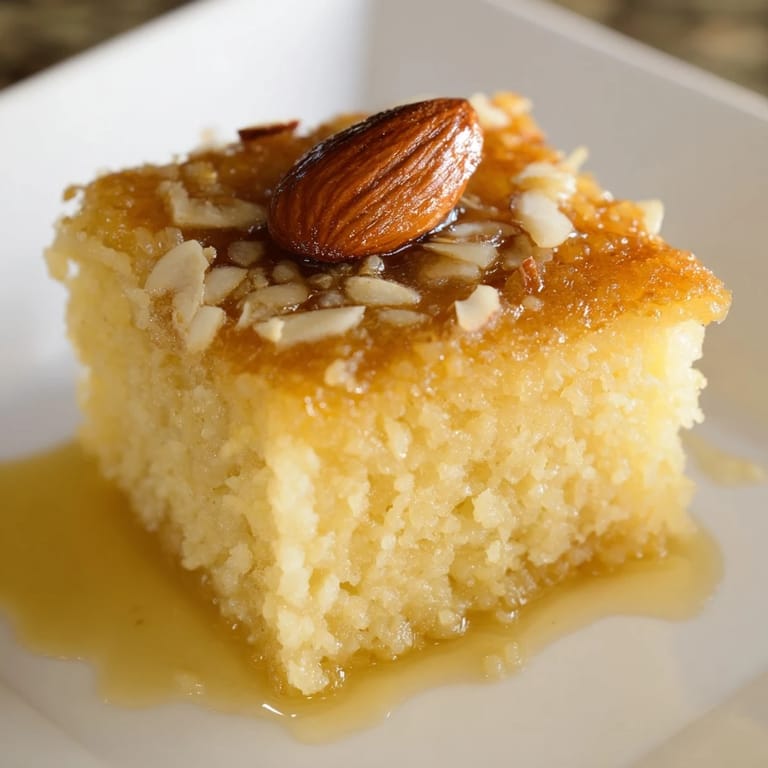
- The instant the basbousa comes out of the oven, pour the cooled syrup all over it in a steady stream, watching as the warm cake drinks it in. This contrast between hot cake and cool syrup is what creates that signature moist texture.
- Cool and cut:
- Let everything cool completely at room temperature before re-cutting along your scored lines with a sharp knife. This patience prevents crumbling and lets the flavors fully settle.
 Save
Save I once made this for a friend going through a rough patch, and she ate a piece while standing at my kitchen counter, then quietly asked to sit down. Sometimes food is just food, but sometimes it's a small kindness that lands exactly when someone needs it most.
Why This Dessert Belongs in Your Rotation
Basbousa is the kind of dessert that doesn't require you to be a baker; it asks only that you follow a straightforward method and trust the ingredients to do their job. I've watched people who claim they can't bake successfully pull a pan from the oven, and I've watched people who spend hours on pastry appreciate how this humble cake proves that simplicity is its own elegance. It's affordable to make, feeds a crowd, and tastes far better than the effort it demands.
Variations and Flavor Play
The first time I added a splash of orange blossom water to the syrup, the entire cake transformed into something almost floral and sophisticated, and I wondered why I'd waited so long to try it. You can experiment with different nuts, swap in sour cream for some of the yogurt for extra richness, or even dust the top with extra coconut before baking for a crunchier surface. The base recipe is forgiving enough that gentle experimentation only makes it better.
Serving and Storage
Basbousa tastes best served at room temperature with strong tea or coffee, the sweetness of the cake playing off the bitterness in a way that feels balanced and satisfying. Store it covered at room temperature for up to four days, and yes, it actually improves slightly as the syrup continues to soak in, making it an ideal make-ahead dessert for gatherings.
- Serve each piece with a small cup of mint tea or strong coffee to cut through the sweetness.
- If you find it too sweet, a small dollop of plain yogurt on the side provides a cooling contrast.
- Wrapped individually, pieces of basbousa make a thoughtful gift, especially during holidays or special occasions.
 Save
Save This is the dessert I return to again and again, not because it's complicated, but because it never fails and it always reminds me why simple things, done with care, matter most.
Recipe FAQs
- → What gives Basbousa its moist texture?
A mixture of yogurt and melted butter creates the rich, moist texture of this semolina cake, ensuring it stays tender after baking.
- → Can I substitute almonds with other nuts?
Yes, almonds can be replaced with pistachios or other tree nuts for a different flavor and texture.
- → What is the purpose of the fragrant syrup?
The syrup soaks into the baked semolina, adding sweetness and a subtle aroma from rose or orange blossom water.
- → How do I know when the cake is done baking?
Bake until golden brown and a toothpick inserted in the center comes out clean, indicating it’s fully cooked.
- → Can I enhance the coconut flavor further?
Sprinkling extra desiccated coconut on top before baking intensifies the coconut aroma and taste.