 Save
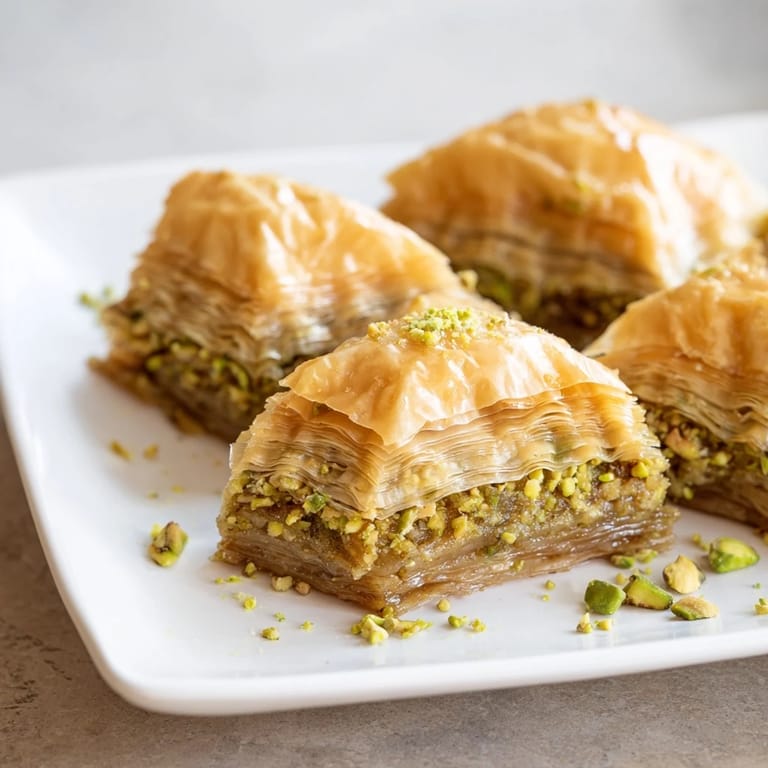
Save The first time I made baklava, I was standing in my neighbor's kitchen at midnight, watching her hands move through the phyllo sheets like she was conducting an orchestra. She'd learned it from her grandmother in Istanbul, and the way she talked about the pastry—how it needed patience, respect, a gentle touch—made me understand that this wasn't just dessert. It was a conversation between generations, layer by delicate layer. That night, when we poured the warm honey syrup over the golden pastry fresh from the oven, the smell that filled the kitchen was pure magic, and I was hooked.
I made this for my sister's book club last fall, and I remember the kitchen was a complete mess—flour everywhere, phyllo crumbs on the floor, butter splashed on my shirt. But then that moment came when I poured the syrup, and the whole apartment smelled like a Turkish bazaar. One of her friends, who'd grown up in Ankara, took a bite and just closed her eyes. She didn't say anything for a full minute, and that silence told me everything. Now it's the dessert everyone asks me to bring.
Ingredients
- Walnuts, finely chopped (1½ cups): The backbone of the filling—their earthy richness balances the sweetness beautifully, and finely chopping them (not grinding) keeps the texture from becoming paste-like.
- Pistachios, finely chopped (1 cup): These add color, a subtle brightness, and a whisper of sophistication; they're worth buying good quality because you'll taste the difference.
- Almonds, finely chopped (½ cup): They soften the intensity of the walnuts and add a delicate sweetness that rounds out the nut profile.
- Granulated sugar (½ cup for filling): This sweetens the nuts and helps them stay slightly moist as they bake, preventing them from drying out completely.
- Ground cinnamon (1 tsp): The warm spice that ties everything together—it's not just flavoring, it's the soul of the filling.
- Phyllo dough, thawed (1 lb): Handle it like it's precious because it is; those paper-thin sheets are what create the legendary crispness, so always thaw it in the fridge overnight.
- Unsalted butter, melted (1 cup): Use real butter, not margarine, because the flavor matters here, and make sure it's melted but not too hot when you brush it on.
- Honey (1 cup): The syrup's sweetness comes from this, so use good honey—it's worth it for the depth it adds.
- Water (1 cup): Dilutes the honey so the syrup soaks in rather than just sitting on top like a glaze.
- Granulated sugar for syrup (1 cup): Works with the honey to create a syrup that's silky and balanced, not cloying.
- Lemon juice (1 tbsp): This is the secret weapon that cuts through the sweetness and makes everything taste more alive.
- Lemon zest (1 strip): Adds complexity to the syrup without making it taste citrusy—just a whisper of brightness.
- Cinnamon stick (1): Infuses the syrup with warmth while it simmers, creating a depth you can't get from ground cinnamon alone.
Tired of Takeout? 🥡
Get 10 meals you can make faster than delivery arrives. Seriously.
One email. No spam. Unsubscribe anytime.
Instructions
- Set up your stage:
- Preheat your oven to 350°F and brush your 9x13 baking dish generously with butter—every corner counts because this is what keeps the bottom layers crispy. Combine your chopped nuts with the sugar and cinnamon in a bowl, and have it ready because once you start layering, you won't want to stop.
- Respect the phyllo:
- Unroll your thawed dough and immediately drape a damp (not soaking) kitchen towel over it; phyllo dries out in seconds, and dry phyllo tears instead of bending. This is the moment where patience becomes your best friend.
- Build your base:
- Lay one sheet of phyllo in the dish, brush it with melted butter using a pastry brush (not too much, not too little—a light, even coat), and repeat until you have 8 layers. The butter is what creates those shatteringly crispy layers, so don't skip it between sheets, but don't drown them either.
- First layer of nuts:
- Sprinkle exactly one-third of your nut mixture over the 8-layer base, spreading it evenly and not pressing down—let the nuts sit loosely so they toast rather than steam.
- Build the middle:
- Layer 5 more phyllo sheets, buttering each one, then scatter another third of the nuts over them in the same relaxed, even way.
- Final nut layer:
- Repeat with 5 more phyllo sheets and the remaining nuts, creating three distinct layers of filling separated by phyllo.
- Crown it:
- Finish with 8-10 phyllo sheets, buttering each one, to create a protective golden crust that locks in all the moisture and flavor.
- Cut before baking:
- Using a very sharp knife, cut the baklava into diamonds or squares (diamonds are traditional, but squares are easier); the key is cutting through all the layers cleanly in one motion, not sawing, which crushes the delicate pastry.
- The golden transformation:
- Bake for 45 minutes until the top is deep golden and you can hear the crackle when you move the pan—this is when you know the phyllo has achieved that impossible crispness.
- Make the syrup magic:
- While the baklava bakes, combine honey, water, sugar, lemon juice, zest, and cinnamon stick in a saucepan and bring to a boil. Let it simmer for 10 minutes so the flavors marry and mellow slightly, then remove the zest and cinnamon stick and let it cool just enough that it's still warm but not scorching.
- The crucial pour:
- The moment the baklava comes out of the oven, slowly pour the warm syrup over it—this is non-negotiable because the contrast between the hot pastry and warm syrup lets the pastry absorb the sweetness while staying crispy. If you wait until it cools, you'll just have sticky baklava.
- The long wait:
- Let it cool completely at room temperature, then cover and let it sit for at least 4 hours (or overnight, even better) so the syrup can fully soak into every layer and the flavors develop their full complexity.
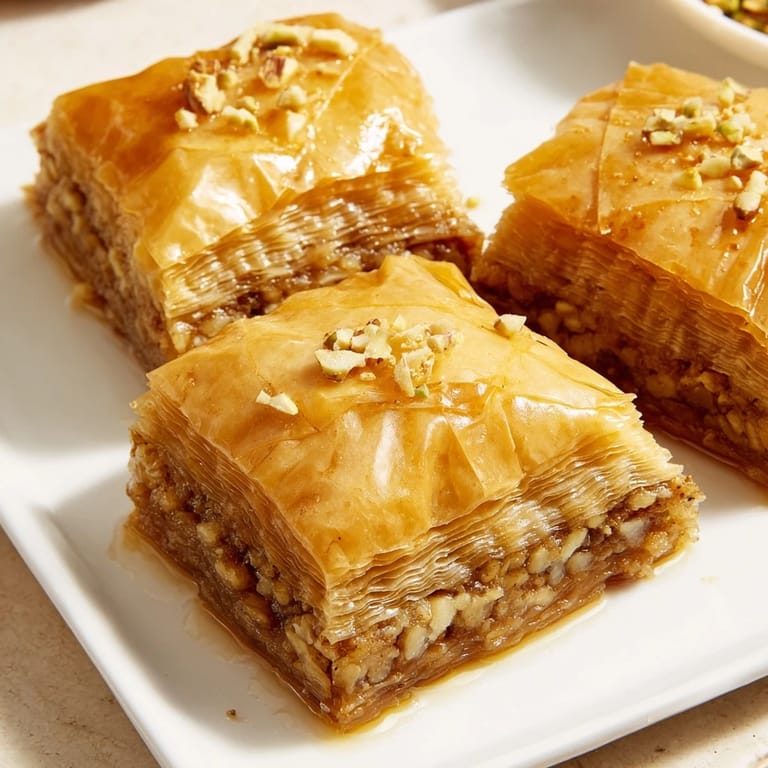 Save
Save There was an afternoon when my daughter helped me make baklava, and she was obsessed with the cutting part. She wanted to understand why we cut before baking instead of after, and as I explained how the heat flows through those cuts and cooks them evenly, I watched her face light up—suddenly baklava wasn't just a dessert anymore, it was geometry and science and tradition all on one tray. That's when I realized this recipe teaches you something every single time you make it.
The Nut Filling: Why It Works
The combination of three different nuts is deliberate—walnuts provide the bulk and earthiness, pistachios add brightness and visual appeal, and almonds soften the overall intensity. When you mix them with sugar and cinnamon before layering, the sugar begins drawing moisture from the nuts, which means they'll stay tender as they bake instead of becoming hard little pebbles. I learned this the hard way after my first batch turned crunchy in an unpleasant way, and now I always give the nut mixture a gentle stir after mixing it to ensure the sugar is evenly distributed.
The Syrup: Timing Is Everything
This is where most people either nail it or fumble—the syrup has to be warm when it hits the hot baklava, and the baklava has to still have residual heat so it absorbs the liquid without becoming soggy. The lemon juice and zest are crucial because they cut through the sweetness and keep the syrup from tasting one-dimensional; without them, it can feel cloying by the third or fourth piece. I've also learned that simmering the syrup for a full 10 minutes makes a real difference—it mellows the honey's intensity and lets all the flavors come into balance.
Storage and Serving
Baklava actually improves over time as the syrup continues to soak in, so making it a day or two ahead is smarter than serving it fresh from the cooling rack. Keep it covered at room temperature (never the fridge, which hardens it) and it'll stay perfect for about a week. Pair each piece with strong Turkish coffee or black tea—the bitterness of the coffee or tea is the perfect counterpoint to the richness of the baklava, and honestly, eating it any other way feels like you're missing half the experience.
- Store baklava in an airtight container at room temperature for up to one week, and resist the urge to refrigerate it.
- If you want to make it even more special, warm each piece slightly before serving—just 10 seconds in the microwave brings back the buttery aroma.
- You can prepare the syrup the day before, which actually gives it time to develop deeper flavor, and just warm it gently before pouring.
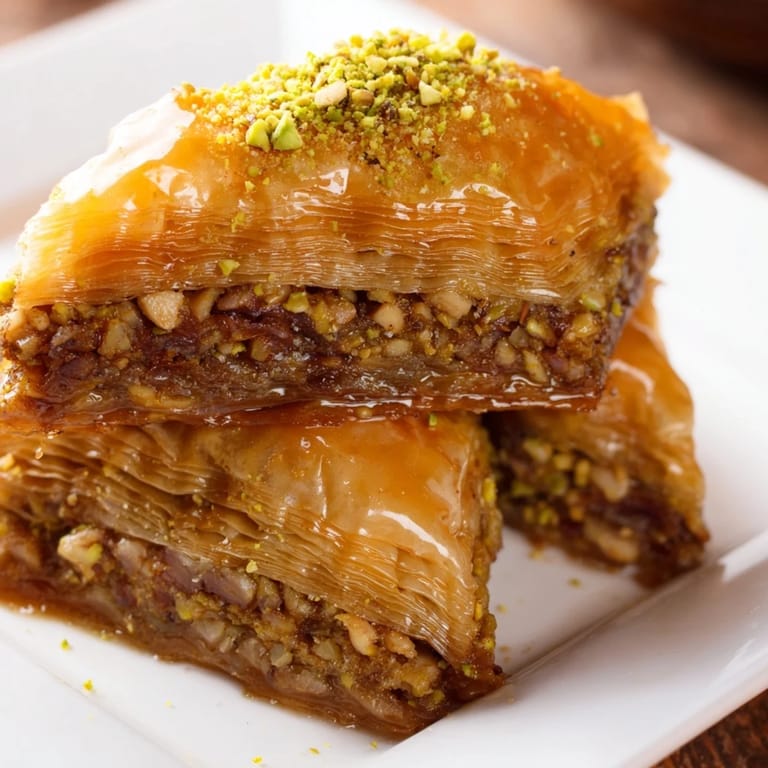 Save
Save Making baklava never feels routine to me, even after dozens of batches. There's something about layering those fragile sheets and watching them transform into golden treasure that reminds me why we cook—not just to eat, but to create something that brings people together and tastes like love.
Recipe FAQs
- → What kind of nuts are used in this dessert?
A combination of finely chopped walnuts, pistachios, and almonds provides a rich and textured filling.
- → How do I prevent the phyllo dough from drying out?
Cover the phyllo sheets with a damp towel while working to keep them moist and pliable.
- → What is the purpose of the honey syrup?
The honey syrup soaks into the baked layers, adding sweetness and moisture, while infusing hints of cinnamon and lemon.
- → Can I prepare this dessert in advance?
Yes, it’s best to let it rest for at least 4 hours after syruping, allowing full absorption and flavor development.
- → What temperature should the oven be for baking?
Preheat the oven to 350°F (175°C) and bake the layered pastry until it turns golden and crisp, about 45 minutes.
- → Are there any storage tips for leftovers?
Keep the dessert covered at room temperature for up to one week to maintain freshness and texture.