 Save
Save The first time I attempted makroudh, I was standing in my aunt's kitchen in Tunis, watching her hands move with such practiced ease through the semolina and date filling that I barely understood what was happening. She'd stuff these golden pastries for every celebration, and I remember asking her why they tasted different from mine—turns out, she'd been letting the date mixture cool completely before shaping, something I'd been skipping in my rush. Now, whenever I make them, I can almost hear her laughing at my impatience as the honey syrup pools on the wire rack below.
I made a batch for my friend Layla's daughter's naming ceremony, and I'll never forget how quickly they disappeared from the table—we had forty-eight and couldn't keep up with refilling the platter. Someone's grandmother pulled me aside afterward and asked for the recipe, and I realized these cookies had traveled from Tunisia to my kitchen to hers, carrying stories without needing a single word.
Ingredients
- Fine semolina: This is the foundation—500 grams creates that signature sandy texture before you add liquid, and it crisps beautifully when fried. Don't use coarse semolina or you'll end up with a grainy result instead of that delicate, tooth-melting crumb.
- Melted butter and olive oil: The combination of 125g butter and 75ml oil matters more than you'd think—the olive oil adds richness and helps the dough hold together, while butter brings that golden, slightly nutty flavor that makes people ask what your secret is.
- Warm water: Start with 100ml and add more gradually; humidity in your kitchen changes everything, and overworking the dough with too much water will give you a dense, chewy cookie instead of a tender one.
- Sugar, salt, and cinnamon: Just 2 tablespoons of sugar and a whisper of salt let the date filling shine, while the cinnamon in the dough echoes the spices in the filling for a harmonious warmth.
- Pitted dates: Chopped to 300 grams, they're the soul of these cookies—softer Medjool dates will break down into paste quickly, while firmer Deglet Noor dates hold their shape longer, so choose based on whether you want smooth or chunky filling.
- Butter, cinnamon, nutmeg, and orange blossom water for filling: The nutmeg brings earthiness while orange blossom water (if using) lifts everything with floral brightness; if you skip it, the cookies are still beautiful but more understated.
- Vegetable oil for frying: You need about enough to reach 170°C, and the temperature matters—too cool and they absorb oil greasily, too hot and they brown before the inside softens.
- Honey and orange blossom water for syrup: Warm honey clings to each cookie like a glaze, and the optional orange blossom water makes it feel like a gift rather than just sweetness.
- Sesame seeds: These are optional but worth it—toasted ones add a nutty finish that catches the light.
Tired of Takeout? 🥡
Get 10 meals you can make faster than delivery arrives. Seriously.
One email. No spam. Unsubscribe anytime.
Instructions
- Make the date filling while the dough rests in your mind:
- In a saucepan over low heat, combine your chopped dates with a tablespoon of butter, cinnamon, and nutmeg, stirring gently until the dates soften into a paste—you'll hear the sizzle quiet down and smell the spices bloom. If using orange blossom water, stir it in off the heat, then spread the filling on a plate to cool completely so it's easier to handle.
- Build the dough by feel:
- Mix your semolina, sugar, salt, and cinnamon in a large bowl, then pour in the melted butter and olive oil and rub everything together with your fingertips until it looks like wet sand. Gradually drizzle in warm water while kneading gently—you want a soft, pliable dough that doesn't fight back, then cover it and let it rest for twenty minutes while you take a breath and maybe have some tea.
- Shape the logs and fill them:
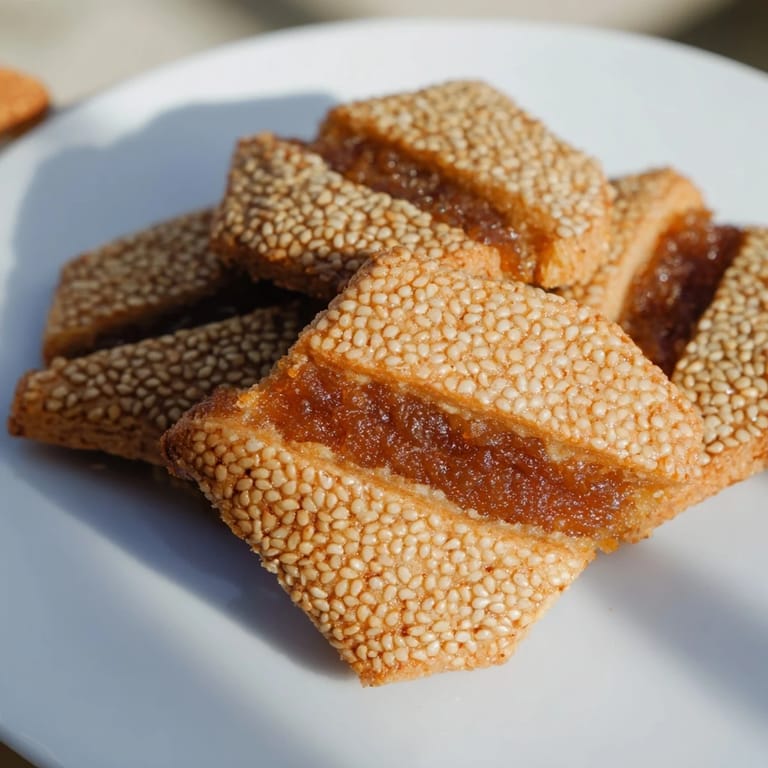
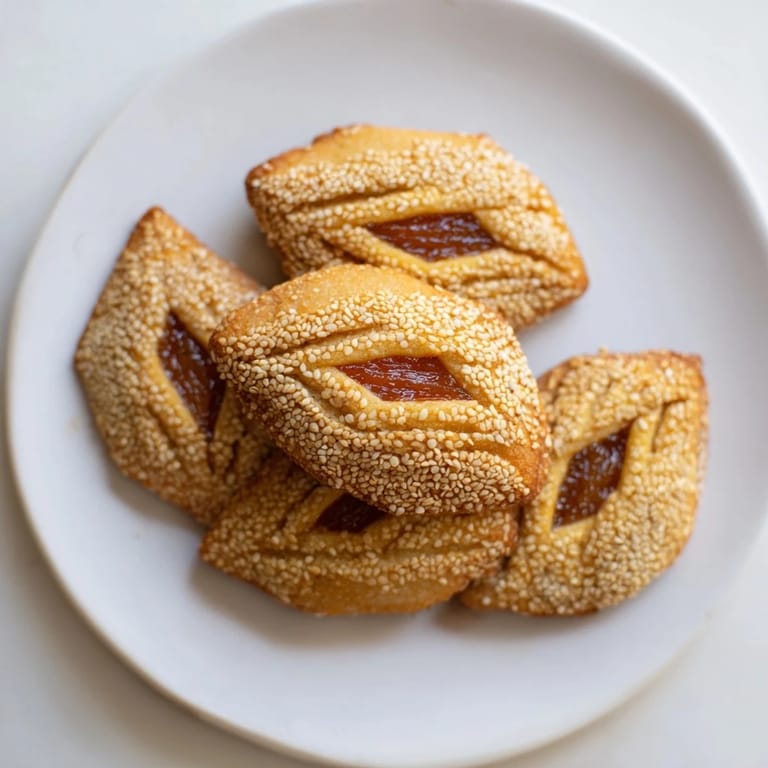
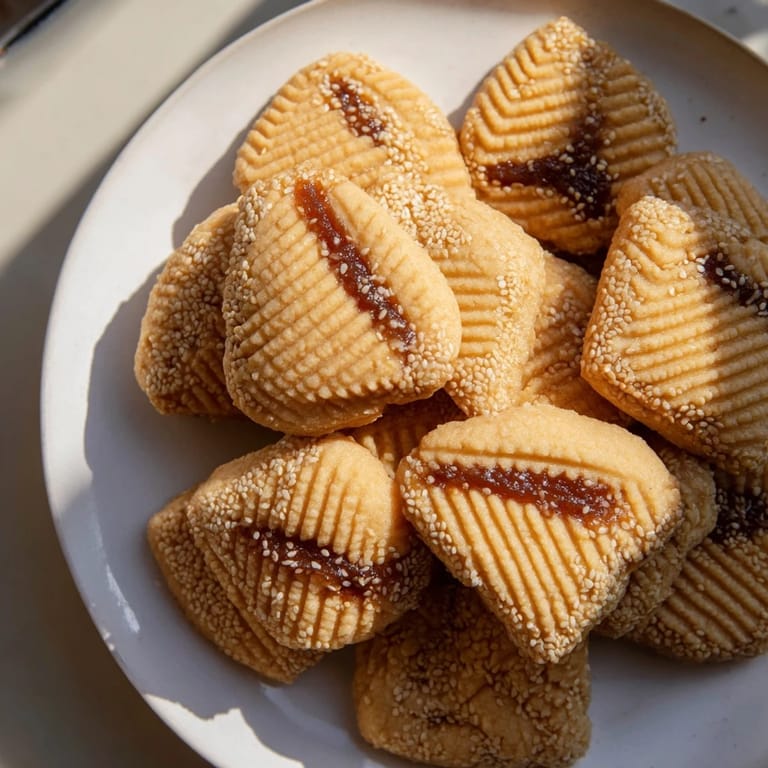
- Divide your rested dough in half and roll each portion into a thick log about 5 centimeters across, then use your finger to press a deep lengthwise groove down the middle. Lay your cooled date log into the groove, fold the dough over to seal it, and gently roll the whole thing to smooth out any cracks, then flatten slightly and cut diagonally into diamond shapes about 4 to 5 centimeters across.
- Fry until they sing:
- Heat your oil to 170°C (watch it carefully with a thermometer, as guessing is how accidents happen), then fry the makroudh in batches until they're golden on all sides—about 5 to 7 minutes, and you'll know they're ready when they float and stop sizzling quite so loudly. Drain them on paper towels while you warm your honey with optional orange blossom water in a small saucepan.
- Finish with the glaze:
- Dip each warm fried makroudh into the warm honey syrup, letting the excess drip off, then place it on a wire rack to cool and set. Scatter sesame seeds over the top if you're using them, and resist eating one immediately—they're almost too hot and too delicious to handle.
 Save
Save There's a moment when you dip the first hot makroudh into the honey syrup and watch it catch the light—glossy, golden, perfect—and suddenly you understand why these cookies have been made the same way for centuries. It's not just nostalgia or tradition; it's because the method works, because every step exists for a reason, and because something that tastes this good deserves to be treated with respect.
A Word on Orange Blossom Water
Orange blossom water is optional, but it's the ingredient that transforms makroudh from delicious to unforgettable—it adds a subtle floral sweetness that feels almost mysterious if you've never encountered it before. I didn't use it in my first batches, and they were fine, but the moment I added it, my friend asked if I'd learned some secret technique, when really it was just that one ingredient. Rose water works beautifully too if you prefer a different floral note, or you can skip it entirely and let the dates and spices be the stars.
Baking as an Alternative
If frying feels intimidating or you want a lighter version, these cookies bake beautifully at 180°C for 25 to 30 minutes until golden, and they're less rich but still satisfying. You'll lose some of that crispy exterior that makes fried makroudh special, but the baked version is less messy, uses less oil, and still dips gorgeously in honey syrup—it's a different experience, not a lesser one, and sometimes easier is exactly right.
Storage and Keeping
Makroudh stays crispy and delicious in an airtight container for about a week, though they rarely last that long in my house—they're the kind of cookie you find yourself reaching for with your morning coffee or after dinner, and before you know it, the container is empty.
- Keep them in a container with a tight seal, or they'll soften from humidity after a few days.
- If they do soften, pop them in a low oven for five minutes to re-crisp them, and they'll taste almost freshly made.
- You can freeze the uncooked, shaped cookies for up to a month, then fry them directly from the freezer without thawing—just add a minute or two to the cooking time.
 Save
Save Making makroudh is like speaking a language you've absorbed through your hands rather than your ears—once you understand the texture of the dough and the feel of the date paste, you'll make them again and again, each batch slightly different because you're not following a recipe anymore, you're cooking from instinct. That's when they taste best.
Recipe FAQs
- → What gives makroudh its distinctive texture?
The combination of fine semolina dough and careful frying creates a crisp, golden crust that contrasts with the soft date filling inside.
- → How is the date filling prepared?
Chopped dates are cooked gently with butter, cinnamon, and nutmeg until softened into a smooth paste, sometimes enhanced with orange blossom water.
- → Can makroudh be baked instead of fried?
Yes, baking at moderate heat offers a lighter version with a golden crust, which is then dipped in honey syrup for flavor.
- → What flavors complement these semolina pastries when served?
Makroudh pairs wonderfully with mint tea or light floral beverages that balance their sweet and spiced notes.
- → How should makroudh be stored?
Store in an airtight container at room temperature for up to one week to maintain crispness and freshness.