 Save
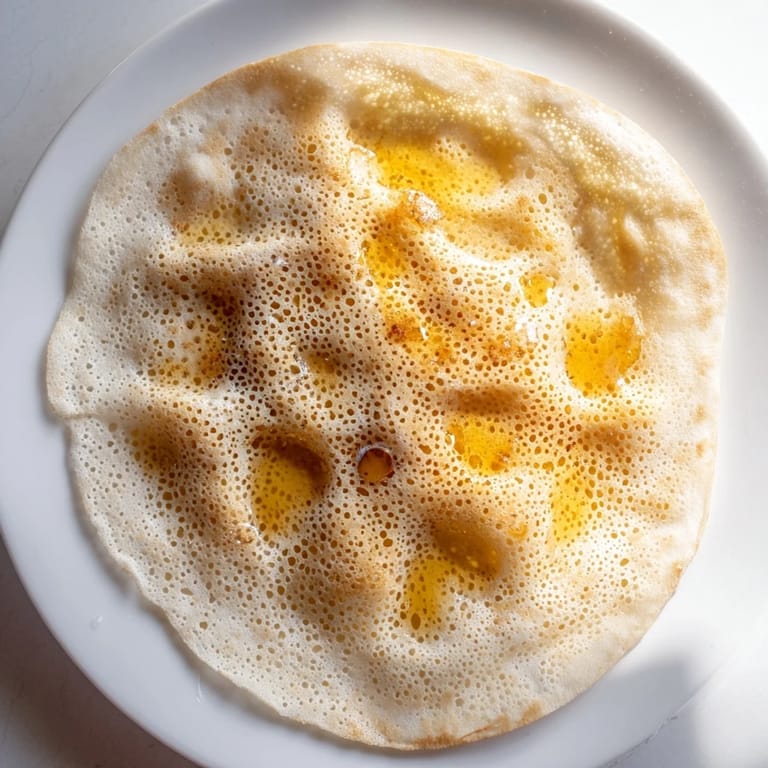
Save The first time I made baghrir, I was standing in a tiny kitchen in Marrakech, watching my host's mother work with what seemed like impossibly simple ingredients. She poured the batter onto a bare pan without oil, and suddenly the surface erupted into those signature honeycomb holes, like magic. Years later, I recreate that moment every time I make these spongy, delicate crepes at home, chasing that same sense of wonder when the batter transforms.
I brought baghrir to a potluck once, convinced no one would understand what they were eating, and watched three people go back for seconds while asking how it was possible for something so light to feel so satisfying. That's when I realized this recipe needed to be in my regular rotation, not saved for special occasions.
Ingredients
- Fine semolina: This is the star, giving baghrir its characteristic spongy texture and slight nutty flavor that you can't replicate with flour alone.
- All-purpose flour: It balances the semolina and helps the batter hold together without making it dense.
- Warm water: Temperature matters here because the yeast needs warmth to wake up and create those bubbles that form the holes.
- Active dry yeast: Don't skip this or use instant yeast without adjusting—the fermentation is what creates the texture, not just the baking powder.
- Baking powder: This ensures you get those holes even if your yeast isn't perfectly active, giving you a safety net.
- Granulated sugar: A small amount feeds the yeast and adds subtle sweetness without overpowering the delicate flavor.
- Salt: Just enough to balance everything and bring out the depth of the semolina.
- Unsalted butter and honey: These are your finish line, and using quality versions makes a noticeable difference in the final taste.
Tired of Takeout? 🥡
Get 10 meals you can make faster than delivery arrives. Seriously.
One email. No spam. Unsubscribe anytime.
Instructions
- Mix the dry foundation:
- Combine semolina, flour, sugar, yeast, baking powder, and salt in a large bowl. This is when your kitchen should smell toasty and promising.
- Build the batter:
- Pour warm water in slowly while whisking, watching the batter transform from rough to silky smooth. You're looking for a consistency like thick cream, not pancake batter.
- Let it rest and ferment:
- Cover and leave the bowl at room temperature for 30 minutes. You'll see the surface start to bubble and the batter will smell slightly yeasty—that's exactly what you want.
- Heat your pan properly:
- Get your nonstick skillet hot over medium heat, and crucially, don't add any oil or butter. A bare pan is key to getting those holes.
- Pour and swirl gently:
- About ¼ cup batter per crepe, swirled quickly to cover the pan. The motion matters more than the precision here.
- Watch for the honeycomb:
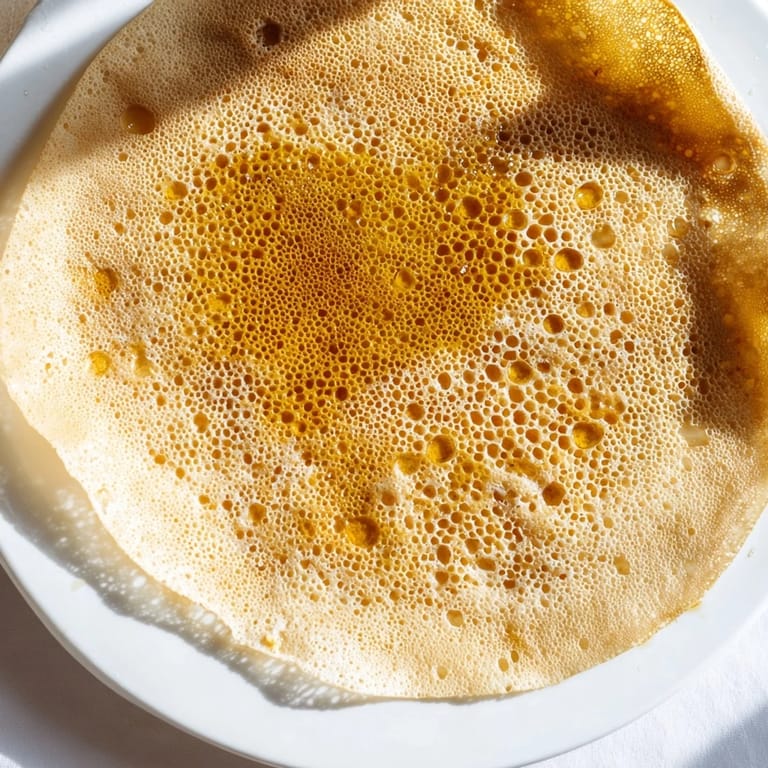
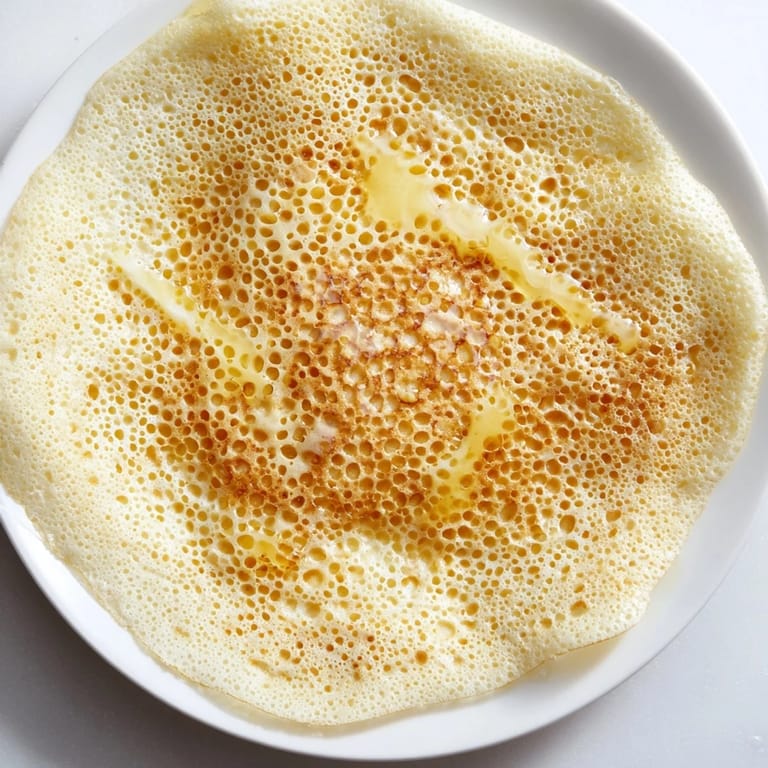
- Stay close because the magic happens fast. The surface will bubble and develop those signature holes while the top dries out, taking about 2 to 3 minutes. You'll know it's ready when the bubbles stop steaming.
- Slide, don't flip:
- Baghrir tears easily, so use a thin spatula to gently slide it onto a plate. No flipping—the bottom should be pale and tender, not browned.
- Warm the honey butter:
- Gently melt butter and honey together in a small saucepan over low heat, letting them marry into a luxurious glaze.
- Serve while warm:
- Stack your baghrir and pour that honey butter generously over the top, letting it soak into all those little holes.
 Save
Save There's something almost meditative about making baghrir, watching the batter transform from simple ingredients into something that feels luxurious. When my kids started requesting these for weekend breakfast instead of regular pancakes, I knew I'd found something worth keeping around.
The Texture That Makes It Special
Those holes aren't just for show—they're engineered by the combination of yeast fermentation and the heat reacting with the batter. The yeast creates tiny bubbles throughout the batter, and when it hits the hot pan, those bubbles expand rapidly and burst through the surface, leaving behind those characteristic dimples. It's why semolina is crucial; its coarser texture creates a network that holds these bubbles instead of deflating them like finer flours might.
Timing and Temperature Secrets
The 30-minute rest isn't negotiable, and the water temperature matters more than you'd think. If your water is too cool, the yeast wakes up slowly and your batter won't have enough lift. If it's too hot, you'll kill the yeast entirely. Aim for about 110°F if you have a thermometer, or warm enough that it's pleasant on your inner wrist without being hot. Once you're cooking, medium heat is the sweet spot—too high and the bottom browns before the holes form, too low and the batter spreads too thin.
Variations Worth Exploring
I've played with baghrir a hundred different ways, and the basics stay the same, but the accompaniments and timing can shift. Some mornings I drizzle them with orange blossom honey instead of regular honey, or sprinkle them with toasted almonds and pistachios. I've even rolled them with ricotta and jam for a fancier dessert version. The base recipe is forgiving enough to let you make it your own.
- Try warming your serving plates so the baghrir stays hot longer and the honey butter soaks in beautifully.
- If you're making these ahead, stack them between parchment and reheat gently in a low oven wrapped in foil to preserve the texture.
- A touch of cinnamon or cardamom in the honey butter adds dimension without changing the core recipe.
 Save
Save Baghrir proves that some of the best things in the kitchen come from patience and understanding why each step matters. Once you've made it once and seen those holes appear, you'll understand why this simple recipe has survived centuries in Moroccan kitchens.
Recipe FAQs
- → What gives Baghrir its honeycomb texture?
The bubbly texture comes from yeast fermenting the semolina and flour batter, which creates small holes during cooking.
- → Can I use only flour instead of semolina?
Semolina adds a distinct texture and bite; using only flour may result in a less spongy crepe.
- → Why am I not flipping the crepes while cooking?
Baghrir cooks from one side only to maintain the unique porous surface, essential for soaking up the honey butter.
- → How do I know when the crepes are cooked?
They are ready when the top surface is dry and covered with tiny holes, usually after 2-3 minutes on medium heat.
- → Can I prepare the batter ahead of time?
While fresh batter yields the best results, it can be rested before cooking. If too thick, add a bit of water to loosen.