 Save
Save The first time I made kahk, I was standing in my grandmother's kitchen while she shaped these butter-soft rounds with the ease of someone who'd done it a thousand times. She didn't measure anything—just a pinch of this, a handful of that—but when I tried to replicate it at home months later, something clicked. The dough came together like silk, the dates melted into a caramel-dark paste, and suddenly I understood why these cookies show up at every celebration, every quiet afternoon, every moment worth sharing.
I made these for my neighbor one December morning, and she came back asking for the recipe by that evening. Her kids had eaten five cookies each without stopping, and she wanted to know my secret. The truth is simpler than any trick—it's just good butter, good dates, and a little patience while you're shaping them.
Ingredients
- All-purpose flour (3 cups): This is your foundation, and it needs to be measured properly or your dough will betray you halfway through.
- Unsalted butter (1 cup, softened): Cold butter will fight you; let it sit on the counter for thirty minutes so it creams into something light and fluffy.
- Powdered sugar (1/2 cup): This dissolves into the butter and keeps the texture tender and yielding.
- Milk (1/4 cup, plus more as needed): Add it slowly, one tablespoon at a time, because you're looking for a soft dough that holds together without being sticky.
- Baking powder (1/2 teaspoon): Just enough to give the cookies a subtle lift without making them cakey.
- Salt (1/4 teaspoon): Don't skip this; it makes the butter and dates taste more like themselves.
- Vanilla extract (1 teaspoon): A whisper of vanilla that nobody will identify but everyone will feel.
- Medjool dates (1 cup, pitted and chopped): These are soft and sweet, better than any other variety for this purpose.
- Unsalted butter for filling (2 tablespoons): This melts into the dates and turns them into a sticky, spreadable paste.
- Ground cinnamon (1/2 teaspoon): Warm and grounding, the backbone of the filling's flavor.
- Ground cardamom (1/4 teaspoon, optional): If you use it, the filling becomes something unforgettable; if you skip it, the cookies are still beautiful.
- Sesame seeds (1/2 cup, untoasted): These stick best when the dough is still slightly warm, and they toast a little in the oven for a gentle, nutty finish.
Tired of Takeout? 🥡
Get 10 meals you can make faster than delivery arrives. Seriously.
One email. No spam. Unsubscribe anytime.
Instructions
- Prepare your oven and workspace:
- Heat your oven to 350°F (175°C) and line a baking sheet with parchment paper. This step takes two minutes and saves you stress later when your hands are covered in dough and date paste.
- Cream the butter and sugar:
- In a large bowl, beat the softened butter and powdered sugar together until it looks pale, fluffy, and almost like frosting. This usually takes three or four minutes with an electric mixer, and it's the moment where your dough begins to become tender.
- Add vanilla and dry ingredients:
- Mix in the vanilla extract, then slowly add the flour, baking powder, and salt, stirring until you have shaggy crumbs. Don't overmix at this point; the dough wants to come together gently, not aggressively.
- Bring the dough together:
- Add the milk one tablespoon at a time, kneading softly after each addition, until you have a soft, pliable dough that holds together without sticking to your hands. If it feels too dry, add another splash of milk; if it's too sticky, dust with a little more flour. Trust your hands more than any measurement.
- Prepare the date filling:
- Combine the chopped dates and butter in a small saucepan over low heat, stirring constantly as the dates soften and collapse into a paste. This takes about five minutes and fills your kitchen with a deep, sweet smell that makes you want to keep tasting it. Stir in the cinnamon and cardamom, then let it cool for ten minutes so it's manageable but still warm.
- Shape the cookies:
- Divide your dough into twenty-four equal pieces by rolling them into balls or cutting the dough into quarters, then dividing each quarter into six. Flatten each piece into a thin disk in your palm, place a teaspoon of filling in the center, fold the edges over to seal, and gently roll it back into a ball with the seam hidden at the bottom.
- Coat with sesame seeds:
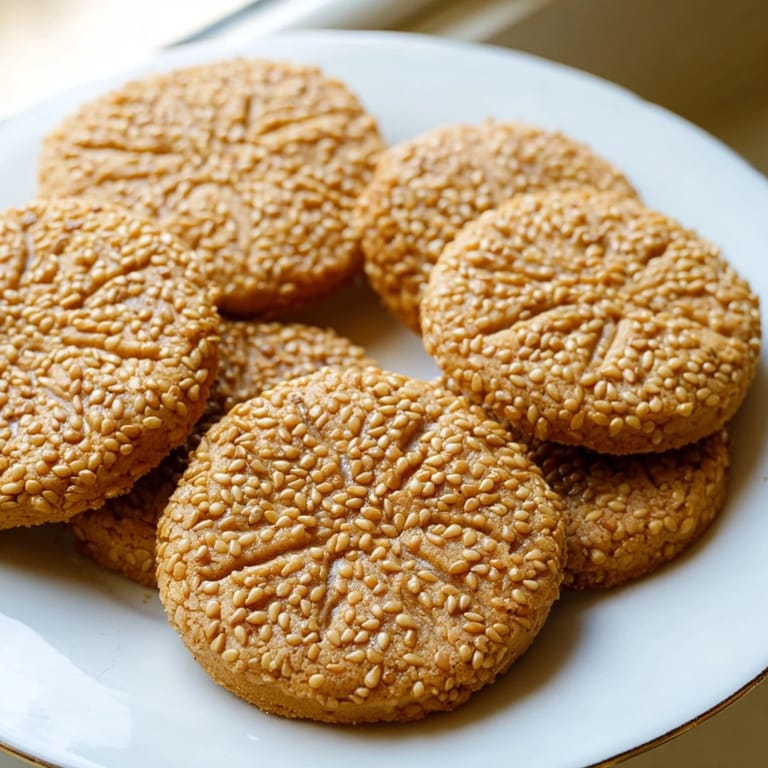
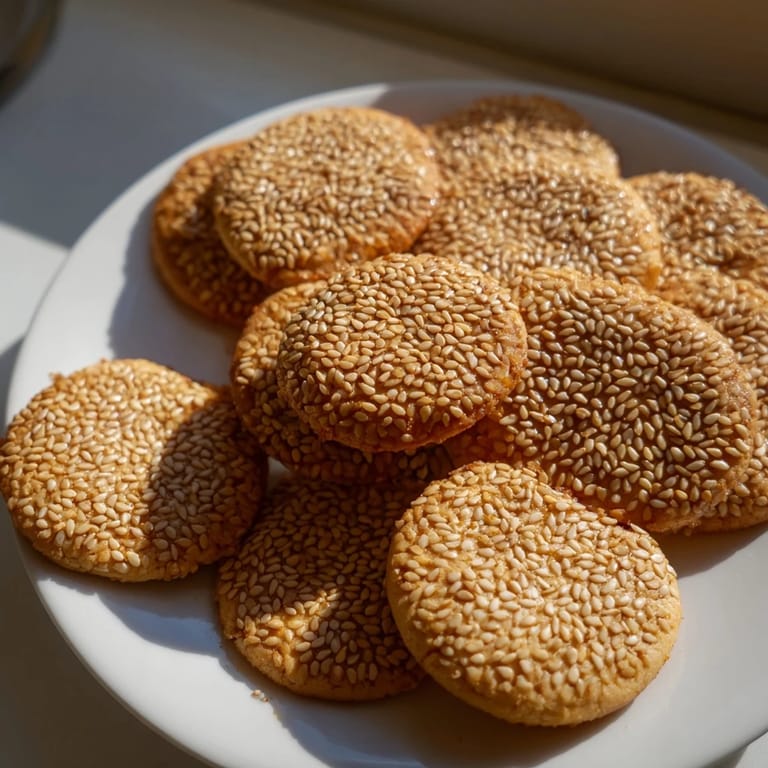
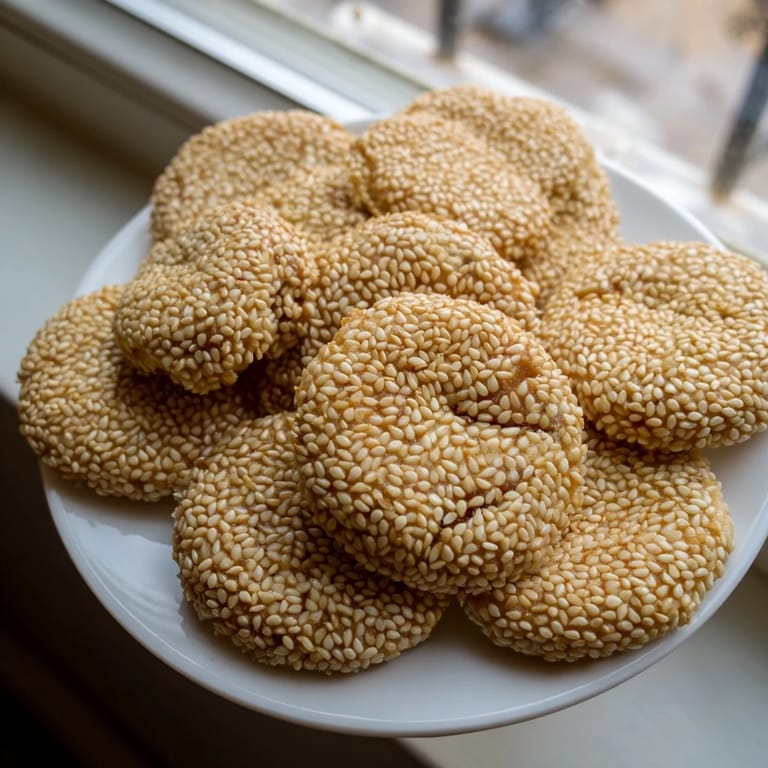
- Pour the sesame seeds into a small bowl and roll each dough ball in them, pressing lightly so the seeds cling to the surface. Don't worry about perfect coverage; the beauty of these cookies is in their homemade, slightly imperfect coating.
- Create the pattern:
- Arrange the seeded balls on your baking sheet, then use a fork or cookie mold to gently flatten each one and create a decorative crosshatch or pattern. This isn't just for looks—it also helps them bake evenly.
- Bake:
- Bake for eighteen to twenty minutes, watching carefully so the bottoms turn golden while the tops stay pale and delicate. If the tops start browning too quickly, your oven might run hot; rotate the sheet halfway through or lower the temperature slightly next time.
- Cool completely:
- Transfer the cookies to a wire rack and let them cool completely before eating or storing. The sesame seeds will crisp up as they cool, and the dough will set into that perfect tender-but-structured texture that makes kahk special.
 Save
Save There's a moment when you bite into one of these cookies still warm from the oven, when the dough melts on your tongue and the date paste hits you with its sweetness, that you understand why every gathering needs these. They're not just cookies; they're the edible version of someone saying they care enough to spend an hour in the kitchen making something with their hands.
The Story Behind These Cookies
Kahk appears at Palestinian celebrations, at weddings and holidays and quiet afternoons when someone decides the day deserves something special. The combination of butter and dates is ancient—both ingredients have fed people in this region for centuries—but the way they come together in these specific cookies is something that belongs to grandmothers and their kitchens, passed down more through watching than through written instructions. Making them yourself isn't just about the cookie; it's about connecting to that lineage of hands that shaped these same rounds, again and again, in the same way you're doing now.
Tips for Getting the Texture Right
The dough should feel like play dough in your hands—soft, responsive, never stiff or crumbly. If it's stiff, your cookies will be dense and hard. If it's too sticky, they'll fall apart. The filling should be thick enough to hold its shape but spreadable enough that you can press a teaspoon into it without breaking the dough underneath. Temperature matters too; make sure your date paste has cooled enough that it won't warm the dough back up when you fill it.
Storage and Serving
Kahk keep beautifully in an airtight container for up to a week, though I've never had a batch last that long. They taste best at room temperature, broken in half while someone pours coffee or mint tea. If you want to add something unexpected, try rolling the filled dough in a mix of sesame seeds and finely chopped pistachios, or dust the baked cookies lightly with cinnamon sugar while they're still warm.
- Serve these with strong coffee or mint tea for an experience that feels both simple and complete.
- If you're making them ahead for a gathering, bake them the day before so they're at their best.
- These also make a thoughtful gift when packed in a box lined with parchment paper, tied with twine.
 Save
Save These cookies are proof that the most memorable things to eat are often the simplest, made with just a handful of good ingredients and the time it takes to shape them by hand. Make them when you want to slow down, when you want to feed someone you love, or when you just want your kitchen to smell like butter and dates and possibility.
Recipe FAQs
- → What ingredients create the dough?
The dough combines all-purpose flour, softened unsalted butter, powdered sugar, milk, baking powder, salt, and vanilla extract for a tender texture.
- → How is the date filling prepared?
Chopped Medjool dates are cooked with butter over low heat until soft, then blended with cinnamon and optional cardamom to create a smooth spiced paste.
- → Why are sesame seeds used as a coating?
Sesame seeds add a delicate nutty flavor and pleasing texture, complementing the buttery dough and sweet filling.
- → What is the baking temperature and time?
Kahk bakes at 350°F (175°C) for about 18-20 minutes until the bottoms turn golden while tops remain pale.
- → Can these be stored after baking?
Yes, they can be stored in an airtight container for up to one week without losing their texture and flavor.