 Save
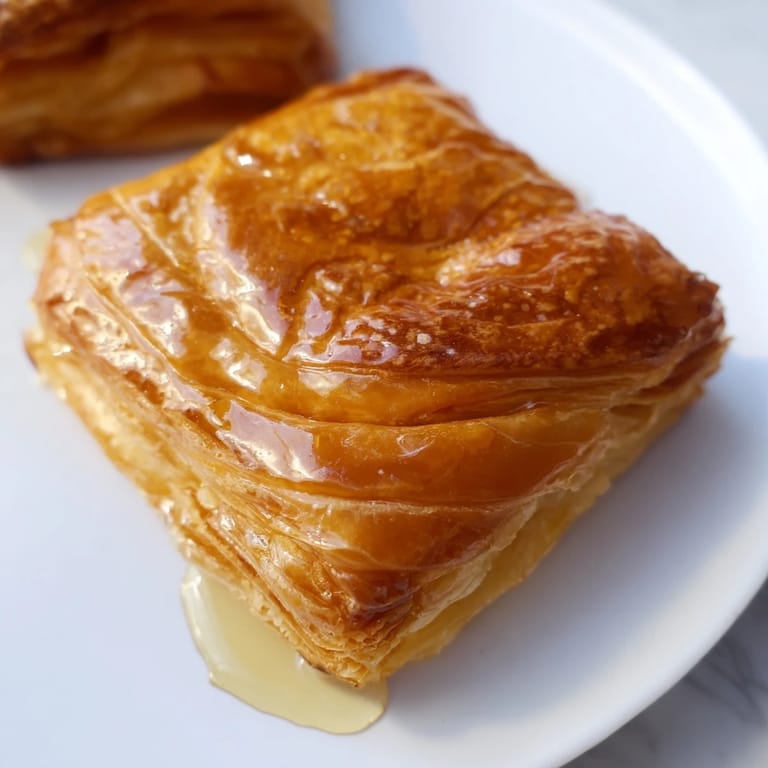
Save The first time I watched my grandmother fold msemen, I couldn't believe how thin she stretched the dough—it was practically see-through, almost like parchment paper. She moved with such ease, brushing butter and sprinkling semolina in one fluid motion, that I thought it must be impossible. But then I tried it myself, and something clicked: the dough wants to be stretched, the butter wants to be layered, and the heat wants to make it golden. Now every time I make these crispy squares, I'm transported to her kitchen, the smell of honey warming in a small pot, and the sound of pastry crackling in the pan.
I made a batch for my neighbor one chilly morning, and she devoured them with an espresso while sitting on my kitchen stool. She kept saying "How is this even a pastry?" between bites, and I realized that msemen has this humble magic—it doesn't ask for much, but it delivers something that feels genuinely special. That morning taught me that the best recipes are the ones that make people pause and pay attention.
Ingredients
- All-purpose flour and fine semolina: The semolina is what gives msemen its signature graininess and helps create those flaky layers when combined with butter.
- Sugar and salt: Just enough to balance the dough without making it sweet—let the honey do that work.
- Warm water: The temperature matters because it helps the dough relax and become extensible without tearing.
- Instant yeast (optional): A tiny bit makes the dough lighter and airier, but skip it if you prefer denser layers.
- Vegetable oil and melted butter: Oil is for your hands and the pan, butter is for brushing between the folds—this layering is everything.
- Honey for serving: Warm it gently so it soaks into the hot pastry rather than just sitting on top.
Tired of Takeout? 🥡
Get 10 meals you can make faster than delivery arrives. Seriously.
One email. No spam. Unsubscribe anytime.
Instructions
- Mix the dough:
- Combine your flour, semolina, sugar, salt, and yeast in a bowl, then gradually pour in the warm water while mixing. You want a soft dough that's not sticky—it should feel almost silky in your hands. Knead for about 10 minutes until it's smooth and elastic, then cover and let it rest for 15 minutes so the gluten relaxes.
- Divide into portions:
- Split the dough into 8 equal balls and lightly grease your hands and work surface with oil. This oil is crucial because it keeps the dough from sticking while you stretch it.
- Stretch into thin circles:
- Take one dough ball and gently stretch it with your oiled hands, working from the center outward, until it's nearly transparent. This takes patience—rush it and the dough tears, but give it a moment and it becomes this beautiful, delicate circle.
- Layer with butter and semolina:
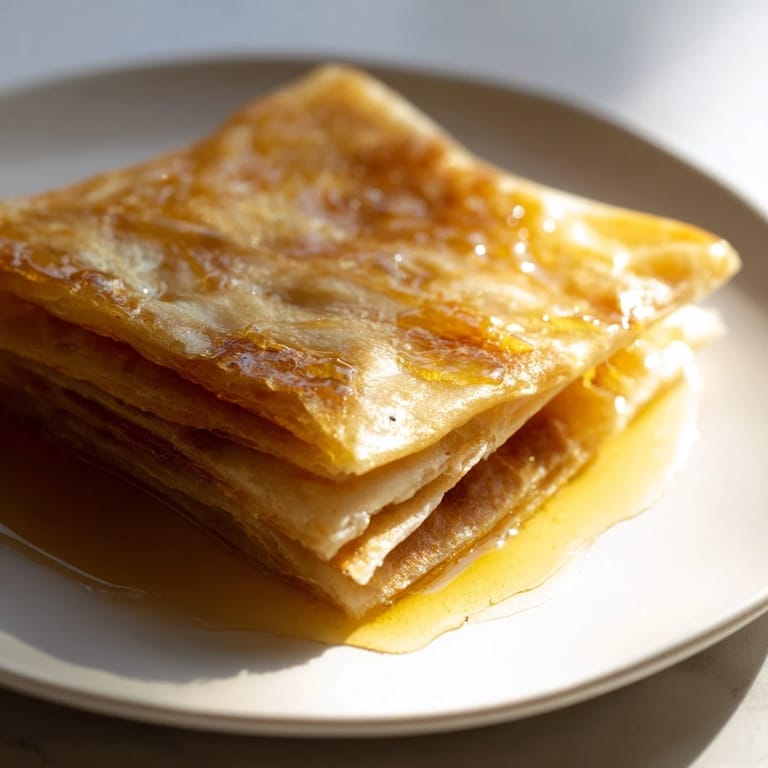
- Brush the stretched circle generously with melted butter, sprinkle semolina over it, then fold the sides in to create a square. Keep brushing and sprinkling as you fold—each layer of butter and semolina is what makes these flaky.
- Rest the folded squares:
- Let them sit for 5 minutes so they relax slightly and the butter sets a bit. This small pause makes the next step much easier.
- Flatten and pan-fry:
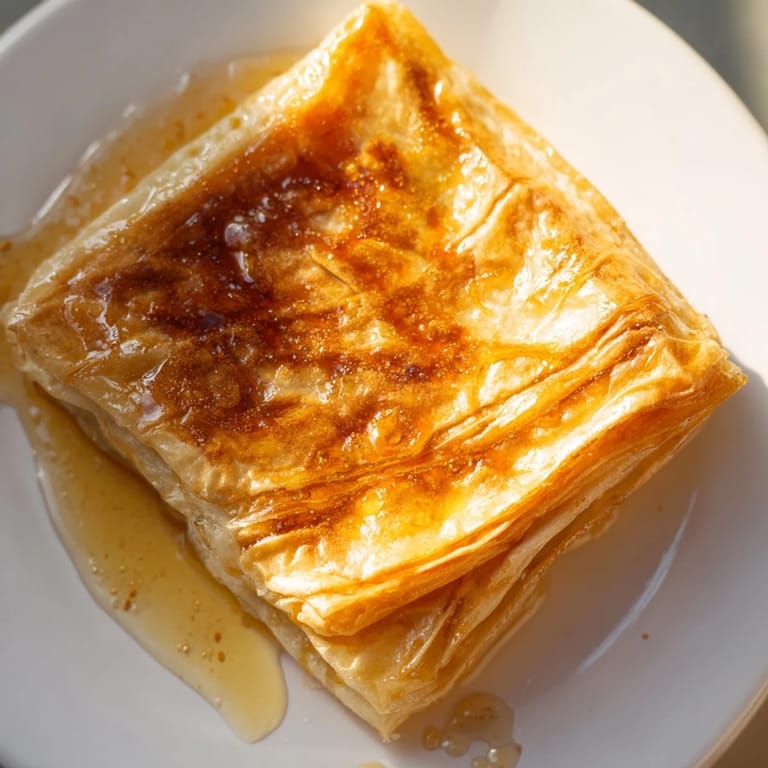
- Heat a non-stick skillet over medium heat with a light brush of oil, then gently flatten each square to about 1/4-inch thick. Fry for 2 to 3 minutes per side until the surface is golden brown and the pastry sounds crispy when you tap it.
- Serve with warmth:
- Transfer to a plate and drizzle generously with warm honey while the msemen is still hot—the contrast of temperatures is part of the magic.
 Save
Save I once made these for a friend who was going through a rough time, and she broke into the biggest smile when she took that first bite. There's something about food that's been folded and cared for with intention that communicates what words sometimes can't. This pastry became a small act of showing up for someone.
The Art of Stretching
The most nerve-wracking part of making msemen is that first stretch, when you're convinced the dough will tear. But here's what I learned: the dough is more forgiving than you think. Work slowly from the center outward, using the warmth of your hands and the slickness of the oil to coax it thinner. If a small hole appears, don't panic—just patch it with a pinch of dough from the edge. By the time you've brushed it with butter and fried it, no one will know.
Variations Worth Trying
Once you've made the basic version, you'll start thinking about what else could happen inside a msemen square. A pinch of cinnamon mixed into the semolina adds warmth without overwhelming the delicate flavor. A few drops of orange blossom water brushed onto the dough before frying creates this floral note that feels sophisticated and subtle. Some people layer a thin spread of amlou (ground almonds, honey, and oil) between the folds, which turns breakfast into something that tastes like an indulgence.
Storage and Reheating
Msemen are best eaten the day you make them, warm and crispy, but leftovers don't go to waste in my kitchen. Store them in an airtight container at room temperature, and when you want to revive them, give them a quick warm-up in a skillet over low heat for a minute or two. They won't be quite as crispy as fresh, but they'll still satisfy. For longer storage, you can freeze the folded but uncooked squares—just add an extra minute or two to the frying time.
- Always reheat in a skillet rather than the microwave, which will make them soggy.
- Warm your honey separately so it doesn't cool down the hot pastry.
- Serve on a plate lined with a cloth to keep them warm if you're making multiple batches.
 Save
Save Making msemen is an act of slowing down, of working with your hands and paying attention to textures and temperatures. Once you've made a batch, you'll understand why they've been beloved in North African kitchens for generations.
Recipe FAQs
- → What ingredients make Msemen flaky?
The combination of all-purpose flour and fine semolina creates a dough that yields the signature flaky layers when folded and pan-fried.
- → How is the dough prepared for Msemen?
The dough is kneaded until elastic, rested, then rolled out thinly and folded multiple times with melted butter and semolina to build delicate layers.
- → What is the best cooking method for Msemen?
Msemen is traditionally pan-fried in a lightly oiled skillet over medium heat until golden and crispy on both sides.
- → Can Msemen be served with other accompaniments besides honey?
Yes, serving Msemen with spreads like amlou (almond-honey paste), fresh jam, or a sprinkle of cinnamon enhances its flavor profile.
- → How should leftover Msemen be reheated?
Leftovers can be reheated in a skillet or toaster to restore their crisp texture and warm interior.